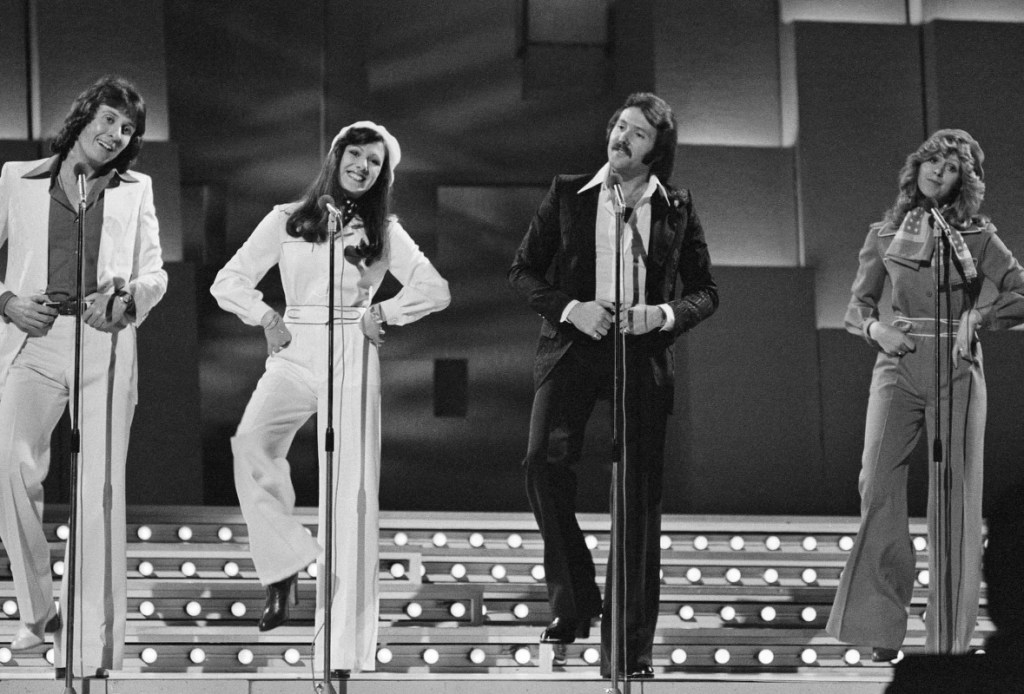
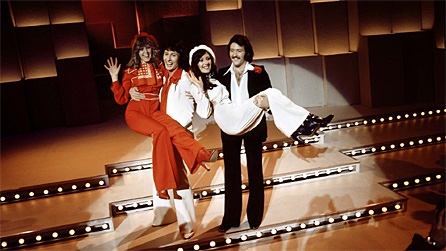
Martin Lee, lead singer of the pop group Brotherhood of Man, died at the age of 77. The British group won the Eurovision Song Contest in 1976 with Save Your Kisses for Me.
“We are deeply saddened to announce the passing of our friend and colleague Martin Lee. He passed away peacefully on Sunday evening due to heart failure following a short illness,” Brotherhood of Man wrote in a statement.
Lee was part of a second formation of the band in 1972 after the first group split up. In addition to being a guitarist, he was the lead singer of the group. In 1976, they represented the United Kingdom at the Eurovision Song Contest. The band received the most points and won with the song Save Your Kisses for Me, which subsequently became an international hit. It reached number one in the Dutch Top 40.
Brotherhood of Man also scored hits with songs such as Kiss Me, Kiss Your Baby, Oh Boy and Angelo. The band has remained a welcome guest at Eurovision concerts in recent years.
Lee was married to Brotherhood Of Man band member Sandra Stevens until his death. Source: nu.nl.
The UK has revealed its entry song for this year’s Eurovision Song Contest. The song is called Dizzy, and it’s by UK pop singer Olly Alexander. Olly is hoping to impress the other countries in the competition in Sweden later this year.
Olly used to be a part of a pop band called Years and Years. Three years ago, he made it into his own solo project, and since then has continued performing all over the world.
In his career he’s had two Number One albums in the charts, had 10 of his songs in the UK Top 40 singles, and had his songs streamed over 6.5 billion times.
He has performed and recorded with some pretty famous musicians, and even had a duet with Sir Elton John!
Olly Alexander’s will play his new track ‘Dizzy’ against other countries in Malmo, in Sweden later this year for the Eurovision Song Contest.
He said he’s really excited to be in the competition, and remembers watching the show with his family when he was younger. Source: BBCNews.
This week the 67th edition of the annual Eurovision Song Contest took place in Liverpool, United Kingdom, as Ukraine, the winner of the 2022 contest with the song Stefania by Kalush Orchestra, was unable to host the event due to the Russian invasion of the country. It was organised by the European Broadcasting Union (EBU), with the British Broadcasting Corporation (BBC) acting as host broadcaster on behalf of the Public Broadcasting Company of Ukraine (UA:PBC). The contest was held at Liverpool Arena, and consisted of two semi-finals on 9 and 11 May and a final on 13 May 2023. The three live shows were presented by British singer Alesha Dixon, British actress Hannah Waddingham, and Ukrainian singer Julia Sanina, with Irish television presenter Graham Norton joining for the final.
Thirty-seven countries participated in the contest, with Bulgaria, Montenegro, and North Macedonia ceasing their participation, mainly due to the economic impact of the global energy crisis.
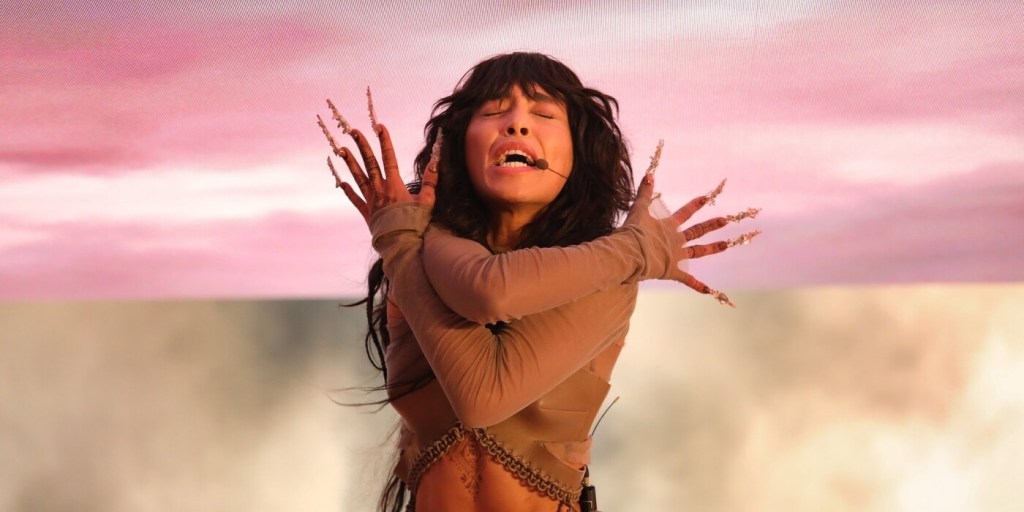
The winner was Sweden with the song Tattoo, performed by Loreen and written by her along with Jimmy Thörnfeldt, Jimmy Jansson, Moa Carlebecker, Peter Boström, and Thomas G:son. Finland, Israel, Italy, and Norway rounded out the top five. Sweden won the combined vote and jury vote, and came second to Finland in the televote. Loreen became the second performer to win the contest twice, after Irish singer Johnny Logan; it was also the seventh win for Sweden, tying Ireland’s record for the most Eurovision victories.
The EBU reported that the contest had a television audience of 162 million viewers in 38 European markets, an increase of a million viewers from the previous edition. A total of 15.6 million viewers watched the contest online on YouTube and TikTok.
Today the 43rd edition of the annual Eurovision Song Contest 1998 took place at the National Indoor Arena in Birmingham, United Kingdom. Organised by the European Broadcasting Union (EBU) and host broadcaster the British Broadcasting Corporation (BBC) and presented by Terry Wogan and Ulrika Jonsson, the contest was held in the United Kingdom following the country’s victory at the 1997 contest with the song Love Shine a Light by Katrina and the Waves.
Twenty-five countries participated in the contest. Six participating countries in the 1997 edition were absent, with Austria, Bosnia and Herzegovina, Denmark, Iceland and Russia relegated due to achieving the lowest average points totals over the previous five contests and Italy actively choosing not to participate. These countries were replaced by Macedoniain its first contest appearance, and previously relegated and absent countries Belgium, Finland, Israel, Romania and Slovakia.
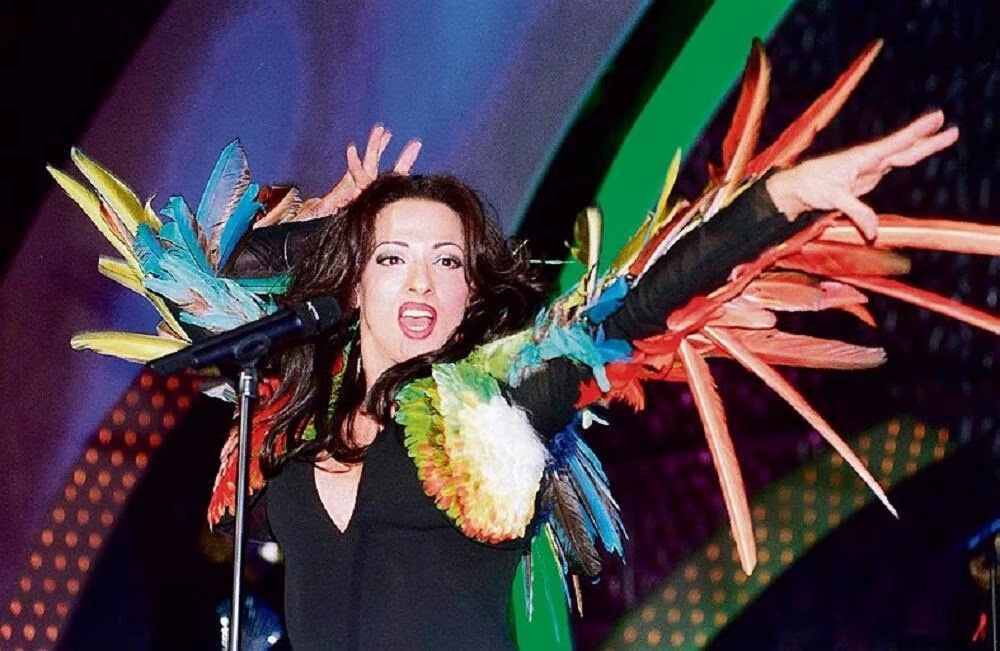
The winner was Israel with the song Diva, composed by Svika Pick, written by Yoav Ginai and performed by Dana International. The United Kingdom, Malta, the Netherlands and Croatia rounded out the top five. Dana International was the contest’s first openly transgender participant and became the contest’s first openly LGBTQ+ winning artist; however, her participation for Israel was controversial among sections of Israeli society and resulted in opposition and death threats against her in the run-up to the contest.
It was the first contest in which the results were determined predominantly through televoting, and would become the last contest in which all participants were required to perform in the language of their country and the last to feature an orchestra and live music accompaniment for the competing entries.
The Eurovision Song Contest 1997 was the 42nd edition of the annual Eurovision Song Contest, held on 3 May 1997 at the Point Theatre in Dublin, Ireland. Organised by the European Broadcasting Union (EBU) and host broadcaster Radio Telefís Éireann (RTÉ) and presented by Carrie Crowley and Ronan Keating, the contest was held in Ireland following the country’s victory at the 1996 contest with the song The Voice by Eimear Quinn. The 1997 contest was the seventh – and to date last – edition to be staged in Ireland, as well as the fourth to be produced by RTÉ in five years. The Point Theatre served as the host venue for the third time, following the 1994 and 1995 contests, becoming the only venue to have been the site of three Eurovision Song Contests.
Twenty-five countries participated in the contest, with a new relegation system introduced to determine which nations could participate, based on each country’s average points total in previous contests. Italy made its first appearance since 1993, and Denmark, Germany, Hungary and Russia returned after last competing in 1995, having been prevented from competing the previous year after failing to progress from that event’s qualifying round. Belgium, Finland and Slovakia, participants in the previous year’s contest, were unable to return after being excluded by the new relegation rules.
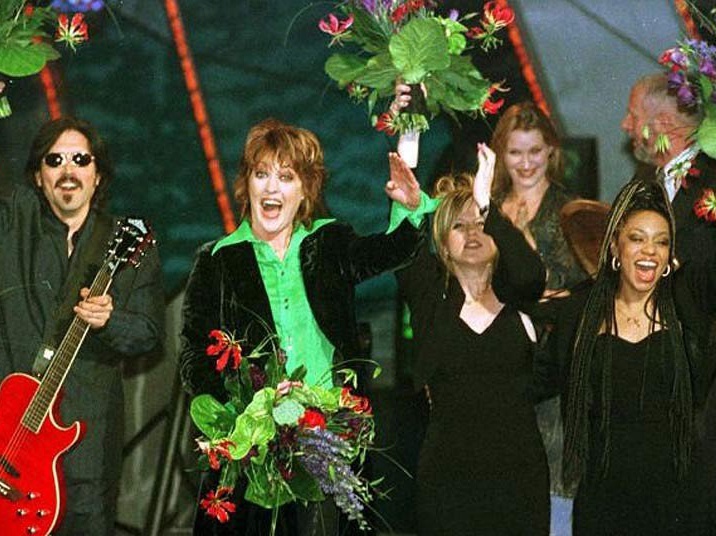
The winner was the United Kingdom with the song Love Shine a Light, written by Kimberley Rew and performed by Katrina and the Waves. Ireland, Turkey, Italy and Cyprus rounded out the top five, with Ireland earning their fifth placing in the top two within six years and Turkey and Cyprus achieving their best results to date. Five of the competing countries used televoting to determine their points, allowing the general viewing public a say in the results for the first time; following this successful trial all countries were encouraged to use this system starting from the following year’s event. Entries were also permitted for the first time to feature no live music accompaniment, with each performance being able to use only a backing track rather than utilising any part of the orchestra or any live instrumentation from the performers themselves.
The 1997 event would prove to be a watershed for the contest, with many aspects of this event leaving a lasting impact on future editions of Eurovision. These included: the first openly LGBT artist, Iceland’s Paul Oscar, selected to compete in the event; changes to contest rules led to the abandonment of live musical accompaniment in future events; a successful trial of televoting in five countries led to widespread adoption for all countries in 1998.
Today the 27th edition of the annual Eurovision Song Contest 1982 took place in Harrogate, United Kingdom, following the country’s victory at the 1981 contest with the song Making Your Mind Up by Bucks Fizz. Organised by the European Broadcasting Union (EBU) and host broadcaster British Broadcasting Corporation(BBC), the contest was held at the Harrogate International Centre and was hosted by English TV presenter and newsreader Jan Leeming.
Eighteen countries took part in the contest with Greece deciding not to enter this year. Due the downsizing of their national broadcasters, France lost the rights to participating at the contest and so was also forced to withdraw.
The winner was Germany with the song Ein bißchen Frieden by Nicole. This was the first time that Germany had won the contest after having competed every year since the contest’s inception. Germany received 1.61 times as many points as runner-up Israel, which was a record under the current scoring system until 2009, when Norway received 1.78 times as many points as Iceland. The song also cemented Ralph Siegel and Bernd Meinunger, the song’s composers, into German Eurovision tradition, writing 18 Eurovision songs between them before and after “Ein bißchen Frieden”, 13 of which were for Germany.
On this day the 26th edition of the annual Eurovision Song Contest was held in Dublin, Ireland, following the country’s victory at the 1980 contest with the song “What’s Another Year” by Johnny Logan. Organised by the European Broadcasting Union (EBU) and host broadcaster Radio Telefís Éireann (RTÉ), the contest was held at the RDS Simmonscourt and was hosted by Irish television journalist Doireann Ní Bhriain.
Twenty countries participated in the contest, equalling the record of the 1978 edition. Cyprus made their début this year, while Israel and Yugoslavia both returned to the competition, after their one-year and five-year absences, respectively. Morocco and Italy decided not to participate.
The winner was the United Kingdom with the song Making Your Mind Up, performed by Bucks Fizz, written by Andy Hill and John Danter. Germany finished second for the second consecutive year, while France finished third. Norway again finished last, with its third nul points in the contest.
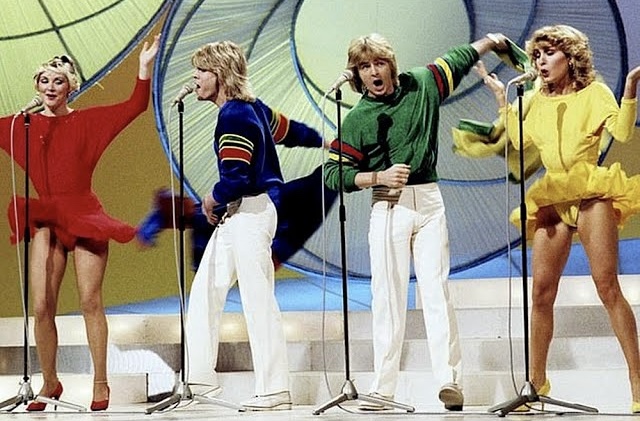
Bucks Fizz’s win launched the group’s hugely successful international career. Their performance on the Eurovision stage included a dance-routine where the two male members ripped the skirts off the two female members only to reveal mini-skirts, and today stands as one of the most defining moments in the contest’s history.
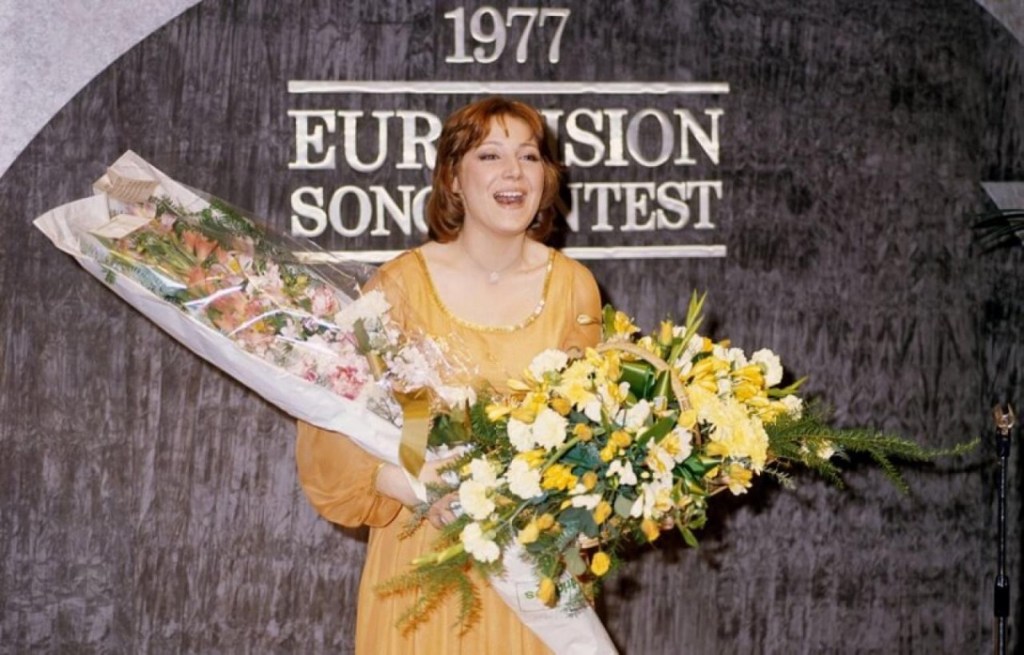
Today the 22nd edition of the annual Eurovision Song Contest took place in London, United Kingdom, following the country’s victory at the 1976 contest with the song “Save Your Kisses for Me” by Brotherhood of Man. Organised by the European Broadcasting Union (EBU) and host broadcaster British Broadcasting Corporation (BBC), the contest was held at the Wembley Conference Centre, marking the first time the event took place in the month of May since the first contest in 1956. The contest was directed by Stewart Morris and hosted by English journalist Angela Rippon.
Eighteen countries participated in the contest; Sweden returned after its absence from the previous edition, while Yugoslavia decided not to enter.
The winner was France with the song “L’Oiseau et l’Enfant“, performed by Marie Myriam, written by Joe Gracy, and composed by Jean-Paul Cara. The United Kingdom, Ireland, Monaco and Greece rounded out the top five. Greece’s fifth place finish was their best result up to that point. France’ fifth win was also a record at the time, and one that France held onto for six years, until being equalled by Luxembourg in 1983.
On this day in 1976, the 21th edition of the annual Eurovision Song Contest took place in The Hague, Netherlands, following the country’s victory at the 1975 contest with the song Ding-a-dong by Teach-In. Organised by the European Broadcasting Union (EBU) and host broadcaster Nederlandse Omroep Stichting(NOS), the contest was held at the Nederlands Congrescentrum and was hosted by 1957 Dutch Eurovision winner Corry Brokken.
Eighteen countries took part in the contest with Sweden, Malta and Turkey opting not to return to the contest after participating the previous year. Malta would not return to the contest again until 1991. On the other hand, Austria and Greece returned to the competition, having been absent since 1972 and 1974 respectively.
United Kingdom won the contest this year with the song Save Your Kisses for Me by Brotherhood of Man. The song went on to become the biggest selling winning single in the history of the contest and won with 80.39% of the possible maximum score and an average of 9.65 of 12; a record under the voting system introduced in 1975.
On this day in 1974, the 19th edition of the annual Eurovision Song Contest 1974 was held in Brighton, United Kingdom, and was organized by the European Broadcasting Union (EBU) and host broadcaster British Broadcasting Corporation(BBC). The UK agreed to host the event after Luxembourg, having won in both 1972 and 1973, declined to host it for a second successive year on the grounds of expense. The contest was held at the Brighton Dome on 6 April 1974 and was hosted by Katie Boyle for the fourth and final time (having hosted the 1960, 1963 and 1968 editions).
Seventeen countries took part in the contest, with France being absent and Greece competing for the first time this year.
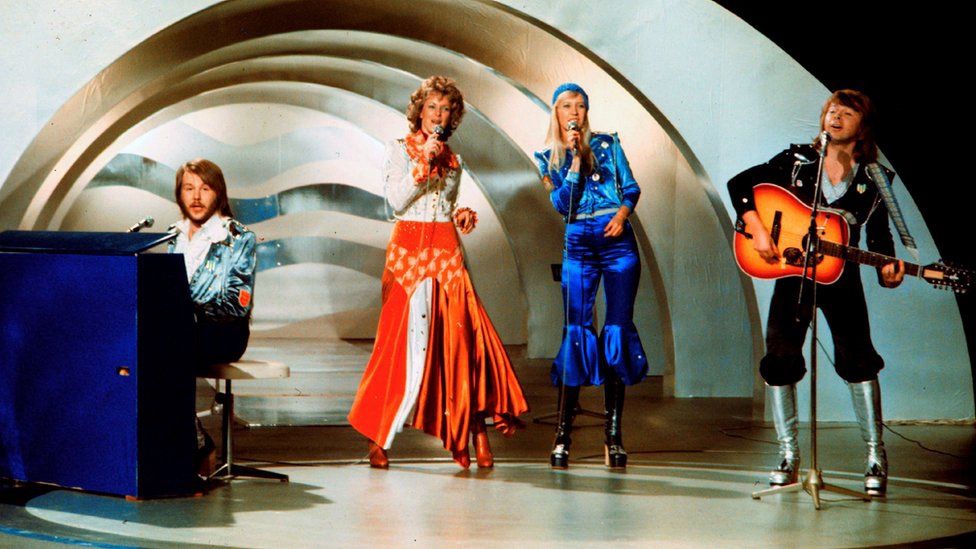
The winner was Sweden with the song Waterloo, performed by ABBA, who would later go on to become one of the best-selling acts in pop music history.
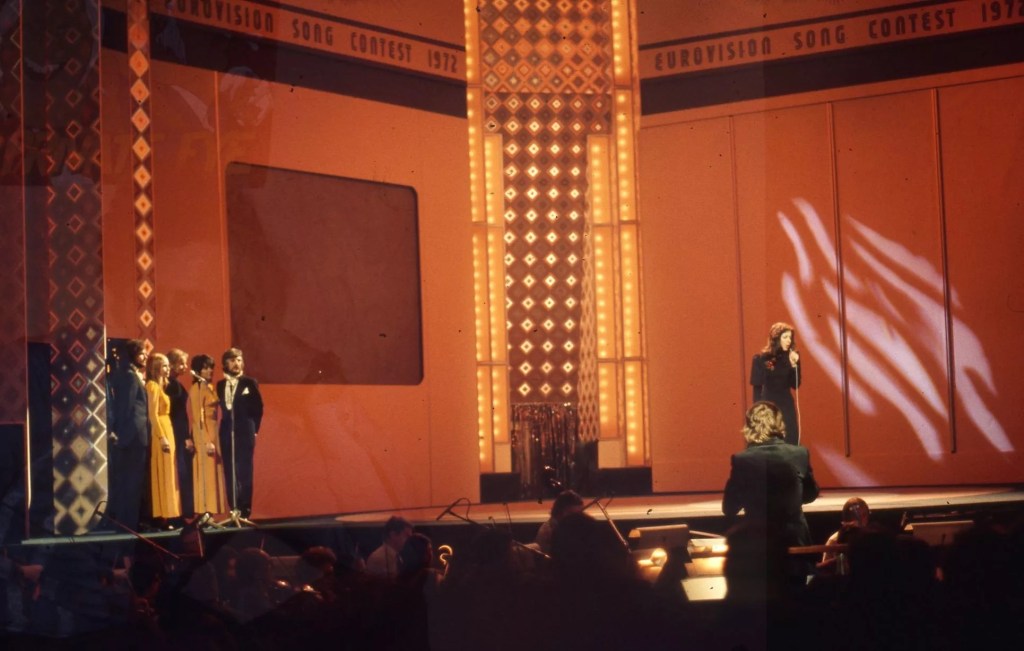
This evening the 17th edition of the annual Eurovision Song Contest took place in Edinburgh, United Kingdom and was organised by the European Broadcasting Union (EBU) and host broadcaster British Broadcasting Corporation(BBC), who agreed to stage the event after Monaco, who won in 1971, were unable to meet the demands of hosting the event and could not find a suitable venue. The contest was held at the Usher Hall on 25 March 1972 and was hosted by Scottish ballet dancer Moira Shearer.
Eighteen countries took part in the contest, the same countries as the previous year.
The winner was Luxembourg with the song “Après toi”, performed by Vicky Leandros, with lyrics by Yves Dessca, and music composed by Mario Panas (which was the writing pseudonym of Vicky’s father Leo Leandros). “Après toi” became the winner with the lowest percentage of the total vote, winning with just 8.30% of the points available. Yves Dessca also wrote “Un banc, un arbre, une rue” that had won the previous edition, and became the second person to win the contest twice, the first person to win for two different countries and the first person to win two years in a row. Germany finished in third place for the third consecutive year, equalling their highest placement from the previous two editions.
Today the 14th edition edition of the annual Eurovision Song Contest took place in Madrid, Spain, following the country’s victory at the 1968 contest with the song La La La by Massiel. Organised by the European Broadcasting Union(EBU) and host broadcaster Televisión Española (TVE), the contest was held at the Teatro Real and was hosted by Spanish television presenter and actress Laurita Valenzuela.
Sixteen countries took part in the contest with Austria deciding not to participate this year.
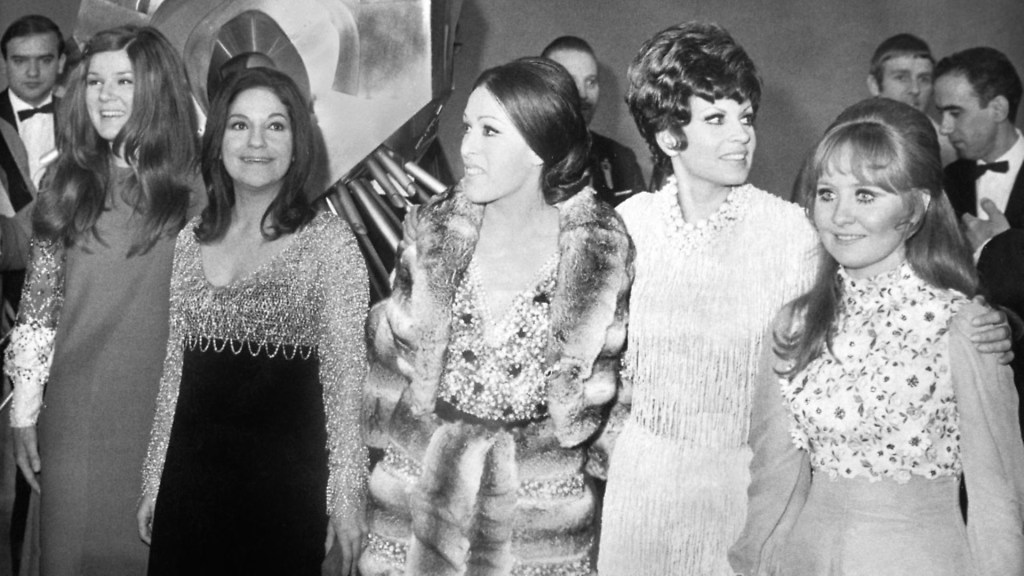
At the close of voting, four countries were declared joint-winners: the United Kingdom with Boom Bang-a-Bang by Lulu, Spain with Vivo cantando by Salomé, the Netherlands with De troubadour by Lenny Kuhr, and France with Un jour, un enfant by Frida Boccara. It was the first time in the history of the contest that a tie for first place had occurred, and as there was no tiebreaker rule in place at the time, all four countries were declared joint winners.
France’s win was their fourth, thus making it the first country to win the contest four times. The Netherlands’ win was their third. Spain and the United Kingdom each won for the second time, with Spain becoming the first country to win the Eurovision Song Contest twice in a row.
On this day in 1968, the 13th edition of the annual Eurovision Song Contest took place in London, United Kingdom, following the country’s first victory at the 1967 contest with the song Puppet on a String by Sandie Shaw. Despite having won for the first time the year before, it was actually the third time that the United Kingdom had hosted the competition, having previously done so in 1960 and 1963, both of which also took place in London. Organised by the European Broadcasting Union (EBU) and host broadcaster British Broadcasting Corporation(BBC), the contest was held at Royal Albert Hall and was hosted by Katie Boyle for the third time. It was notably also the first time that the contest was broadcast in colour.
Seventeen countries participated in the contest, the same countries that had participated the previous year.
The winner was Spain with the song La La La by Massiel, and written/composed by Manuel de la Calva and Ramón Arcusa. This was Spain’s first victory – and their first ever top five placing – in the contest.
Today the 12th edition of the annual Eurovision Song Contest took place in Vienna, Austria, following the country’s victory at the 1966 contest with the song Merci, Chérie by Udo Jürgens. Organised by the European Broadcasting Union (EBU) and host broadcaster Österreichischer Rundfunk (ORF), the contest was held at the Großer Festsaal der Wiener Hofburg on 8 April 1967, becoming the first contest held in the month of April, and was hosted by Austrian actress Erica Vaal.
Seventeen countries participated in the contest, one fewer than the record eighteen that had competed in the 1965 and 1966 editions. Denmark decided not to enter and left the contest at this point, not returning until 1978.
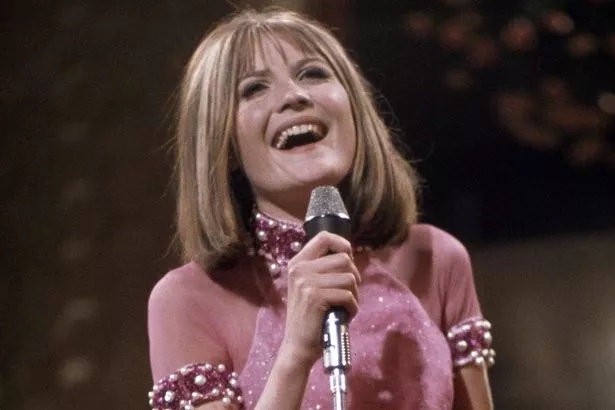
The United Kingdom won the contest for the first time with the song Puppet on a String, written and composed by Bill Martin and Phil Coulter, and performed by Sandie Shaw. The entry had one of the widest margins of victory ever witnessed in the competition; it garnered more than twice as many points as the second-placed song. Shaw intensely disliked the composition, though her attitude towards the song somewhat mellowed in later years, even releasing a new version in 2007.
This was the last contest to be transmitted only in black and white as it would begin to be transmitted in colour from the 1968 edition onwards.
Today the fifth edition of the annual Eurovision Song Contest 1960 was held at the Royal Festival Hall in London, United Kingdom, and hosted by British television presenter and actress Catherine Boyle. Organised by the European Broadcasting Union (EBU) and host broadcaster the British Broadcasting Corporation (BBC), the United Kingdom was offered the rights to stage the contest after the Netherlands, which had won the 1959 contest, declined the opportunity after having organised the event in 1958.
Luxembourg returned to the competition after an absence of one year, and Norway made its first contest appearance, bringing the total number of participating countries to thirteen.
The winner was France with the song Tom Pillibi, performed by Jacqueline Boyer, composed by André Popp and written by Pierre Cour. This marked France’s second contest victory, having also won in 1958. The United Kingdom placed second for the second consecutive year and Monaco earned their first top three finish by placing third.




 euro-vision.blog