Stage

Unbranded will build the decor for the Eurovision Song Contest for the fourth time. The design, which forms the basis for the production, comes from Wieder Design.

Unbranded, which is located at the Media Park in Hilversum, already made an important contribution to the Eurovision editions in Vienna (2015), Kiev (2017) and Rotterdam (2021) and is now working on the decor for the music spectacle in Basel, Switzerland. According to the company, the focus is on the main stage, the green room, the catwalk and the interval acts. Unbranded also provides ‘props’ for the delegations. 

The decors are produced at the Media Park and will leave for Basel in April for construction in the arena. The decor for the Eurovision Song Contest is realized by a team of professionals, with a total of thirty-five people who are closely involved in the construction.

“We are really mega proud that Unbranded is allowed to build the decor for the Eurovision Song Contest for the fourth time,” says managing director Mikael Olsthoorn. “With two hundred million viewers worldwide, this event is one of the largest and most watched TV broadcasts in the world. Our team is working very hard on all the decor to make it a special spectacle. We can’t wait for everyone to see the result!”

Unbranded has a lot of experience in Europe in building decors for large-scale events. This year, the company is building the set for the semi-finals of the Eurovision Song Contest, which will take place on 13 and 15 May, with the grand finale on 17 May in Basel. Source: Noordhollands Dagblad.
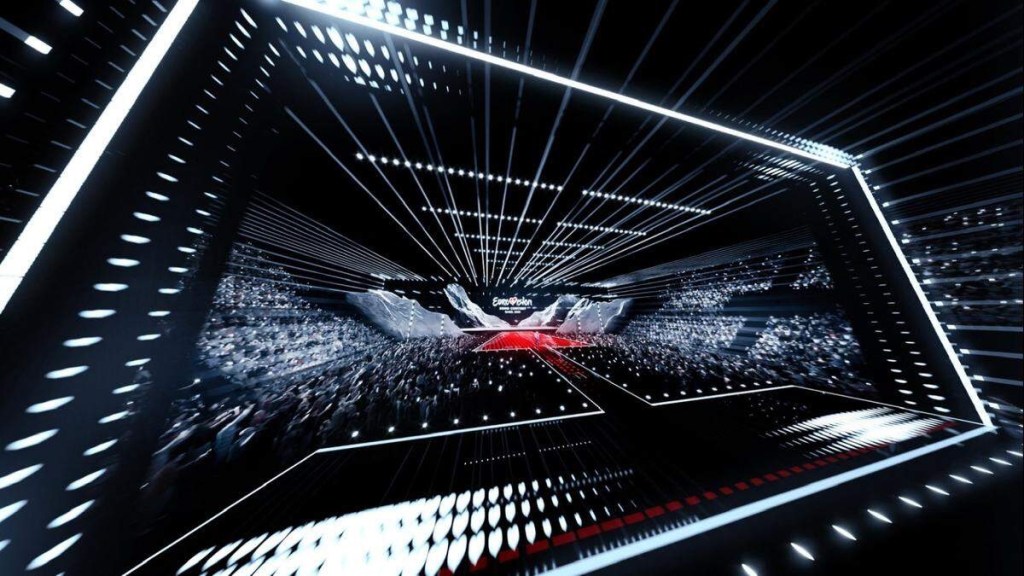

Stage design by Wieder Design. ©Foto Unbranded
Eurovision 2023

This week the 67th edition of the annual Eurovision Song Contest took place in Liverpool, United Kingdom, as Ukraine, the winner of the 2022 contest with the song Stefania by Kalush Orchestra, was unable to host the event due to the Russian invasion of the country. It was organised by the European Broadcasting Union (EBU), with the British Broadcasting Corporation (BBC) acting as host broadcaster on behalf of the Public Broadcasting Company of Ukraine (UA:PBC). The contest was held at Liverpool Arena, and consisted of two semi-finals on 9 and 11 May and a final on 13 May 2023. The three live shows were presented by British singer Alesha Dixon, British actress Hannah Waddingham, and Ukrainian singer Julia Sanina, with Irish television presenter Graham Norton joining for the final.

Thirty-seven countries participated in the contest, with Bulgaria, Montenegro, and North Macedonia ceasing their participation, mainly due to the economic impact of the global energy crisis.

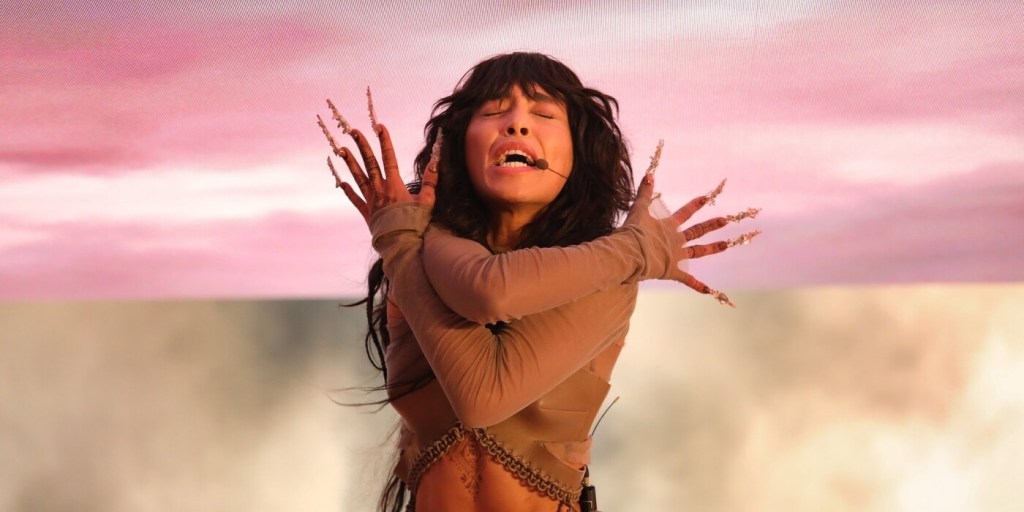
The winner was Sweden with the song Tattoo, performed by Loreen and written by her along with Jimmy Thörnfeldt, Jimmy Jansson, Moa Carlebecker, Peter Boström, and Thomas G:son. Finland, Israel, Italy, and Norway rounded out the top five. Sweden won the combined vote and jury vote, and came second to Finland in the televote. Loreen became the second performer to win the contest twice, after Irish singer Johnny Logan; it was also the seventh win for Sweden, tying Ireland’s record for the most Eurovision victories.

The EBU reported that the contest had a television audience of 162 million viewers in 38 European markets, an increase of a million viewers from the previous edition. A total of 15.6 million viewers watched the contest online on YouTube and TikTok.

Eurovision 2022

This week the 66th edition of the annual Eurovision Song Contest took place in Turin, Italy, following the country’s victory at the 2021 contest with the song Zitti e buoni by Måneskin. Organised by the European Broadcasting Union (EBU) and host broadcaster Radiotelevisione italiana (RAI), the contest was held at the PalaOlimpico, and consisted of two semi-finals on 10 and 12 May, and a final on 14 May 2022. The three live shows were presented by Italian television presenter Alessandro Cattelan, Italian singer Laura Pausini and Lebanese-born British-French singer Mika.

Forty countries participated in the contest, with Armenia and Montenegro returning after their absence from the previous edition. Russia had originally planned to participate, but was excluded due to its invasion of Ukraine.

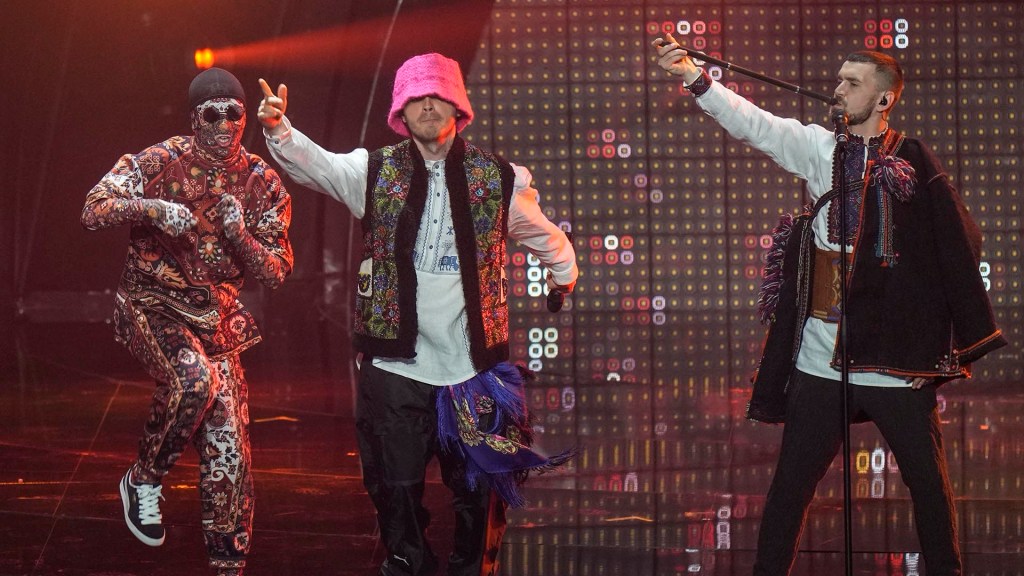
The winner was Ukraine with the song Stefania, performed by Kalush Orchestra and written by the group’s members Ihor Didenchuk, Oleh Psiuk, Tymofii Muzychuk and Vitalii Duzhyk, along with Ivan Klymenko. The United Kingdom finished in second place for a record-extending sixteenth time, also achieving its best result since 1998. Spain, Sweden and Serbia rounded out the top five, with Spain achieving its best result since 1995. Ukraine won the televote with 439 points, the most received in the contest’s history to date, and came fourth in the jury vote behind the United Kingdom, Sweden and Spain. “Stefania” is the first song sung entirely in Ukrainian and the first song with hip-hop elements to win the contest.

The EBU reported that the contest had a television audience of 161 million viewers in 34 European markets, a decrease of 22 million viewers from the previous edition, however, it is noted that this is due to the exclusion of Russia and the lack of audience figures from Ukraine, with the overall figures up by 7 million viewers in a comparable market from 2021. An increase of three per cent in the 15–24 year old age range was also reported. A total of 18 million viewers watched the contest online on YouTube and TikTok.

Eurovision 2017

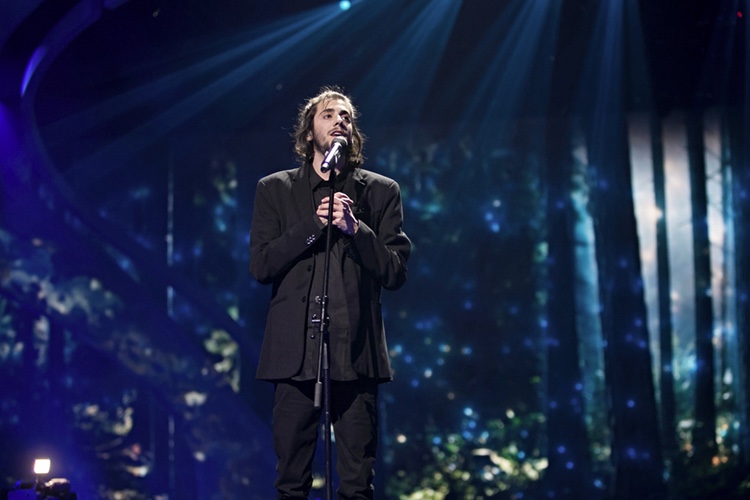
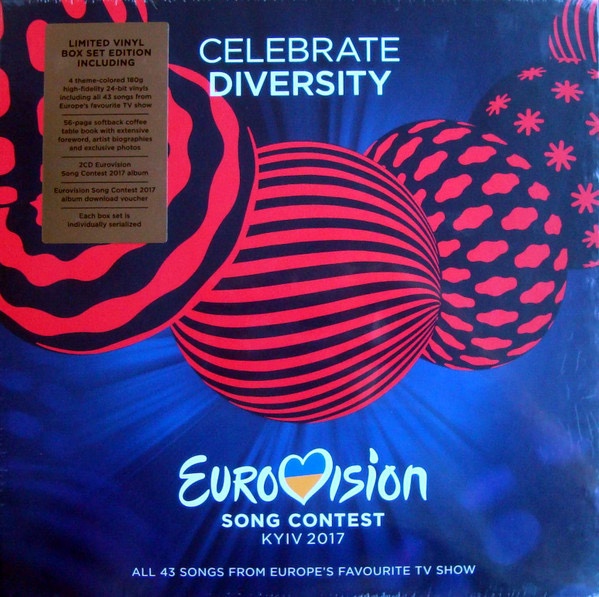
This week the 62nd edition of the annual Eurovision Song Contest took place in Kyiv, Ukraine, following the country’s victory at the 2016 contest with the song 1944 by Jamala. Organised by the European Broadcasting Union (EBU) and host broadcaster Public Broadcasting Company of Ukraine (UA:PBC), the contest was held at the International Exhibition Centre and consisted of two semi-finals on 9 and 11 May, and a final on 13 May 2017. The three live shows were presented by Ukrainian television presenters Oleksandr Skichko, Volodymyr Ostapchuk and Timur Miroshnychenko, being the first contest since the inaugural 1956 edition without a female host.

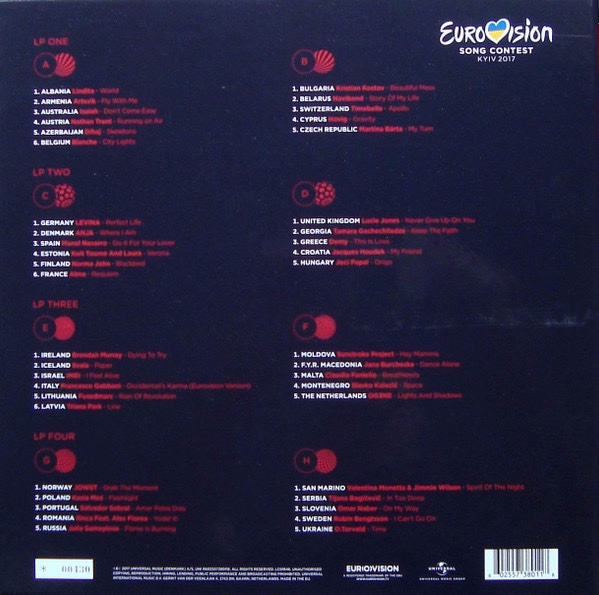
Forty-two countries participated in the contest. Portugal and Romania returned to the contest after a year’s absence, while Bosnia and Herzegovina did not participate on financial grounds. Russia had originally planned to participate, but later withdrew after its representative, Julia Samoylova, was banned from entering Ukraine by virtue of having travelled directly from Russia to Crimea, a region that was annexed by Russia in 2014, to give a performance, which is illegal under Ukrainian law.

The winner was Portugal with the song Amar pelos dois, performed by Salvador Sobral and written by his sister Luísa Sobral. The song won both the jury vote and televote, and Bulgaria, Moldova, Belgium and Sweden rounded out the top five. This was Portugal’s first victory in 53 years of participation, the longest in Eurovision history. It was also the first winning song entirely performed in a country’s native language since Serbia’s Molitva in 2007. The top three countries – Portugal, Bulgaria and Moldova – all achieved their highest placings in their Eurovision history, while host country Ukraine received its worst placing to date, finishing 24th in the final.

The EBU reported that 182 million viewers worldwide watched the contest, 22 million fewer than the 2016 record.

Eurovision 2016

This week the 61st edition of the annual Eurovision Song Contest took place in Stockholm, Sweden, following the country’s victory at the 2015 contest with the song Heroes by Måns Zelmerlöw. Organised by the European Broadcasting Union (EBU) and host broadcaster Sveriges Television (SVT), the contest was held at the Globe Arena and consisted of two semi-finals on 10 and 12 May, and a final on 14 May 2016. The three live shows were presented by Petra Mede and the previous year’s winner Måns Zelmerlöw.

Forty-two countries participated in the contest. Bosnia and Herzegovina, Bulgaria, Croatia and Ukraine returned after absences from recent contests, while Australia also returned after debuting as a special guest in 2015. Portugal did not enter, largely due to their national broadcaster’s insufficient promotion of its music-based media, while Romania had planned to participate, but was disqualified due to repeated non-payment of debts by its national broadcaster to the EBU.

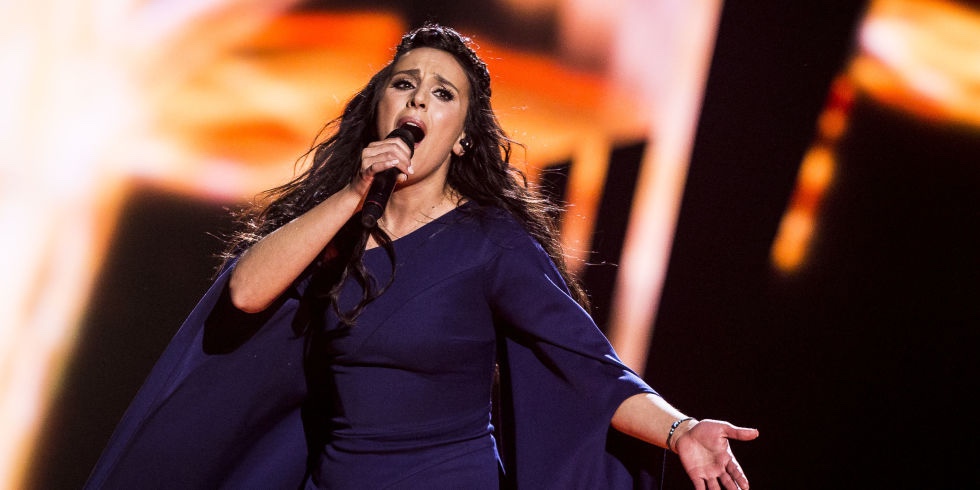
The winner was Ukraine with the song 1944, performed and written by Jamala. Australia, Russia, Bulgaria and host country Sweden rounded out the top five. This was the first time since the introduction of professional jury voting in 2009 that the overall winner won neither the jury vote, which was won by Australia, nor the televote, which was won by Russia, with Ukraine placing second in both. 1944 is the first song containing lyrics in Crimean Tatar to win the contest.

The Czech Republic managed to qualify for the final for the first time in five attempts since its debut in 2007, while both Bosnia and Herzegovina and Greece failed to qualify from the semi-finals for the first time ever, the latter being absent from the final for the first time since 2000. In the final, Australia’s second-place finish was an improvement on its fifth-place finish in 2015, while Bulgaria finished fourth, its best result since its debut and first participation in a final since 2007.

The contest was the first to implement a voting system change since 1975: each country’s professional jury points were announced largely as before, while the results of each national televote were combined and announced in reverse order. It was also the first contest to be broadcast on live television in the United States, and the EBU recorded a record-breaking 204 million viewers worldwide for the contest, beating the 2015 viewing figures by over 5 million.

Eurovision 2005

This week the 50th edition of the annual Eurovision Song Contest was held in Kyiv, Ukraine, following the country’s victory at the 2004 contest with the song Wild Dances by Ruslana. Organised by the European Broadcasting Union (EBU) and host broadcaster National Television Company of Ukraine (NTU), the contest was held at the Palace of Sports, and consisted of a semi-final on 19 May, and a final on 21 May 2005. The two live shows were presented by Ukrainian television presenters Maria Efrosinina and Pavlo Shylko.

Thirty-nine countries participated in the contest, three more than the previous record of thirty-six, that took part the year before. Bulgaria and Moldova made their first participation this year, while Hungary returned to the contest after a six-year absence, having last taken part in 1998.

An official CD and DVD was released and a new introduction was an official pin set, which contains heart-shaped pins with the flags of all thirty-nine participating countries. The EBU also commissioned a book The Eurovision Song Contest – The Official History by British/American author John Kennedy O’Connor to celebrate the contest’s fiftieth anniversary. The book was presented on screen during the break between songs 12 and 13 (Serbia and Montenegro, Denmark). The book was published in English, German, French, Dutch, Swedish, Danish and Finnish.

During the semi-final, there were a few sound faults, most notably during the Norwegian song, shortly after the intro and also during the Irish song. These were not fixed for the DVD release.

Following Istanbul’s Under The Same Sky, the slogan for the 2005 show was Awakening, which symbolised the awakening of the country and city ready to present itself to Europe. The postcards (short clips shown between performances) for the 2005 show illustrated Ukraine’s culture and heritage along with a more modern and industrial side to the country.This was the first edition to be broadcast in widescreen 16:9 format.

The Netherlands did not qualify for the final on Saturday. My Impossible Dream by Glennis Grace got 53 point and ended as 14th in the semi-final.

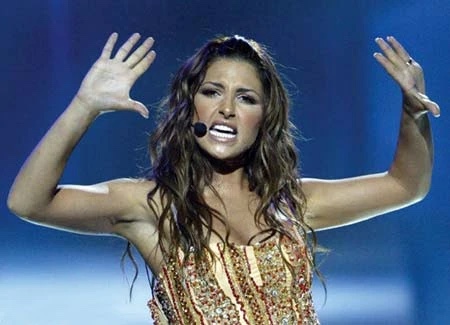
The winner was Greece with the song My Number One, performed by Helena Paparizou and written by Manos Psaltakis, Christos Dantis and Natalia Germanou. This was Greece’s first victory in the contest after 31 years of participation. Malta, Romania, Israel and Latvia rounded out the top five. Malta equalled their best result from 2002, while Romania achieved their best result in their Eurovision history. Unusually, all Big Four countries (France, Germany, Spain and United Kingdom) ended up as the Last Four, all placing in the bottom four positions in the final

Eurovision 2004

This week the 49th edition of the annual Eurovision Song Contest took place in Istanbul, Turkey, following the country’s victory at the 2003 contest with the song Everyway That I Can by Sertab Erener. Organised by the European Broadcasting Union (EBU) and host broadcaster Turkish Radio and Television Corporation (TRT), the contest was held at the Abdi İpekçi Arena, and, for the first time, consisted of a semi-final on 12 May, and a final on 15 May 2004. The two live shows were presented by Turkish actors Korhan Abay and Meltem Cumbul. It was the first time that Turkey had hosted the contest, 29 years after the country made its debut, and was also the first time since the 1998 contest in Birmingham that it was not hosted in the host country’s capital city.

Thirty-six countries participated in the contest, beating the record of twenty-six in the previous edition. Albania, Andorra, Belarus and Serbia and Montenegro took part for the first time this year. The old relegation system was replaced with a semi-final format. This was done in order to accommodate the increasing number of countries who wished to participate. The new format allowed all countries to participate every year, rather than being forced to sit out per the relegation rules, which had been the standard since 1994. Because of this, Denmark, Finland, Lithuania, Macedonia, Monaco and Switzerlandall returned to the contest, Monaco not having competed since 1979.

The semi-final was held on 12 May 2004 at 21:00 (CET). 22 countries performed and all participants voted except France, Poland and Russia who opted not to broadcast the show.

A new ABBA video was shown in the semi-final, briefly outlining how ABBA started and what the response was of the first record company they approached. It featured small puppets of the band performing snippets of their songs (the voices being the ones of the band) and featured Rik Mayall as the record company manager. Due to copyright purposes, this was cut from the Eurovision Song Contest DVD and released separately. References to the video before it was shown were also cut.

The winner was Ukraine with the song Wild Dances, performed by Ruslana who wrote it with her husband Oleksandr Ksenofontov. This was Ukraine’s first victory in the contest, only one year after the country made its debut in 2003. Serbia and Montenegro, Greece, Turkey, Cyprus and Sweden rounded out the top five. Due to the expansion of the contest, this year was the first time in which a non-winning entry scored over 200 points. Prior to this contest, only the winning entries in 1994 and 1997 had passed this mark. In this contest, the top 3 songs all got over 200 points. An official CD was released and, for the first time, the entire contest was released on DVD which included the semi-final and the final.