
This week the 49th edition of the annual Eurovision Song Contest took place in Istanbul, Turkey, following the country’s victory at the 2003 contest with the song Everyway That I Can by Sertab Erener. Organised by the European Broadcasting Union (EBU) and host broadcaster Turkish Radio and Television Corporation (TRT), the contest was held at the Abdi İpekçi Arena, and, for the first time, consisted of a semi-final on 12 May, and a final on 15 May 2004. The two live shows were presented by Turkish actors Korhan Abay and Meltem Cumbul. It was the first time that Turkey had hosted the contest, 29 years after the country made its debut, and was also the first time since the 1998 contest in Birmingham that it was not hosted in the host country’s capital city.
Thirty-six countries participated in the contest, beating the record of twenty-six in the previous edition. Albania, Andorra, Belarus and Serbia and Montenegro took part for the first time this year. The old relegation system was replaced with a semi-final format. This was done in order to accommodate the increasing number of countries who wished to participate. The new format allowed all countries to participate every year, rather than being forced to sit out per the relegation rules, which had been the standard since 1994. Because of this, Denmark, Finland, Lithuania, Macedonia, Monaco and Switzerlandall returned to the contest, Monaco not having competed since 1979.
The semi-final was held on 12 May 2004 at 21:00 (CET). 22 countries performed and all participants voted except France, Poland and Russia who opted not to broadcast the show.
A new ABBA video was shown in the semi-final, briefly outlining how ABBA started and what the response was of the first record company they approached. It featured small puppets of the band performing snippets of their songs (the voices being the ones of the band) and featured Rik Mayall as the record company manager. Due to copyright purposes, this was cut from the Eurovision Song Contest DVD and released separately. References to the video before it was shown were also cut.
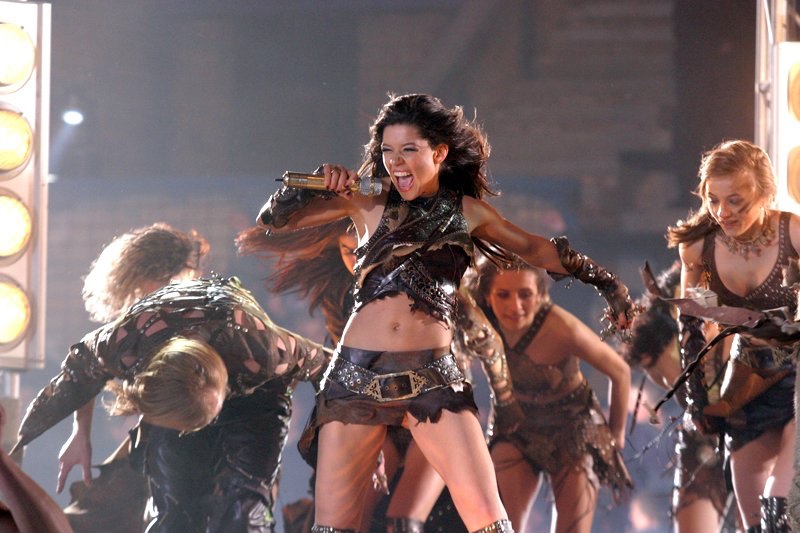
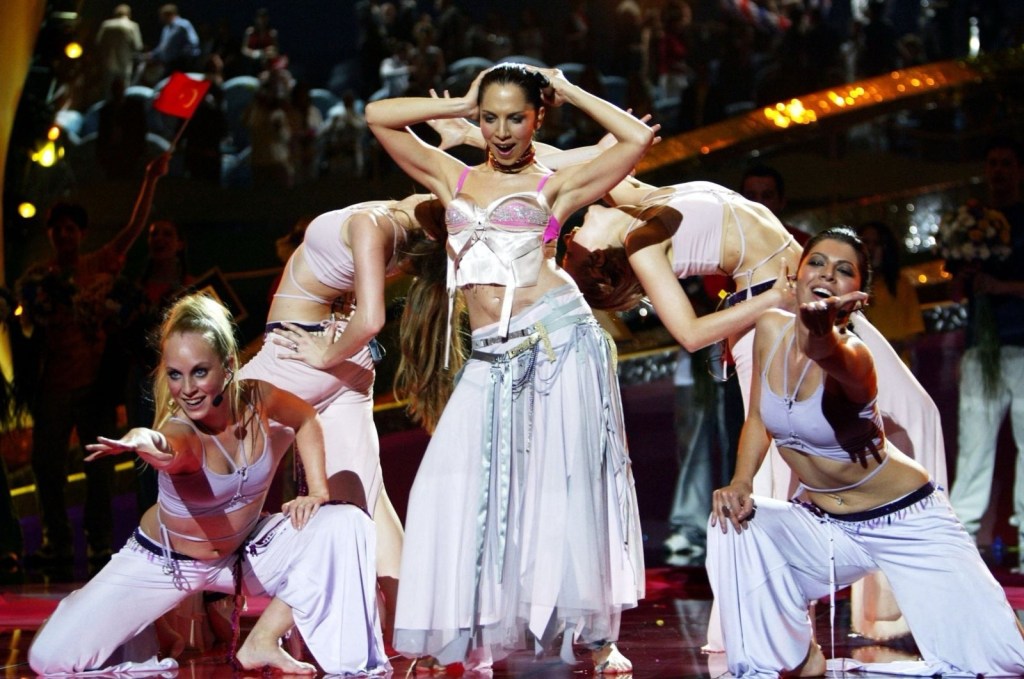
The winner was Ukraine with the song Wild Dances, performed by Ruslana who wrote it with her husband Oleksandr Ksenofontov. This was Ukraine’s first victory in the contest, only one year after the country made its debut in 2003. Serbia and Montenegro, Greece, Turkey, Cyprus and Sweden rounded out the top five. Due to the expansion of the contest, this year was the first time in which a non-winning entry scored over 200 points. Prior to this contest, only the winning entries in 1994 and 1997 had passed this mark. In this contest, the top 3 songs all got over 200 points. An official CD was released and, for the first time, the entire contest was released on DVD which included the semi-final and the final.

 euro-vision.blog