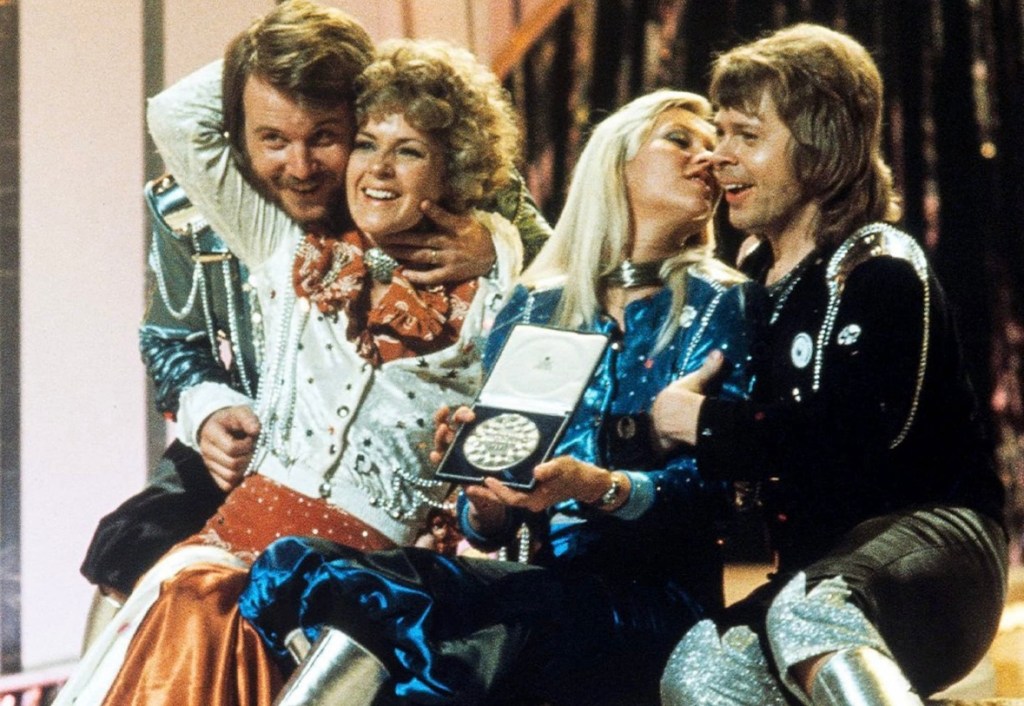
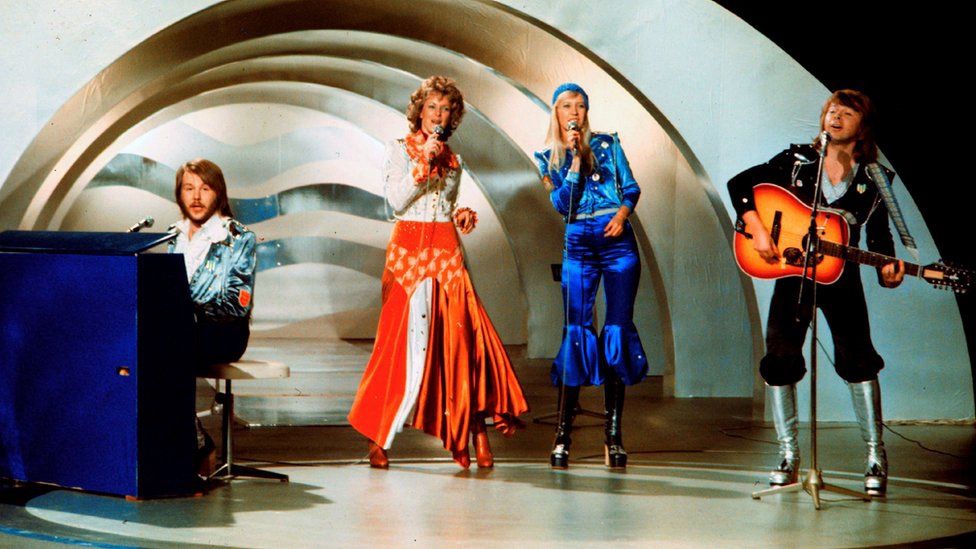
ABBA has shared a letter on social media thanking their fans for their years of support. It is exactly fifty years on Saturday that the Swedish group won the Eurovision Song Contest with Waterloo.
“We are a bit taken aback by it and it moves us to think that millions of people who saw us for the first time during the 1974 Eurovision Song Contest have subsequently passed on our music not only to one generation, but to many more,” the ABBA members wrote.
Agnetha Fältskog, Björn Ulvaeus, Benny Andersson and Anni-Frid Lyngstad write that not a day goes by when they don’t think about their fans. “Many of you were there from the beginning and have followed us for more than half a century since then. Music that you discover at a young age or even hear later in life, always stays with you in a certain way. We share that experience with you.”
The Swedish band think it’s “great” to know that their music has become a constant factor in the lives of many fans. “It’s not easy to say thank you for everything you’ve given us without sounding trivial. This is no time for triviality.”
“It is a happy, yet solemn moment and we can only hope that you know how deeply grateful we are for a long, successful career and for your loyalty and support over the years. Thank you!”
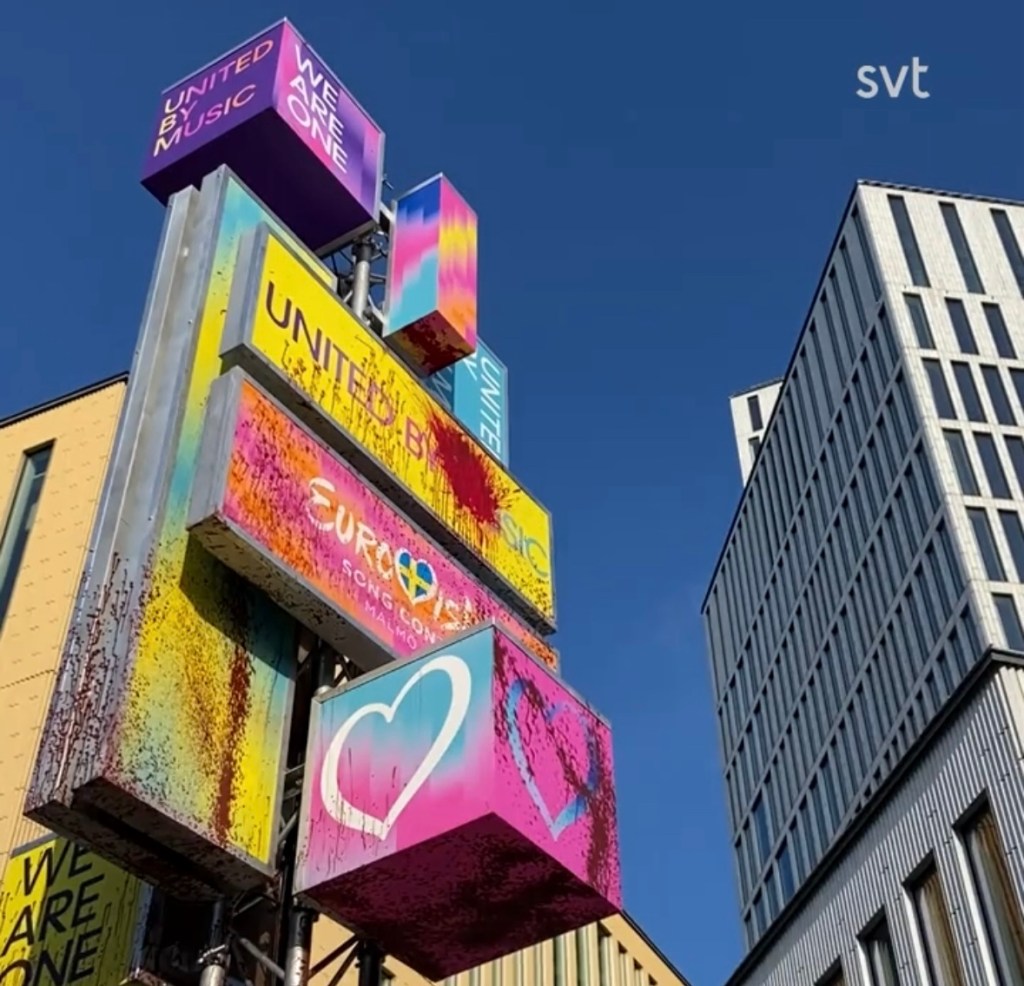
The large digital sign about Eurovision outside Malmö Live was vandalized overnight on Monday. Someone or a few have thrown blood-red paint and written pro-Palestinian slogans.
The vandalism was discovered in the morning hours. On the base of the sign, someone has written “Free Gaza” and daubed it with red paint. Even on the digital sign that says “United by music” and “We are one” someone has thrown paint.
The EBU decides the contestants Israel’s participation in Eurovision has provoked strong protests directed both at Malmö municipality and at SVT, despite the fact that it is the EBU – the European Television Union – that decides who gets to compete.
The police have not received any report about the vandalism during the night, but will prepare one themselves in the morning. Source: SVT Nyheter.
I believe that everyone has the right to demonstrate, but I don’t understand that this should be done by vandalism.
The UK has revealed its entry song for this year’s Eurovision Song Contest. The song is called Dizzy, and it’s by UK pop singer Olly Alexander. Olly is hoping to impress the other countries in the competition in Sweden later this year.
Olly used to be a part of a pop band called Years and Years. Three years ago, he made it into his own solo project, and since then has continued performing all over the world.
In his career he’s had two Number One albums in the charts, had 10 of his songs in the UK Top 40 singles, and had his songs streamed over 6.5 billion times.
He has performed and recorded with some pretty famous musicians, and even had a duet with Sir Elton John!
Olly Alexander’s will play his new track ‘Dizzy’ against other countries in Malmo, in Sweden later this year for the Eurovision Song Contest.
He said he’s really excited to be in the competition, and remembers watching the show with his family when he was younger. Source: BBCNews.
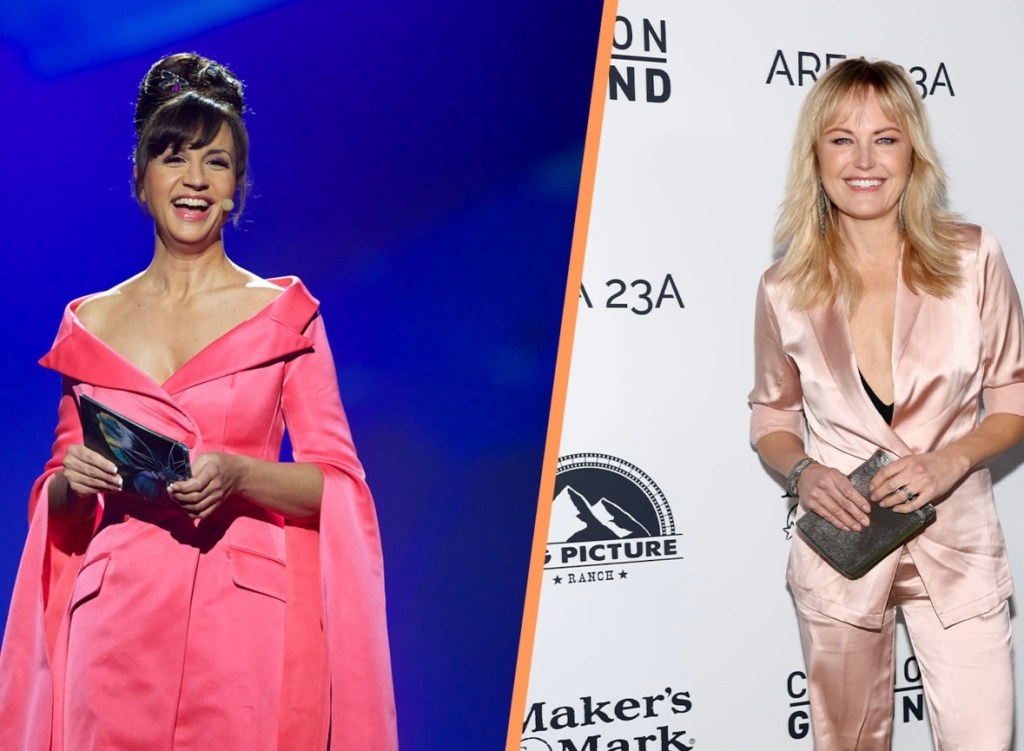
Presenter Petra Mede and actress Malin Akerman will present the Eurovision Song Contest in Malmö, Sweden this May. The organization of the event announced the presentation duo on Monday.
The 53-year-old Mede is one of the best-known Swedish presenters and already presented the Eurovision Song Contest in 2013 and 2016. The 45-year-old Akerman, born in Stockholm and raised in Canada, is known as an actress for films such as The Heartbreak Kid and Rock of Ages .
Mede and Akerman have not worked together before, but say they are very much looking forward to presenting the Eurovision Song Contest together.
The Eurovision Song Contest takes place in Malmö from Tuesday 7 to Sunday 11 May. The Netherlands is represented by Joost Klein. He will play in the second semi-final on May 9. Source: nu.nl.
This week the 67th edition of the annual Eurovision Song Contest took place in Liverpool, United Kingdom, as Ukraine, the winner of the 2022 contest with the song Stefania by Kalush Orchestra, was unable to host the event due to the Russian invasion of the country. It was organised by the European Broadcasting Union (EBU), with the British Broadcasting Corporation (BBC) acting as host broadcaster on behalf of the Public Broadcasting Company of Ukraine (UA:PBC). The contest was held at Liverpool Arena, and consisted of two semi-finals on 9 and 11 May and a final on 13 May 2023. The three live shows were presented by British singer Alesha Dixon, British actress Hannah Waddingham, and Ukrainian singer Julia Sanina, with Irish television presenter Graham Norton joining for the final.
Thirty-seven countries participated in the contest, with Bulgaria, Montenegro, and North Macedonia ceasing their participation, mainly due to the economic impact of the global energy crisis.
The winner was Sweden with the song Tattoo, performed by Loreen and written by her along with Jimmy Thörnfeldt, Jimmy Jansson, Moa Carlebecker, Peter Boström, and Thomas G:son. Finland, Israel, Italy, and Norway rounded out the top five. Sweden won the combined vote and jury vote, and came second to Finland in the televote. Loreen became the second performer to win the contest twice, after Irish singer Johnny Logan; it was also the seventh win for Sweden, tying Ireland’s record for the most Eurovision victories.
The EBU reported that the contest had a television audience of 162 million viewers in 38 European markets, an increase of a million viewers from the previous edition. A total of 15.6 million viewers watched the contest online on YouTube and TikTok.
This week the 61st edition of the annual Eurovision Song Contest took place in Stockholm, Sweden, following the country’s victory at the 2015 contest with the song Heroes by Måns Zelmerlöw. Organised by the European Broadcasting Union (EBU) and host broadcaster Sveriges Television (SVT), the contest was held at the Globe Arena and consisted of two semi-finals on 10 and 12 May, and a final on 14 May 2016. The three live shows were presented by Petra Mede and the previous year’s winner Måns Zelmerlöw.
Forty-two countries participated in the contest. Bosnia and Herzegovina, Bulgaria, Croatia and Ukraine returned after absences from recent contests, while Australia also returned after debuting as a special guest in 2015. Portugal did not enter, largely due to their national broadcaster’s insufficient promotion of its music-based media, while Romania had planned to participate, but was disqualified due to repeated non-payment of debts by its national broadcaster to the EBU.
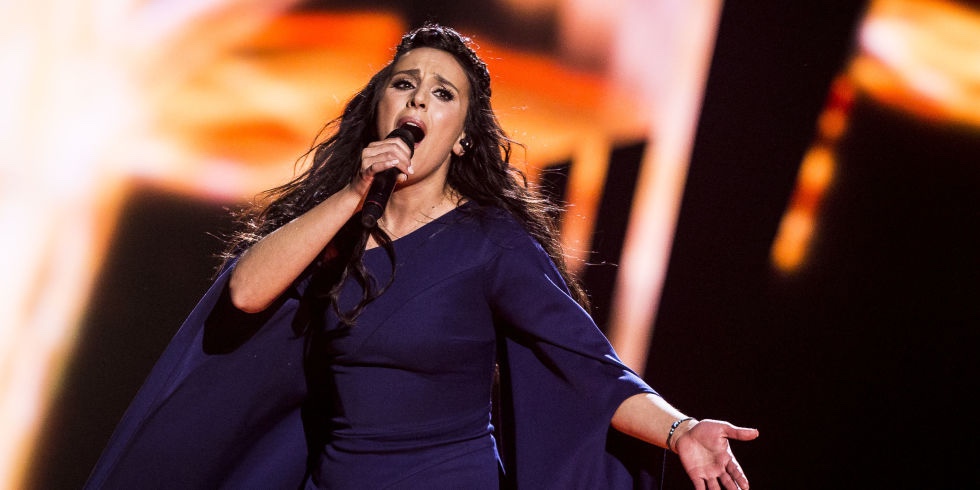
The winner was Ukraine with the song 1944, performed and written by Jamala. Australia, Russia, Bulgaria and host country Sweden rounded out the top five. This was the first time since the introduction of professional jury voting in 2009 that the overall winner won neither the jury vote, which was won by Australia, nor the televote, which was won by Russia, with Ukraine placing second in both. 1944 is the first song containing lyrics in Crimean Tatar to win the contest.
The Czech Republic managed to qualify for the final for the first time in five attempts since its debut in 2007, while both Bosnia and Herzegovina and Greece failed to qualify from the semi-finals for the first time ever, the latter being absent from the final for the first time since 2000. In the final, Australia’s second-place finish was an improvement on its fifth-place finish in 2015, while Bulgaria finished fourth, its best result since its debut and first participation in a final since 2007.
The contest was the first to implement a voting system change since 1975: each country’s professional jury points were announced largely as before, while the results of each national televote were combined and announced in reverse order. It was also the first contest to be broadcast on live television in the United States, and the EBU recorded a record-breaking 204 million viewers worldwide for the contest, beating the 2015 viewing figures by over 5 million.
This week the 60th edition of the annual Eurovision Song Contest took place in Vienna, Austria, following the country’s victory at the 2014 contest with the song Rise Like a Phoenix by Conchita Wurst. Organised by the European Broadcasting Union(EBU) and host broadcaster Österreichischer Rundfunk (ORF), the contest was held at the Hall D of the Wiener Stadthalle and consisted of two semi-finals on 19 and 21 May, and a final on 23 May 2015. The three live shows were presented by Austrian television presenters Mirjam Weichselbraun, Alice Tumler and Arabella Kiesbauer, while the previous edition’s winner Conchita Wurst acted as the green room host.
Forty countries participated in the contest, with Australia making a guest appearance. Cyprusand Serbia returned, after their one-year absence, while the Czech Republic returned after their last participation in 2009. Meanwhile, Ukraine announced their non-participation due to financial and political crises related to the Russo-Ukrainian War.
The winner was Sweden with the song Heroes, performed by Måns Zelmerlöw and written by Anton Malmberg Hård af Segerstad, Joy Deb and Linnea Deb. This was the country’s second win in three years, having also won in 2012. Sweden won the jury vote and had the highest combined points, but placed third in the televote behind Italy and Russia. Overall the latter two countries placed third and second respectively, and Belgium and Australia rounded out the top five. Further down the table, Montenegro achieved its best result since its independence, finishing thirteenth.
For the first time, the top four of the contest all scored 200 points or better. Russia’s entry A Million Voices became the first non-winning Eurovision song to score over 300 points. Austria and Germany became the first countries since 2003 to score no points in the final, with Austria also becoming the first (and to date, only) host country to fail to score a point.
The EBU reported that over 197 million viewers worldwide watched the contest, beating the 2014 viewing figures by 2 million.
The organization of the Eurovision Song Contest is tightening the voting rules because Azerbaijan bribed jury members and televoters in 2013.
The Eastern European country is said to have hired Lithuanian students to influence the vote. Azerbaijan finished second with 234 points, behind winner Denmark.
Singer Farid Mammodov’s song Hold Me received twelve points from Russia, Lithuania, Montenegro, Malta, Israel, Hungary, Greece, Georgia, Bulgaria and Austria. Azerbaijan itself gave twelve points to Gravity by the Ukrainian singer Zlata Ognevich.
The EBU (European Broadcasting Union) says the fraud was discovered on time and that the counting was fair. Still, the rules will be tightened for next time. Normally when a country is caught committing fraud there is a three-year ban, but in this case the Azerbaijan organization had nothing to do with the case. This year Denmark is organizing the Eurovision Song Contest. Source: Televizier.nl
Vanavond is dan uiteindelijk, zoals ik het altijd zeg; het échte Eurovisie Songfestival. Ik vind het hartstikke leuk, drie avonden met Europees gezang, danspasjes en trukendoosjes op de flatscreen, maar vanavond is het de spannende Eurovisie Songfestival van vroeger; met de zenuwslopende puntentelling. En sinds 2004 wordt het voor ons weer eens echt ouderwets spannend, want Anouk heeft ons afgelopen dinsdagavond naar de finale gezonden.
Vanzelfsprekend kan ik nu niet melden wie er vanavond doorgaan naar een volgende ronde, want vanavond wordt de winnaar bekend gemaakt. Maar ik kan wel een voorspelling doen over de top 5 van de favorieten van vanavond. Hieronder dan mijn vooruitziende blik. Wederom in alfabetische volgorde van het land. Overigens had ik vorig jaar maar twee van de vijf goed ‘voorspeld’.
Azerbeidzjan(Farid Mammadov – ‘Hold Me’) Denemarken (Emmelie de Forrest – ‘Only Teardrops’) Nederland (Anouk – ‘Birds’) Noorwegen (Margaret Berger – ‘I Feed You My Love’) Rusland (Dina Garipova – ‘What If’)
Nadat Anouk ons (the Netherlands) afgelopen dinsdag na acht jaar afwezigheid weer de ‘grand finale’ in heeft gezongen, is het aanstaande zaterdag weer helemaal een ouderwets spannend Eurovisie Songfestival-avondje. Op tijd douchen en in pyama voor de flatscreen zitten! Vanavond is de tweede halve finale van het Eurovisie Songfestival 2013 en hieronder mijn voorspelling voor de concurrentie die Anouk aankomende zaterdag te wachten staat. Ik ben benieuwd of ik weer net zo goed zal scoren als eergisteren (7 landen van de 10 goed voorspeld).
Onderstaande voorspelling is wederom niet gebaseerd op het aantal keren dat de songs op mijn iTunes zijn afgespeeld. Dit jaar heb ik mijn persoonlijke smaak/mening mee laten tellen en heb een beetje gedacht aan het stemgedragverleden van enkele landen. Onderstaande ‘vooruitziende blik’ is wederom niet op volgorde van voorkeur, maar gewoon op alfabetische volgorde van het uitvoerend land. Have fun!
Over een week begint het Europese circus weer te draaien, want op 14 mei is de eerste halve finale van het Eurovisie Songfestival. Ik heb de cd met alle deelnemers al een week in huis, maar dit jaar vind ik zo’n 85% van de inzendingen echt niet mooi. Waar ik voorgaande jaren de cd constant op repeat had staan (ook tijdens het hardlopen), luister ik deze dagen naar andere compilaties. Misschien dat ik toch wat vaker moet luisteren en ontdek ik nog een paar juweeltjes…
Natuurlijk heb ik een paar favorieten. Er zitten best wel een paar mooie nummers bij. De inzendingen van Hongarije, Malta, San Marino, Rusland & Oekraïne zijn de betere inzendingen. Mijn favoriet is tot nu toe nog Hongarije met een heel rustig nummer ‘Kedvesem’ (lief, dierbaar), maar ik zal de komende week de acts op youtube.com moeten volgen, want hoewel sommige nummers op cd fantastisch klinken, heeft ervaring me geleerd dat performance (en het zuiver zingen) niet altijd even goed uit de verf komt.
This week the 57th edition of the annual Eurovision Song Contest was held in Baku, Azerbaijan, following the country’s victory at the 2011 contest with the song Running Scared by Ell and Nikki. It was the first time Azerbaijan hosted the contest – only four years after the country made its debut. Organised by the European Broadcasting Union (EBU) and host broadcaster İctimai Television (İTV), the contest was held at the Baku Crystal Hall, and consisted of two semi-finals on 22 and 24 May, and a final on 26 May 2012. The three live shows were presented by Azerbaijani television presenter Leyla Aliyeva, newsreader Nargiz Birk-Petersen and singer Eldar Gasimov, the latter of whom was one of the previous edition’s winners.
Forty-two countries participated in the contest. Montenegro returned to the contest for the first time since 2009. Meanwhile, Armenia withdrew due to security concerns in relation to the ongoing Nagorno-Karabakh conflict with Azerbaijan. Poland also did not participate due to financial concerns.
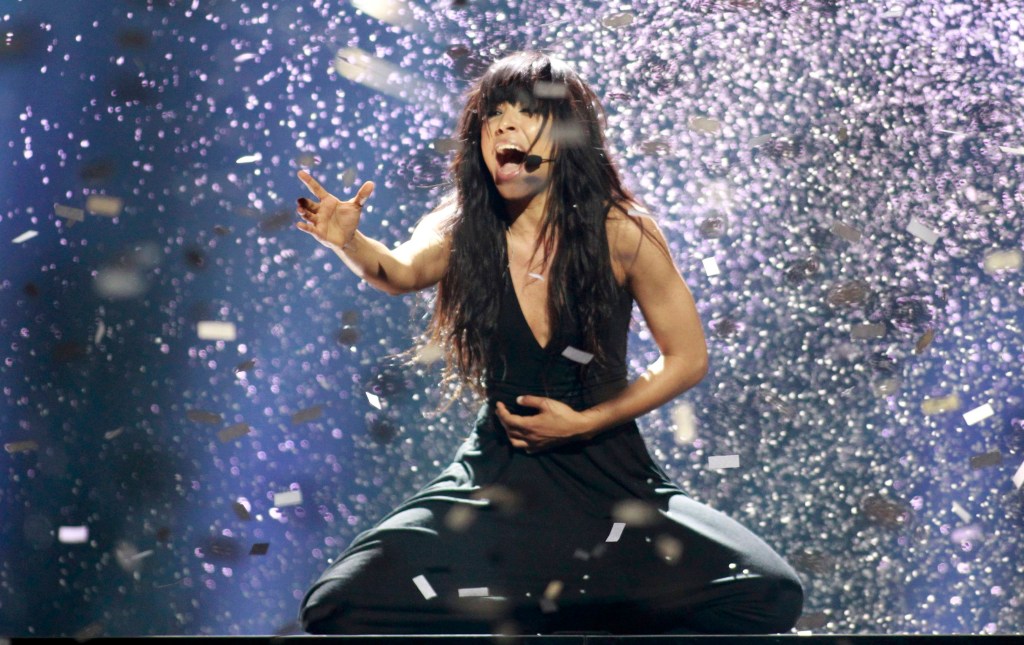
The winner was Sweden with the song Euphoria, performed by Loreen and written by Thomas G:son and Peter Boström. The song won both the jury vote and televote and received 372 points out of a maximum of 492. Russia, Serbia, Azerbaijan and Albania rounded out the top five, with Albania achieving their best result to date. Out of the Big Five countries, Germany, Italy and Spain all managed to rank within the top 10, finishing eighth, ninth and tenth, respectively.
The lead-up to the contest was met with political concerns and protests surrounding the host country, including its human rights record and allegations by advocacy groups that Baku was carrying out forced evictions in the construction of the contest’s venue, along with objections to the contest’s presence by Iranian officials – who felt that the event was anti-Islamic because it was, according to them, a gay parade.
Today the 45th edition of the annual Eurovision Song Contest 2000 took place in Stockholm, Sweden, following the country’s victory at the 1999 contest with the song “Take Me to Your Heaven” by Charlotte Nilsson. Organised by the European Broadcasting Union (EBU) and host broadcaster Sveriges Television (SVT), the contest was held at the Globe Arena. The contest was presented by Swedish television presenters Kattis Ahlström and Anders Lundin.
Twenty-four countries took part in the contest. Latvia participated for the first time, while Slovakia, Greece and Hungary decided not to compete, citing financial reasons. Finland, Macedonia, Romania and Switzerland returned after their relegation from the previous edition. Russia also returned, after their last participation in 1997. Meanwhile, Bosnia and Herzegovina, Lithuania, Poland, Portugal and Slovenia were relegated due to having the lowest average scores over the previous five editions.
The winner was Denmark with the song “Fly on the Wings of Love”, performed by the Olsen Brothers and written by the oldest brother Jørgen Olsen. This was Denmark’s second victory in the contest, following their win in 1963 almost 4 decades earlier. Russia, Latvia, Estonia and Germany rounded out the top five. Both Russia and Estonia achieved their best result in the contest up to this point, while Latvia achieved the best placing for a debuting country since Poland’s second-place finish in 1994. On the day of their victory, Jørgen Olsen was 50 years and 61 days of age, making him the oldest artist yet to win the contest. The combined ages of the Olsen Brothers make them the oldest aged act ever to win the contest.
Sponsored by Microsoft, the contest was also broadcast in Australia, Canada, Japan, the United States, and via the Internet for the first time.
In the Netherlands, NOS decided to take the contest off air halfway through because of the Enschede fireworks disaster that happened earlier that day, so it could use the channel for continuous news broadcasts. Later, NOS declared that it was both for practical reasons as well as because they found it “inappropriate to broadcast a light entertainment programme on the night of such a catastrophic event”. As a result, televoting had to be suspended and the Dutch votes were given by a stand-by jury instead. The contest was later rebroadcast in full on 12 June 2000.
Today was a warm, almost tropical day in the Netherlands. We spent the day on the beach in Den Helder and heard about the fireworks disaster on our little transistor radio. In the evening, back home in Almere, we continued to watch the broadcast via the BBC, after the NOS took the contest off the air.
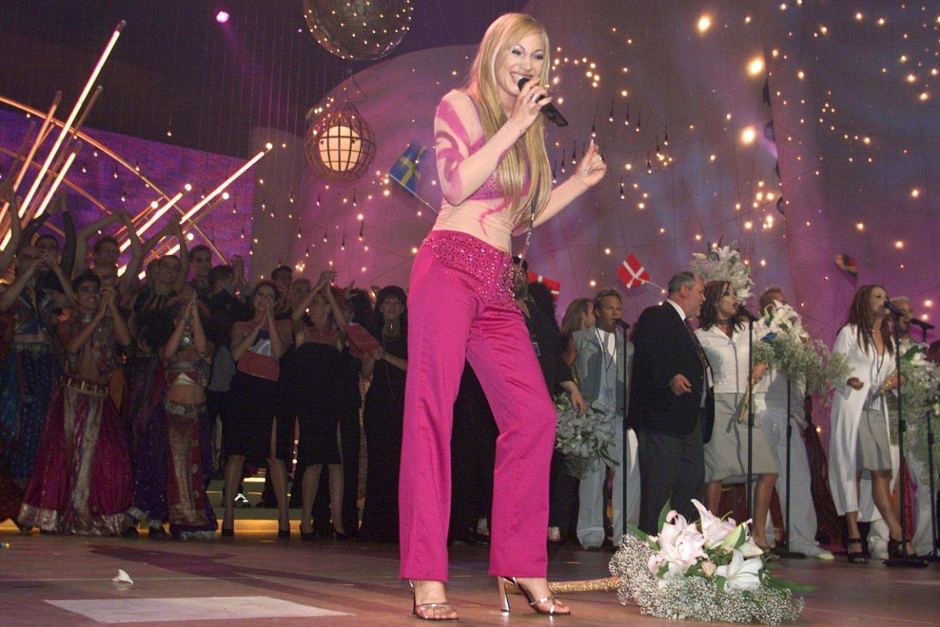
Today the 44th edition of the annual Eurovision Song Contest 1999 was held at the International Convention Centre in Jerusalem, Israel. Organised by the European Broadcasting Union(EBU) and host broadcaster Israel Broadcasting Authority (IBA), the contest was held in the country following its victory at the 1998 contest with the song Diva by Dana International, and was presented by Dafna Dekel, Yigal Ravid and Sigal Shachmon.
Twenty-three countries participated in the contest. Finland, Greece, Hungary, Macedonia, Romania, Slovakia, and Switzerland, having participated in the 1998 contest, were absent due to being relegated after achieving the lowest average points totals over the past five contests or by actively choosing not to return. Meanwhile Austria, Bosnia and Herzegovina, Denmark, and Iceland returned to the contest, having last participated in 1997, while Lithuania made its first contest appearance since 1994.
For the first time since the 1976 contest the participants had full freedom to perform in any language, and not simply that of the country they represented. This led to a marked increase in the number of entries which were performed in English. Additionally, the rules were modified to make the orchestra a non-obligatory feature of the contest of which organising broadcasters were free to opt out. IBA chose not to provide an orchestra, with all entries subsequently being performed with backing tracks, and no orchestra has been included as part of the competition since.
The winner was Sweden with the song Take Me to Your Heaven, composed by Lars Diedricson, written by Gert Lengstrand and performed by Charlotte Nilsson. Iceland, Germany, Croatia, and Israel rounded out the top five, with Iceland achieving its best ever result and Croatia equalling its previous best.
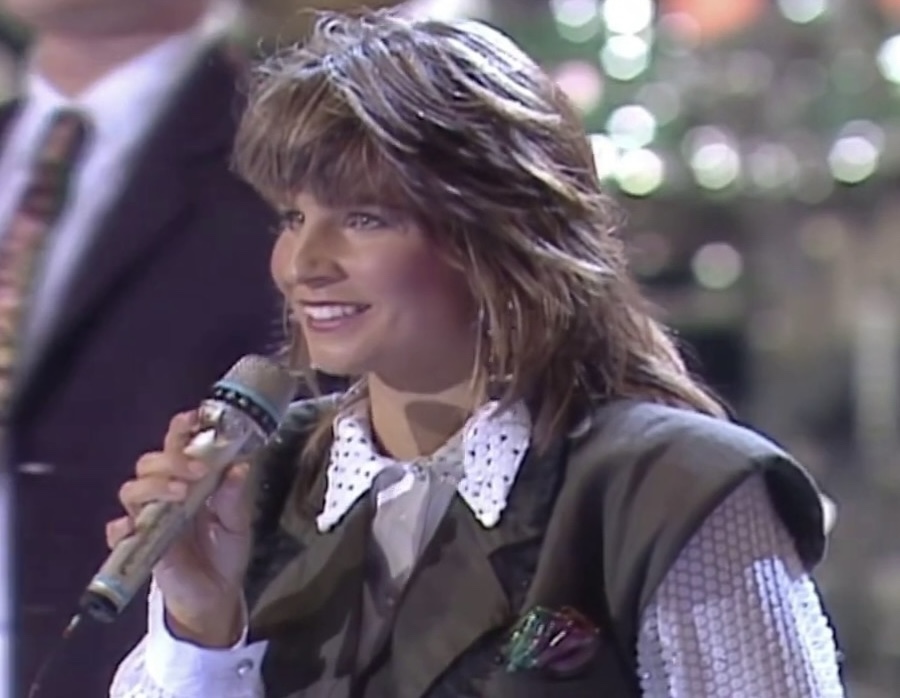
Yesterday the 37th edition of the annual Eurovision Song Contest was held on 9 May 1992 at the Malmö Isstadion in Malmö, Sweden. Organised by the European Broadcasting Union (EBU) and host broadcaster Sveriges Television (SVT), and presented by Lydia Capolicchio and Harald Treutiger, the contest was held in Sweden following the country’s victory at the 1991 contest with the song Fångad av en stormvind by Carola.
Twenty-three countries participated in the contest – a new record number of participating countries – with the Netherlands returning to the contest following a one-year break to join the twenty-two countries which had participated in the previous year’s event.
The winner was Ireland with the song Why Me, written by Johnny Logan and performed by Linda Martin. This marked Ireland’s fourth contest win, and brought songwriter Logan his third win overall, having previously won the contest in 1980 as singer and in 1987 as both singer and songwriter. The United Kingdom, Malta, Italy, and Greece also placed in the top five, with the United Kingdom recording its thirteenth second-place position and Malta and Greece achieving their best ever results in the contest.
Today the 36th edition of the annual Eurovision Song Contest was held at Stage 15 of the Cinecittà Studios in Rome, Italy. Organised by the European Broadcasting Union (EBU) and host broadcaster Radiotelevisione italiana (RAI), and presented by Gigliola Cinquetti and Toto Cutugno, the contest was held in Italy following the country’s victory at the 1990 contest with the song “Insieme: 1992” by Toto Cutugno.
Twenty-two countries participated in the event: Malta made its first Eurovision Song Contest appearance in sixteen years, having last participated in 1975, while the Netherlands decided not to participate due to the date of this year’s event coinciding with the country’s annual Remembrance of the Dead commemorations. It was also the first time that Germany was represented as a single state following the reunification of East and West Germany.
For the first time since 1969 the contest resulted in a draw for first place, with both France and Sweden being awarded the same number of points. The contest’s tie-break procedure was implemented for the first time in its history, which resulted in Sweden being declared the winner due to their entry, “Fångad av en stormvind”, written by Stephan Berg and performed by Carola, having received a greater number of top scores from the other competing countries than the French entry; it was Sweden’s third contest victory overall. Alongside France, Israel, Spain and Switzerland rounded out the top five countries.
Today the 30th edition of the annual Eurovision Song Contest 1985 took place in Gothenburg, Sweden, following the country’s victory at the 1984 contest with the song Diggi-Loo Diggi-Ley by Herreys.
Organised by the European Broadcasting Union(EBU) and the host broadcaster Sveriges Television (SVT), the contest was held at the Scandinavium on 4th May 1985. It was hosted by previous Swedish contestant Lill Lindfors.
The Netherlands was absent in 1985 due to the date of the contest coinciding with the Dutch Remembrance of the Dead.
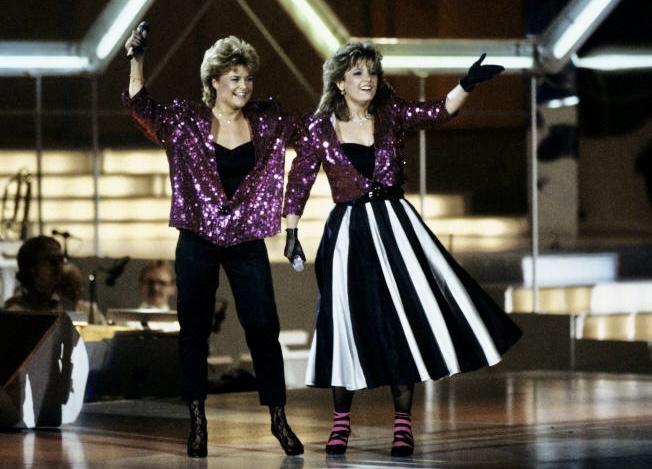
Nineteen countries participated in the contest, with Norway winning the contest for the first time with La det swinge by Bobbysocks!
Tonight the 29th edition of the annual Eurovision Song Contest took place in Luxembourg City, Luxembourg, following the country’s victory at the 1983 contest with the song Si la vie est cadeau by Corinne Hermes. Organised by the European Broadcasting Union (EBU) and host broadcaster Radio Télévision Luxembourg(RTL), the contest was held at the Théâtre Municipal on 5 May 1984 and was hosted by Luxembourgish multimedia personality Désirée Nosbusch, who was only 19 years at the date, making her the youngest presenter in adult Eurovision history.
Nineteen countries took part in the contest. Israel did not enter due to it conflicting with the country’s Yom HaZikaron holiday again. Greece was also absent. On the other hand, Ireland, who had not participated the previous year, returned this year.
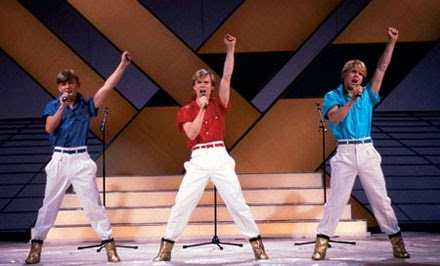
The winner was Sweden with the song Diggi-Loo Diggi-Ley performed by Herreys. This was the first winning song in Swedish, as ABBA had performed Waterloo in English when they won in 1974. Richard and Louis Herrey became the first teenage males to win Eurovision and as of 2023 remain the youngest ever adult Eurovision male winners, being 19 years and 260 days and 18 years and 184 days of age respectively.
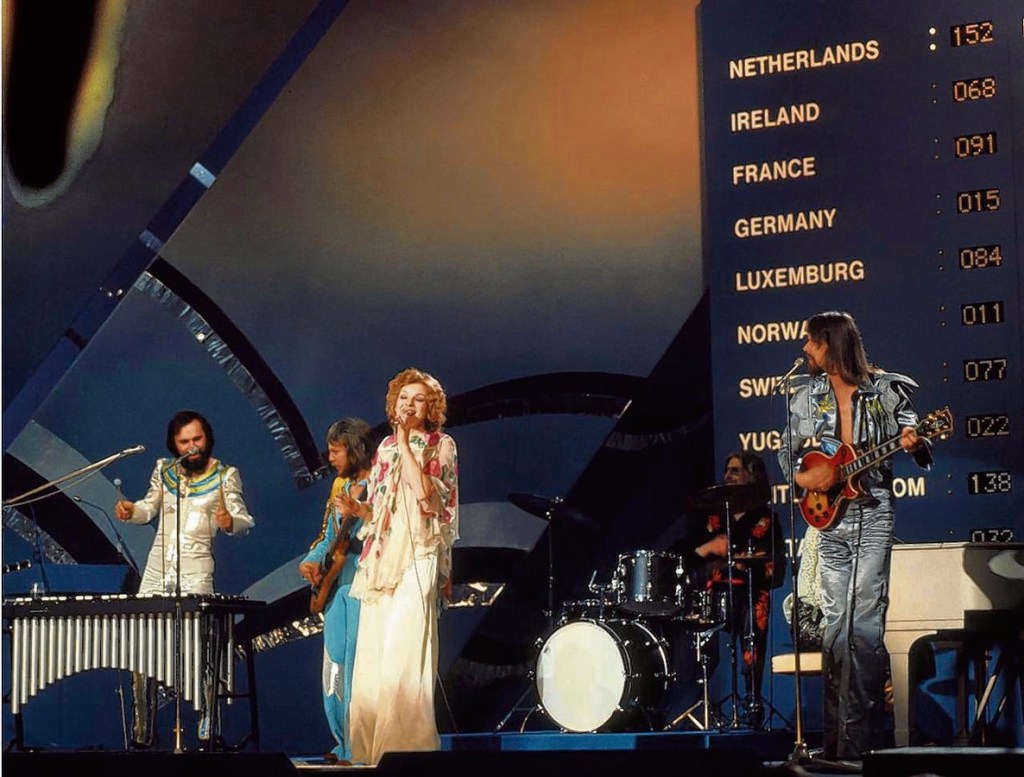
The Eurovision Song Contest 1975 was the 20th edition of the annual Eurovision Song Contest. It took place in Stockholm, Sweden, following the country’s victory at the 1974 contest with the song Waterloo by ABBA. Organised by the European Broadcasting Union(EBU) and host broadcaster Sveriges Radio(SR), the contest was held at Stockholmsmässan on this day in 1975, and was hosted by Swedish television director Karin Falck. It was the first time that the contest had taken place in Sweden.
Nineteen countries participated in the contest, beating the previous record of eighteen, that was first set in the 1965 edition. France and Malta returned after their one-year and two-year absences, respectively. Turkey made its debut, while Greece decided not to enter after its debut the year prior.
The winner of the contest was the Netherlands who won with the song Ding-A-Dong, performed by Teach-In, written by Will Luikinga and Eddy Ouwens, and composed by Dick Bakker. The country would not win again until 2019.
On this day in 1974, the 19th edition of the annual Eurovision Song Contest 1974 was held in Brighton, United Kingdom, and was organized by the European Broadcasting Union (EBU) and host broadcaster British Broadcasting Corporation(BBC). The UK agreed to host the event after Luxembourg, having won in both 1972 and 1973, declined to host it for a second successive year on the grounds of expense. The contest was held at the Brighton Dome on 6 April 1974 and was hosted by Katie Boyle for the fourth and final time (having hosted the 1960, 1963 and 1968 editions).
Seventeen countries took part in the contest, with France being absent and Greece competing for the first time this year.
The winner was Sweden with the song Waterloo, performed by ABBA, who would later go on to become one of the best-selling acts in pop music history.








 euro-vision.blog