Statement EBU

Jean Philip De Tender, Deputy Director General of the EBU, says: “The European Broadcasting Union acknowledges the depth of feeling and the strong opinions that this year’s Eurovision Song Contest – set against the backdrop of a terrible war in the Middle East – has provoked. We understand that people will want to engage in debate and express their deeply held views on this matter. We have all been affected by the images, stories and the unquestionable pain suffered by those in Israel and in Gaza.

However, we wish to address the concerns and discussions surrounding this situation, especially the targeted social media campaigns against some of our participating artists.

The decision to include any broadcaster, including the Israeli’ broadcaster Kan, in the Eurovision Song Contest is the sole responsibility of the EBU’s governing bodies and not that of the individual artists. These artists come to Eurovision to share their music, culture, and the universal message of unity through the language of music.

The EBU has previously explained the reasoning for the inclusion of KAN and the differences between them as an independent broadcaster and previous participants who were excluded. Constructive debate is a positive consequence of such decisions.

However, while we strongly support freedom of speech and the right to express opinions in a democratic society, we firmly oppose any form of online abuse, hate speech, or harassment directed at our artists or any individuals associated with the contest. This is unacceptable and totally unfair, given the artists have no role in this decision.

The EBU is dedicated to providing a safe and supportive environment for all participants, staff, and fans of the Eurovision Song Contest. We will continue to work closely with all stakeholders to promote the values of respect, inclusivity, and understanding, both online and offline.

We urge everyone to engage in respectful and constructive dialogue and support the artists who are working tirelessly – on what is a music and entertainment show – to share their music with the world.”

De Russen!

Velen in mijn omgeving zijn het helemaal niet met mij eens, maar ik vind de inzending van Rusland voor het Eurovisie Song Festival juist heerlijk (vaak afgespeeld in iTunes). Een heerlijk relaxt voortkabbelend liedje met een lieve tekst en ook heel relaxt uitgevoerd. Hoe de andere landen eind deze maand zullen stemmen weet ik (nu nog) niet, maar van mij het onderstaand lied door naar de finale op 29 mei.

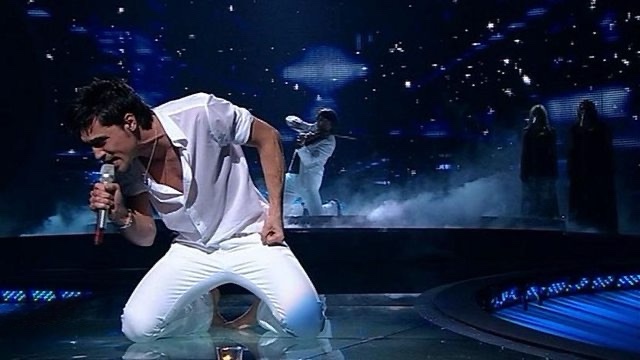
In onderstaande clip zie je heel even de winnaars van vorig jaar (Alexander Rybak) en het jaar er voor (Dima Bilan). Beneden het onderstaand filmpje vind je de lyrics van ‘Lost & Forgotten’. Zing maar mee..

Would you believe, Lord of Mercy?
Would you be so good, Lord?
I wanna love her now
And I wanna feel that now with all…
All of those kisses and sweet embraces

Here am I, lost and forgotten
For this cruel, cruel time
When I’m first time in love
Now that is why
Now that is why I sing, Lord of Mercy
And I hope now that you hear me

What are you doing man?
I’m looking at her photos
What should I do with them?
Drop them to the fire
Oh, yes, yes, I’m gonna burn them now
‘Cause I have to forget her now with all…
All of those kisses and sweet embraces

Here am I, lost and forgotten
For this cruel, cruel time
When I’m first time in love
Now that is why
Now that is why I sing, Lord of Mercy
And I hope now that you hear me

Here am I, lost and forgotten
For this cruel, cruel time
First time in love
Now that is why
Now that is why I sing, Lord of Mercy
And I hope now that you hear me
Oh, bring her back to me

Eurovision 2009

This week the 54th edition of the annual Eurovision Song Contest took place in Moscow, Russia, following the country’s victory at the 2008 contest with the song Believe by Dima Bilan. Organised by the European Broadcasting Union (EBU) and host broadcaster Channel One (C1R), the contest was held at the Olimpiysky Arena, and consisted of two semi-finals on 12 and 14 May, and a final on 16 May 2009. The semi-finals were presented by Russian model Natalia Vodianova and television presenter Andrey Malakhov, while the final was presented by Russian television presenter Ivan Urgant and former Russian contestant Alsou Abramova, becoming the first and to date only time that two different sets of presenters had hosted the semi-finals and finals.

Forty-two countries participated in the contest, down one from the record forty-three the year before. Slovakia returned to the contest for the first time since 1998, while San Marino did not enter due to financial issues. Latvia and Georgia originally announced their intention not to participate, but it was later stated by the EBU that both countries would participate. However, Georgia later decided to withdraw after the EBU rejected its selected song as being a breach of the contest’s rules.

Thirty-seven countries participated in one of the two semi-finals of the contest, with the Big Four countries (France, Germany, Spainand the United Kingdom) and the host (Russia) pre-qualified for the final. In addition to those pre-qualified, the final also included the ten selected countries from each semi-final, making a total of twenty-five participants.

A discussion on changes to the format of the 2009 Eurovision Song Contest had taken place at an EBU meeting in Athens, Greece in June 2008 where a proposal was made that could have resulted in the Big Four losing their automatic place in the final of the contest. However, it was confirmed that the Big Four countries would continue to automatically qualify for the final at the 2009 contest.

Host broadcaster Channel One presented the sub-logo and theme for the 2009 contest on 30 January 2009. The sub-logo is based upon a Fantasy Bird, which can be used with many colours. As in previous years, the sub-logo was presented alongside the generic logo. 2009 is the only year since 2002 without a slogan.

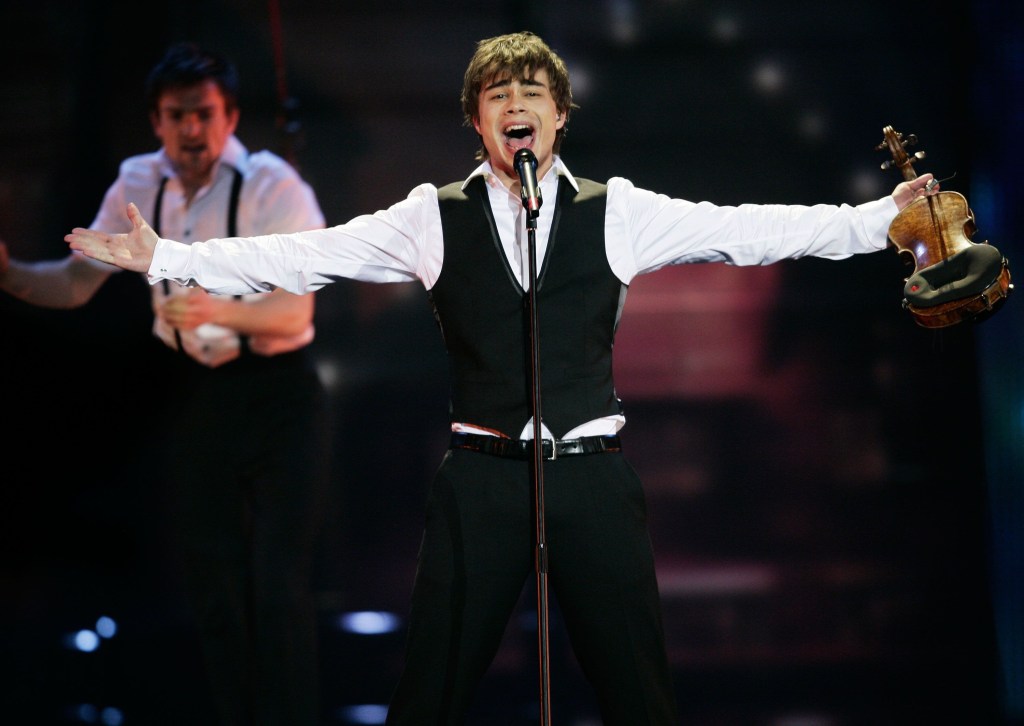
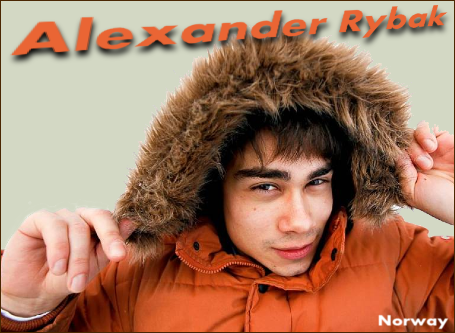
The winner was Norway with the song Fairytale, performed and written by Alexander Rybak. The song won both the jury vote and televote and received 387 points out of a possible 492, at the time the highest total score in the history of the contest. Iceland, Azerbaijan, Turkey and the United Kingdom rounded out the top five, with the latter achieving its best placing since 2002. Iceland’s second-place finish was the country’s best placing in a decade.

After criticism of the voting system in 2007, changes in the voting procedure were finally made prior to this contest, with the re-introduction of a national jury alongside televoting for the final, while the format of the semi-finals remained the same.

Voor(spelling)ronde

ESC LOGO

Het Songfestival is weer ouderwets retro en vintage. Afgelopen week ging er geen dag voorbij of er viel wel iets te melden over onze Toppers in Moskou. Viel de afgelopen jaren het Eurovisie Songfestival niet meer op en trokken de Nederlanders de schouders op als men vroeg wie er voor Nederland afgevaardigd was, nu is dat anders. Schandalen en tragedies zijn weer aan de orde van de dag. Het Eurovisie Songfestival is weer op de kaart gezet. Nu Nederland nog door naar de finale!

Over een half uur begint de tweede halve finale en nu nog even snel een voorspelling doen. Eens zien of mijn muzikale smaak nog gelijk is aan die van de gemiddelde Europeaan. Ik ga voor en hoop vooral dat de volgende tien landen naar de finale door gaan: Polen, Noorwegen, Cyprus, Denemarken, Hongarije, Azerbeidzjan, Griekenland, Litouwen, Oekraïne en dan toch Nederland.

Sakis2

Glazen Bol

ESC LOGO

De NOS zal haar medewerking aan de finale van het Eurovisiesongfestival in Moskou heroverwegen, als de Gay Pride die zaterdag in de Russische hoofdstad plaats heeft, wordt neergeslagen. Dat viel dinsdag op te maken uit antwoorden van cultuurminister Ronald Plasterk op vragen uit de Tweede Kamer. De Nederlandse bijdrage, geleverd door De Toppers, moet natuurlijk wel eerst de finale halen. Eerder dreigde deelnemer Gordon in het geval van een finaleplaats en antihomogeweld niet te zullen zingen.

Boris van der Ham (D66) kaartte de zaak aan en vond bij Plasterkveel begrip. De bewindsman herinnerde zich beelden van een eerderehomodemonstratie die in Rusland in elkaar werd geslagen: ”Gruwelijk!”. Hij zal de zorg aan de Russische ambassadeur in Nederland overbrengen, zijnRussische cultuurcollega aanspreken en staatssecretaris FransTimmermans vragen de kwestie te berde te brengen tijdens eenbijeenkomst over homorechten deze week in Parijs. bron

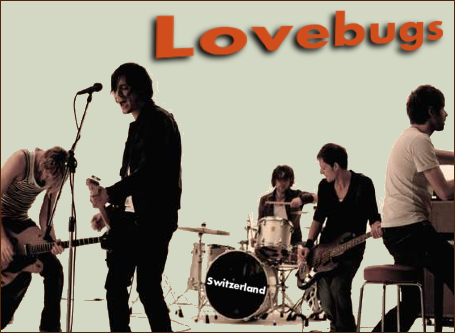
Laten we de dingen positief benaderen en er van uit gaan dat èn de Toppers doorgaan naar de finale èn dat de zaterdag de Gay Pride in Moskou vredelievend door zal gaan. Over een half uur begint de eerste halve finale en ik denk (en hoop) dat de volgende tien landen naar de finale door gaan: Zweden, Zwitserland, Turkije, Israel, IJsland, Roemenië, Finland, Portugal, Malta en Bosnië Herzegovina.

Lovebugs

€-Visie

ESC LOGO

Waar ik vroeger met een pen plus schrijfblokje voor de buis zat te schrijven en de liedjes van het Eurovisie Songfestival voor het eerst hoorde en zag, kan ik vandaag de dag ruim van te voren weten wie er voor welk land mag optreden. Toen ik nog een mini-dray was beoordeelde/veroordeelde ik de deelnemers op wat ik toen pas op de buis kreeg voorgeschoteld.

Sinds een week heb ik de dubbel CD van alle liedjes 2009 in huis en kan zo langzaamaan wennen aan de 42 (!) deelnemers. Er zitten afschuwelijke dingen tussen, maar ook liedjes waarvan ik denk: ‘Hmm, zo slecht nog niet.’ Zo vind ik het nummer ‘I Dont Wanna Leave‘ van Polen een mooie ballad, maar toen ik de uitvoering op YouTube zag, was ik toch minder enthousiast. Het gaat tegenwoordig tenslotte ook om de act.

In de linkerkolom staat sinds vandaag een Google-overzicht. Hierop staan de landen in volgorde van populariteit. Echter niet om het liedje of act, maar om het aantal zoekopdrachten in Google. Bij de bookmakers zal er zeker een andere volgorde te zien zijn. Ik ben overigens benieuwd hoe ‘onze’ Toppers het volgende week zullen doen. Nu ze van die kitscherig lamp-kostuums hebben aangeschaft, maken ze wellicht meer kans dan voorheen. Ze staan vandaag net niet in de top 10 van de minst succesvolle deelnemers bij de bookmakers..

Alexander Rybak

Eurovision 2008

This week the 53rd edition of the annual Eurovision Song Contest took place in Belgrade, Serbia, following the country’s victory at the 2007 contest with the song Molitva by Marija Šerifović. Organised by the European Broadcasting Union (EBU) and host broadcaster Radio Television of Serbia (RTS), the contest was held at the Belgrade Arena, and (for the first time) consisted of two semi-finals on 20 and 22 May, and a final on 24 May 2008. The three live shows were presented by Serbian television presenter Jovana Janković and musician Željko Joksimović.

Forty-three countries participated in the contest, the highest ever number of participants in the contest beating the record of forty-two set the year before. Azerbaijan and San Marino participated for the first time, while Austria did not participate, mainly due to questions on the semi-final organisation as well as the politicization of the contest.

At a press conference in Helsinki in May 2007, Svante Stockselius, executive supervisor of the contest for the EBU, announced that the competition’s format may be expanded to two semi-finals in 2008 or 2009. On 28 September 2007 it was announced that the EBU had approved the plan of hosting two semi-finals in 2008.

According to the executive supervisor of the contest Svante Stockselius, there were multiple ideas on how the two semi-finals would be organized, such as prerecording both semi-finals and airing them simultaneously on Thursday 22 May, with each broadcaster airing the semi-final their country competes or votes in; or prerecording one semi-final, while the other one is held live, and airing them simultaneously on Thursday 22 May, with each broadcaster airing the semi-final their country votes in. In both cases, the results sequences would be held live.

Although originally this option was not being considered due to the additional costs to such a production, it was later decided that the two semi-finals would be held on different days, both live, on Tuesday 20 May and 22 May 2008.

The winner was Russia with the song Believe, performed by Dima Bilan who wrote it with Jim Beanz. Ukraine, Greece, Armenia and Norway rounded out the top five. Armenia achieved their best result to date this year. Of the Big Four countries Spain placed the highest, finishing sixteenth, while the United Kingdom ended up in last place for the second time in their Eurovision history, after 2003.

The official website, eurovision.tv, streamed national finals for this year’s contest live on ESCTV for the first time. Furthermore, for the first time the winner has been awarded the perpetual glass microphone trophy of the Eurovision Song Contest. The trophy is a handmade piece of sandblasted glass in the shape of a 1950s microphone.