
Today the 28th edition of the annual Eurovision Song Contest was held in Munich, West Germany, following the country’s victory at the 1982 contest with the song Ein bißchen Frieden by Nicole. Although this was Germany’s first victory, 1983 was the second time Germany had hosted the contest, having previously done so in 1957. Organised by the European Broadcasting Union (EBU) and host broadcaster Bayerischer Rundfunk (BR) on behalf of the Arbeitsgemeinschaft der öffentlich-rechtlichen Rundfunkanstalten der Bundesrepublik Deutschland (ARD), the contest was held at the Rudi-Sedlmayer-Halleon and was hosted by German dancer Marlene Charell.
Twenty countries took part this year, with France, Greece and Italy all returning this year, while Ireland decided not to participate.
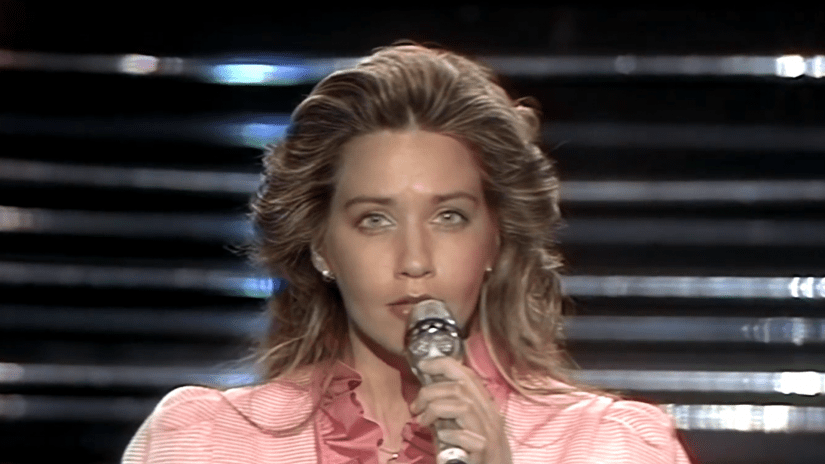
The winner was Luxembourg with the song Si la vie est cadeau by Corinne Hermes, which equalled the record of 5 victories set by France in 1977. This record would in turn be beaten by Ireland in 1994. It was also the second year in a row where the winning entry was performed last on the night and the second year in a row in which Israel won 2nd place. For the third year in a row, at least one country ended up with nul points, and in this case, it happened to be two countries, Spain and Turkey, neither of whom were able to get off the mark.
The 1983 contest was the first to be televised in Australia, via Channel 0/28 (now the Special Broadcasting Service) in Sydney and Melbourne. The contest went on to become popular in Australia, leading to the country’s eventual debut at the 60th anniversary contestin 2015.

 euro-vision.blog