On a Budget

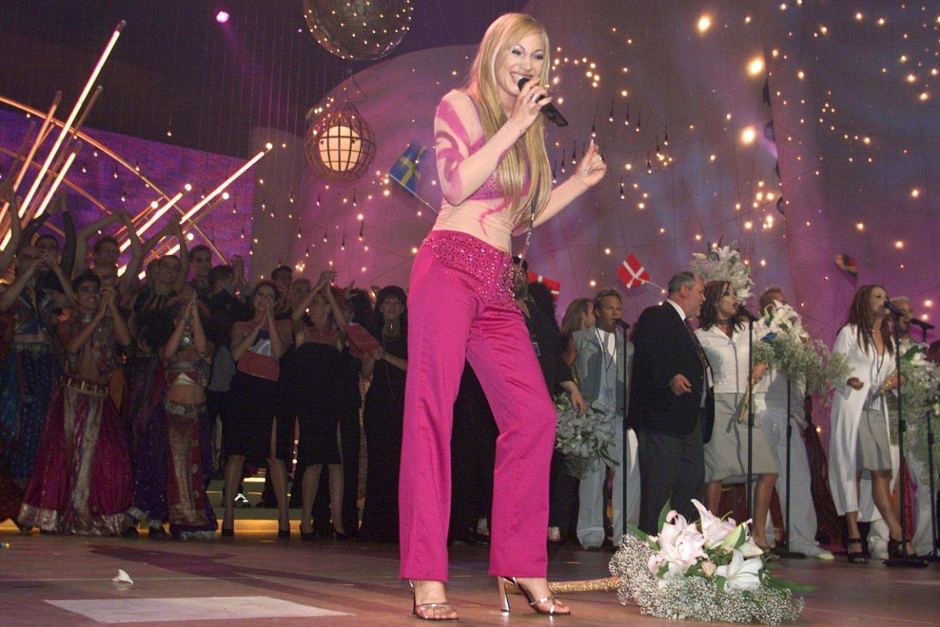
Just a few more days and then it’s finally that time again: the Eurovision Song Contest. And that brings back memories for former participant and presenter Marlayne Sahupala (52). In 1999 she achieved eighth place in Jerusalem with her song One Good Reason. But for that she had to dig deep into her pockets. She says this in an interview in magazine ‘Libelle‘.

Marlayne was 28 years old when she performed for the Netherlands with the song One Good Reason. She had no experience as a solo artist at the time. She thought singing was fine, but she didn’t dare say anything into the microphone. “It was all very awkward and I hated being the center of attention.”

Yet she won the National Song Contest with her song and was able to prepare for the European spectacle in Israel. She says it cost her something. “The organizing broadcaster gave me seven hundred and fifty euros for outfits for me and the background artists. That was tight.” The presenter hardly earned any money herself at the time. The fact that at one point she received requests for performances was her ‘salvation’. “The whole spectacle ultimately cost me quite a lot of money, because I had to pay for all the clothing and expenses myself.”

It seems that her participation has paid off. “Thanks to my participation, I got where I am now,” says Marlayne, who was then allowed to record her solo album in England and was given the opportunity to present Hart van Nederland.

Does she have any advice for Joost Klein? No. “If I do that, he will probably think: Marlayne who? But I am convinced that he will deliver a top performance with his vision and song.”


Eurovision 1999

Today the 44th edition of the annual Eurovision Song Contest 1999 was held at the International Convention Centre in Jerusalem, Israel. Organised by the European Broadcasting Union(EBU) and host broadcaster Israel Broadcasting Authority (IBA), the contest was held in the country following its victory at the 1998 contest with the song Diva by Dana International, and was presented by Dafna Dekel, Yigal Ravid and Sigal Shachmon.

Twenty-three countries participated in the contest. Finland, Greece, Hungary, Macedonia, Romania, Slovakia, and Switzerland, having participated in the 1998 contest, were absent due to being relegated after achieving the lowest average points totals over the past five contests or by actively choosing not to return. Meanwhile Austria, Bosnia and Herzegovina, Denmark, and Iceland returned to the contest, having last participated in 1997, while Lithuania made its first contest appearance since 1994.

For the first time since the 1976 contest the participants had full freedom to perform in any language, and not simply that of the country they represented. This led to a marked increase in the number of entries which were performed in English. Additionally, the rules were modified to make the orchestra a non-obligatory feature of the contest of which organising broadcasters were free to opt out. IBA chose not to provide an orchestra, with all entries subsequently being performed with backing tracks, and no orchestra has been included as part of the competition since.

The winner was Sweden with the song Take Me to Your Heaven, composed by Lars Diedricson, written by Gert Lengstrand and performed by Charlotte Nilsson. Iceland, Germany, Croatia, and Israel rounded out the top five, with Iceland achieving its best ever result and Croatia equalling its previous best.