Eurovision 1988

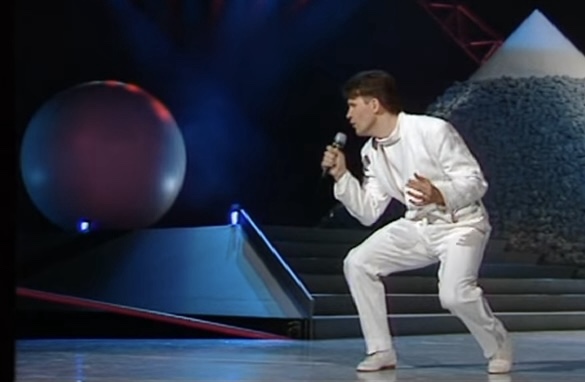
Today the 33rd edition of the annual Eurovision Song Contest took place in Dublin, Ireland, following Johnny Logan’s win at the 1987 contest with the song Hold Me Now. Organised by the European Broadcasting Union (EBU) and host broadcaster Radio Telefís Éireann (RTÉ), the contest was held at the RDS Simmonscourt and was hosted by Irish broadcaster Pat Kenny and the Miss Ireland 1980 Michelle Rocca, marking the first time since the 1979 contest that two presenters had hosted the contest.

Twenty-one countries took part, after an initial plan of twenty-two, as Cyprus’ song was disqualified for breaching the contest’s rules by being published a few years earlier, in an attempt to represent the country at a prior edition of the contest. The Cypriot song had been drawn to be performed 2nd in the running order.

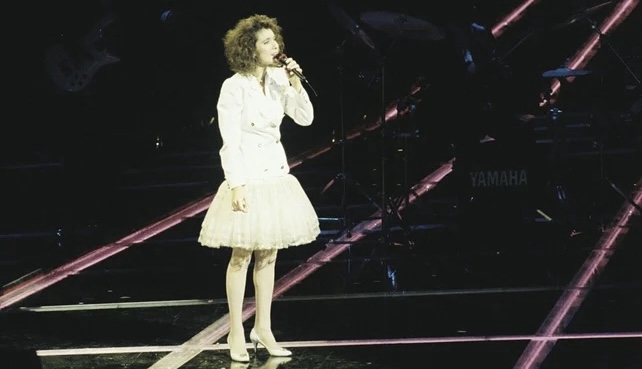
The contest helped launch an international career for two now world-famous artists, the winner for Switzerland Céline Dion and Luxembourg’s representative Lara Fabian. Canadian Céline Dion was a rising star in the French-speaking world at the time of the contest. Shortly afterwards she started recording songs in English to great worldwide success. As Dion, Belgian-Canadian Lara Fabian also achieved a successful career after the contest with becoming established in various countries worldwide, with a mainly French-sung repertoire. The UK entry was written and composed by Julie Forsyth, the daughter of the entertainer Bruce Forsyth who was present. When interviewed afterwards he was particularly annoyed at the Dutch jury not having given a vote to the UK, as they had done some work there.

The winner was Switzerland with the song Ne partez pas sans moi, performed by Canadian singer Céline Dion and composed by Atilla Şereftuğ with lyrics in French by Nella Martinetti. Switzerland beat the United Kingdom by just one point in the last vote to win the title. The victory helped launch Dion’s international career, subsequently leading her to become one of the best-selling artists of all time.
Eurovision 1987

Today the 32nd edition of the annual Eurovision Song Contest took place in Brussels, Belgium, following the country’s victory at the 1986 contest with the song “J’aime la vie” by Sandra Kim. Organised by the European Broadcasting Union (EBU) and host broadcaster Radio-télévision belge de la Communauté française(RTBF), the contest was held at the Centenary Palace on 9 May 1987 (also Europe Day) and hosted by French-Belgian singer Viktor Lazlo.

By 1986, Belgium has participated in the Eurovision Song Contest 30 times since making its debut at the first contest in 1956 along 6 other countries. Before Sandra Kim’s win, Belgium was the only one of the 7 founding countries to have never won the contest and had only twice finished in the top five (with Tonia’s fourth place in 1966 and Jean Vallée’s second place in 1978).

Twenty-two countries took part in the contest with Greece and Italy returning to the competition after their absences the previous year. This set the record for the highest number of competing countries up until that point.

The winner was Ireland with the song “Hold Me Now” by Johnny Logan, who had also won the 1980 contest. He was the first performer to have won the Eurovision Song Contest twice.

Eurovision 1981

On this day the 26th edition of the annual Eurovision Song Contest was held in Dublin, Ireland, following the country’s victory at the 1980 contest with the song “What’s Another Year” by Johnny Logan. Organised by the European Broadcasting Union (EBU) and host broadcaster Radio Telefís Éireann (RTÉ), the contest was held at the RDS Simmonscourt and was hosted by Irish television journalist Doireann Ní Bhriain.

Twenty countries participated in the contest, equalling the record of the 1978 edition. Cyprus made their début this year, while Israel and Yugoslavia both returned to the competition, after their one-year and five-year absences, respectively. Morocco and Italy decided not to participate.

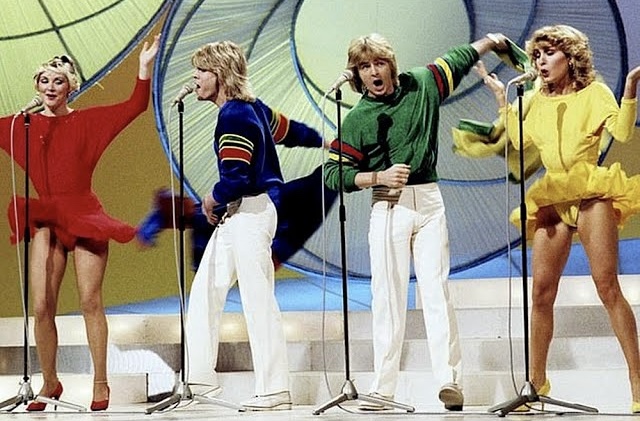
The winner was the United Kingdom with the song Making Your Mind Up, performed by Bucks Fizz, written by Andy Hill and John Danter. Germany finished second for the second consecutive year, while France finished third. Norway again finished last, with its third nul points in the contest.

Bucks Fizz’s win launched the group’s hugely successful international career. Their performance on the Eurovision stage included a dance-routine where the two male members ripped the skirts off the two female members only to reveal mini-skirts, and today stands as one of the most defining moments in the contest’s history.

Eurovision 1980

Today the 25th edition of the annual Eurovision Song Contest was held in The Hague, Netherlands, and was organised by host broadcaster Nederlandse Omroep Stichting (NOS) – which agreed to stage the event after Israel, having won in both 1978 and 1979, declined to host it for a second successive year – and the European Broadcasting Union (EBU). The contest was held at the Nederlands Congresgebouw and was hosted by Dutch actress Marlous Fluitsma, although each song was introduced by a presenter from the participating nation (in some cases, this was the same person providing the commentary).

Nineteen countries took part this year, with Monaco and the previous year’s winner Israel deciding not to participate, and Turkey returning. Morocco, notably, made its only appearance in the contest.

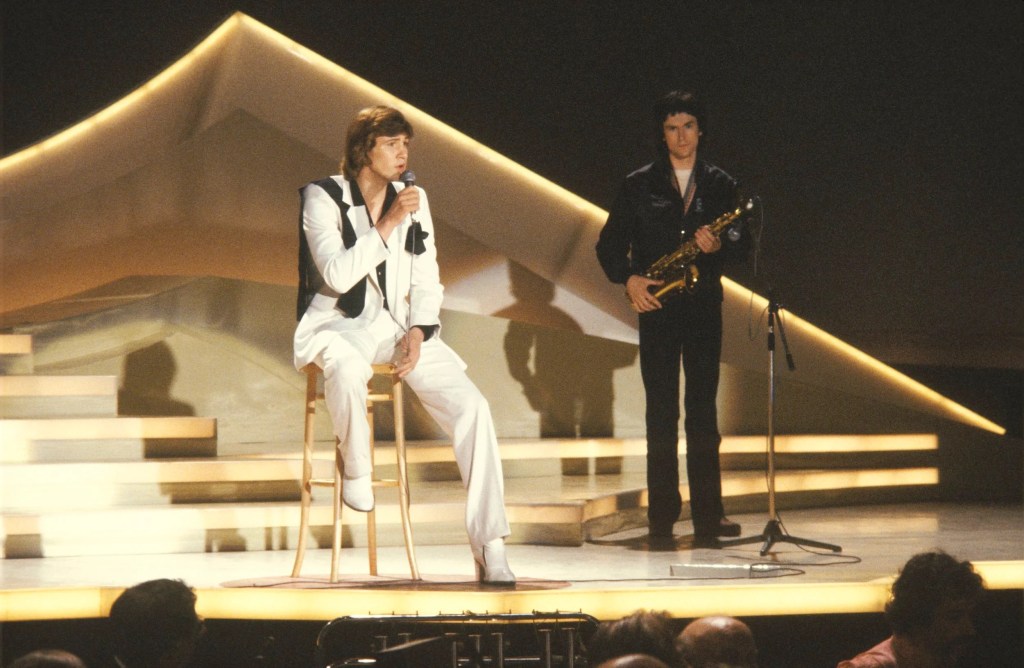
The winner was Ireland with the song What’s Another Year, sung by Johnny Logan and written by Shay Healy.