Belgium Questions Participating

The VRT has doubts about a future participation in the Eurovision Song Contest. The Belgian broadcaster wants the organizer European Broadcasting Union to provide full transparency about the scoring. The VRT also wants to debate Israel’s participation with all countries.

“We have no indications that the scoring was not done correctly, but we do ask the EBU for full transparency,” says a spokesperson for the VRT. “The question is mainly whether the current voting system guarantees a fair reflection of the opinions of the viewers and listeners.” Twenty votes can be cast per person, which according to the broadcaster could lead to manipulation.

The statement from the Belgian broadcaster comes after the Spanish public broadcaster RTVE asked the European Broadcasting Union (EBU) to investigate the votes of viewers. RTVE finds it strange that Israel, despite protests against the country’s participation in the Song Contest, received twelve points from the Spanish public. Both the Belgian and Spanish professional juries gave Israel zero points.

The EBU states that the voting procedure was correct. “It is important to emphasize that the Eurovision Song Contest voting procedure is among the most advanced in the world. In each participating country, the result is carefully checked and verified by a large team to rule out suspicious or irregular voting patterns,” EBU boss Martin Green told the Belgian news agency Belga.

Green says that he takes the concerns of the broadcasters seriously in the evaluation of the last edition.

RTVE also wants a broad debate about Israel’s participation. This initiative is supported by the VRT. “We at VRT have noticed that the Song Contest as it is currently organized is less and less a unifying and apolitical event,” says the VRT. “It is increasingly at odds with the original standards and values ​​of the event and those of the public broadcaster.”

The VRT says that it works well with the EBU on “many levels”. But without a clear answer to his concerns, the Belgian broadcaster questions future participation.

The VRT cannot decide on participation in the next edition. Then it is the turn of the French-language Belgian broadcaster RTBF, with which the VRT alternates, to decide on participation in the event.

Israel came second in the singing competition on Saturday behind Austria. Israel’s participation has been controversial since the 2024 edition due to the war in Gaza. The EBU defends Israel’s participation because, according to the organization, the Eurovision Song Contest is a “non-political music event”. Source: nu.nl
Unpleasantness

What should have been a fun musical party turned out to be a debacle for the Netherlands. Today it turned out that the Netherlands had already reported an unsafe atmosphere before the disqualification. Ireland, Lithuania and Norway also spoke out critically.

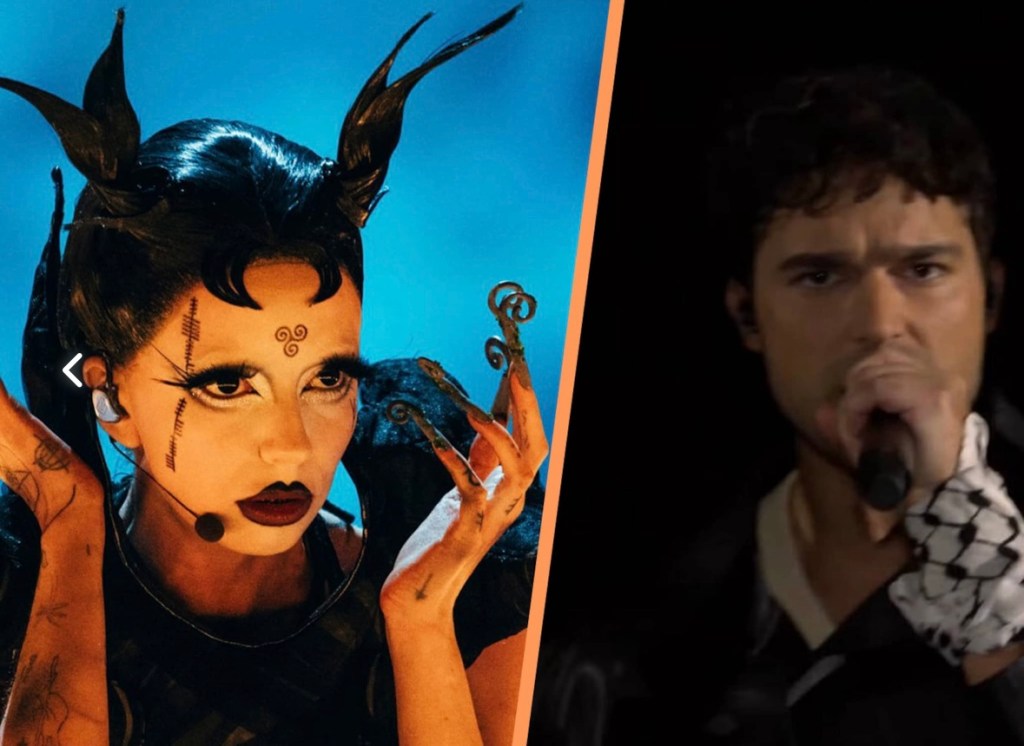
“Fuck the EBU!” These are not just the words of Eurovision commentator Cornald Maas after Joost Klein’s disqualification, they are also the words used by Irish artist Bambie Thug after the final of the Eurovision Song Contest. They both addressed the organizer of the festival, the European Broadcasting Union (EBU).

After the final, the Lithuanian entry wrote on social media that it would have been better if the entire party had been stopped after the first semi-final and now the Norwegian band Gate is also speaking out critically. “Withdrawing was an option until the last minute. We ultimately had constructive discussions with the EBU and that was just good enough for us to continue.”

Switzerland, the United Kingdom, Ireland and Portugal are all said to have threatened to withdraw due to the atmosphere behind the scenes, which was described as tense by several participants. On Tuesday it emerged that the Netherlands and Norway were also among the countries that reported the working atmosphere.

When asked, AVROTROS informed nu.nl that it had made an official report of the unsafe atmosphere behind the scenes. They already did that on Friday, when Joost Klein had not yet been disqualified.

The disqualification of Joost Klein may feel like the moment that everything went wrong for the Dutch, but there was already a lot of pressure on the event in the run-up to the Eurovision Song Contest. Israel’s participation made it perhaps the most politically charged edition in the 68 years that the festival has been held.

From the very first Eurovision events, participants were asked for their opinion on Israel’s entry, which sometimes led to emotional moments. After the final, Bambie Thug was crying to journalists because they had experienced so much pressure to ignore political opinions that it no longer felt sincere.

Bambie Thug is also the artist who was commissioned by the organization to remove the word ‘ceasefire’ in old Irish script from their face. The watermelon, painted on the chest of Australia’s entry was overlooked by the organization: the fruit is also seen as a statement of support for the Palestinians. Former participant Eric Saade received an angry response from the EBU after he wore a kaffiya during a performance. The scarf also symbolizes a signal of commitment to Palestine.

Things also went wrong in the commentators’ booths. For example, the Israeli colleague of Cornald Maas and Jacqueline Govaert announced the Irish entry as “the artist who speaks negatively about Israel”. The Irish delegation then filed a complaint with the EBU and the commentator was reprimanded.

The performance of Portuguese singer Iolanda during the final never appeared on social media because she had, among other things, the Palestinian flag painted on her nails. Such a political statement is prohibited according to the rules of the Eurovision Song Contest and therefore the artist could have been disqualified. It is unclear why this did not happen.

The Portuguese broadcaster RTP has not only been critical of the exclusion of Iolanda’s performance on social media, they also find it unacceptable that the EBU used an “anti-booing system” during the semi-final and final. As a result, the booing of the EBU and Israel’s entry was less received by the viewers at home than in the audience.

“For an organization like the EBU and for an organization like RTP and the European public media service, the fight against fake news, misinformation and the manipulation of information is a constant battle. It is unacceptable that this is possible. This method distorts the truth.”

AVROTROS is also critical: “We believe that when a musician performs you should always show what it does to the audience.”

As always, the European Broadcasting Union is difficult to reach, but responded to the angry reactions in an official statement. The organization places the blame mainly on the participating countries themselves.

“We find it very unfortunate that some delegations did not adhere to the rules during the event and during broadcasts. We have spoken to several delegations about incidents that have come to our attention. The EBU continues to engage with the chairmen of delegations and will do an evaluation of this Eurovision Song Contest.”

“In this way we hope to be able to move forward in a positive way, in a way where everyone respects the values of this event. Individual problems will be discussed in a subsequent meeting.” Source: nu.nl

No Participation

Joost Klein is not allowed to participate in the jury show of the Eurovision Song Contest. The investigation into the incident that emerged earlier today has not yet been completed, AVROTROS reports.

AVROTROS informs the Dutch press that the European Broadcasting Union (EBU) has not given permission to participate in the show taking place in the Malmö Arena tonight. The professional jury therefore assesses the performance from the second semi-final.

The EBU is investigating an incident involving Klein. No further details have been shared. According to rumors from the Swedish broadcaster SVT, it concerns a violent incident in which the artist is involved. This has not been confirmed in any way.

The EBU speaks of “discussions” that are still ongoing with broadcaster AVROTROS. It is now unclear when anything will be decided.

Tonight would be an important moment for Klein: half of the points awarded on Saturday evening will already be determined during the jury show. On the evening before the final, professional juries submit their points.

During the rehearsal of the finale it became clear that something was going on around Klein. The artist should have been fifth on stage, but the Netherlands was skipped and rehearsals went straight to Israel. Klein did participate in the flag parade that is part of the opening ceremony.

Belarus was refused to participate in 2021 due to the political connotation of the song that the country wanted to submit. In the 68 years that the Eurovision Song Contest has been taking place, it has never happened that a country has been disqualified during the festival. Source: nu.nl

Investigation Incident

Joost Klein skipped his place in the Eurovision Song Contest rehearsal on Friday afternoon. The European Broadcasting Union is investigating an “incident” involving the artist. It is unclear what is going on.

“We are currently investigating an incident surrounding the Dutch entry. Klein will not rehearse for the time being,” the statement said. The EBU will not comment further.

It is unclear whether Klein will still be allowed to do his rehearsals at a later date. No statements are made in the audience about Klein’s absence.

AVROTROS, the broadcaster that accompanies Klein during the Eurovision Song Contest, was not available for comment. Source: nu.nl.

Largest Police Operation Ever

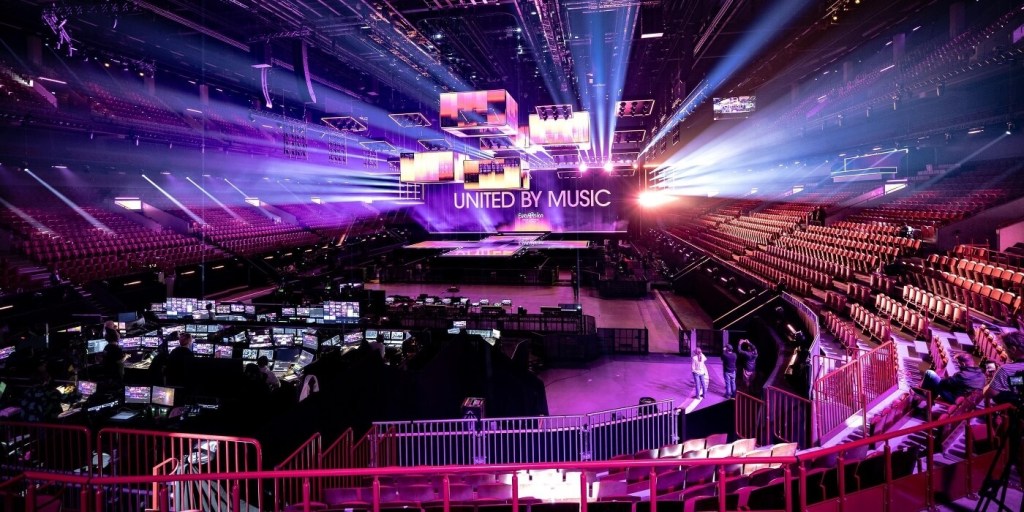
The Eurovision Song Contest is expected to be one of the largest police operations ever in Sweden. Thousands of officers will be deployed to secure the arena and the city of Malmö from May 7 to 11, Swedish broadcaster SVT reports.

Not only will forces from Denmark and Norway be reinforced, the airspace above the city will also be closed. The police take into account incoming danger via drones.

Special equipment is used to remove drones from the air. Agents from the Swedish southern province of Skane cannot be given leave during the Eurovision Song Contest. Malmö already announced earlier this week

that stricter security measures apply during the event. The host city reported that this concerns visible and invisible measures.

Sweden takes demonstrations into account because of Israel’s participation in the Eurovision Song Contest. Protests have taken place in various countries in recent months because Israel is welcome despite the war in Gaza. Organizer European Broadcasting Union (EBU) has repeatedly indicated that the Eurovision Song Contest is a “non-political event”. Source: nu.nl
Security

The Swedish city of Malmö will tighten security measures during the Eurovision Song Contest, you can read on the host city’s website. The measures follow criticism of Israel’s participation and possible protests against it.

“The city, the organizing broadcaster, the police and everyone else involved are doing everything they can to ensure that the event runs safely,” the message reads. “We are taking safety measures throughout the city, with a strong focus on the central locations of the Eurovision Song Contest.”

Police deployment will be increased in and around the city. Bags are also not allowed to be brought to the event. “We have to look out for each other and help each other. That is why it is especially important that everyone follows the instructions of the municipality of Malmö and other authorities.”

Israel’s Eurovision participation has been criticized for some time. Israeli forces have been active in the Gaza Strip since the attack by Hamas on October 7. Thousands of civilians have already been killed. According to critics, Israel therefore does not belong in the Eurovision Song Contest. Organizer European Broadcasting Union (EBU) has repeatedly emphasized that the Eurovision Song Contest is a “non-political event”. Nevertheless, Russia has not been welcome since 2022 due to the invasion of Ukraine.

The Eurovision Song Contest lasts from May 7 to 11. Israel is participating this year with the song Hurricane, sung by singer Eden Golan.

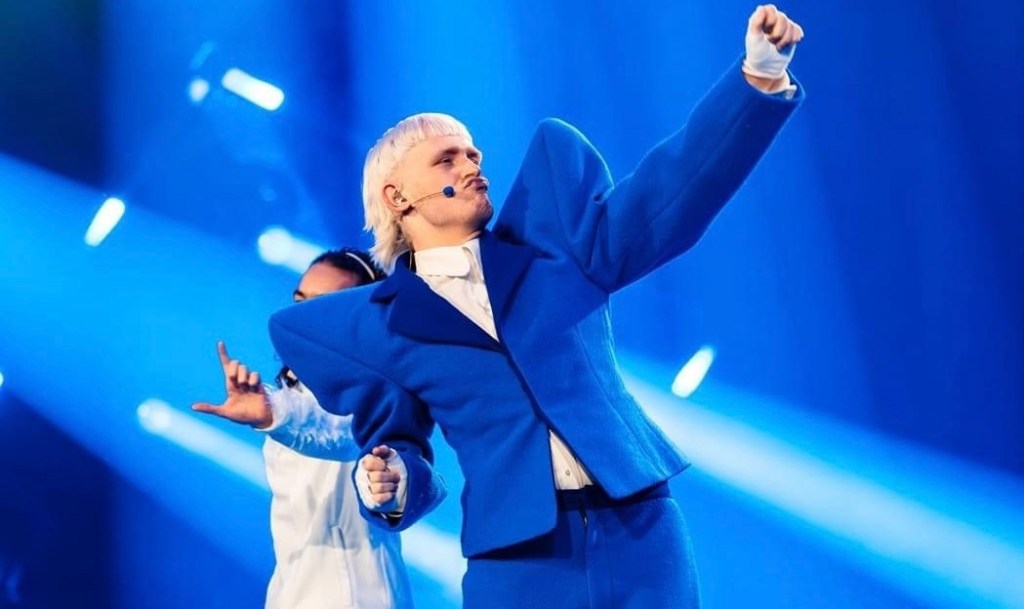
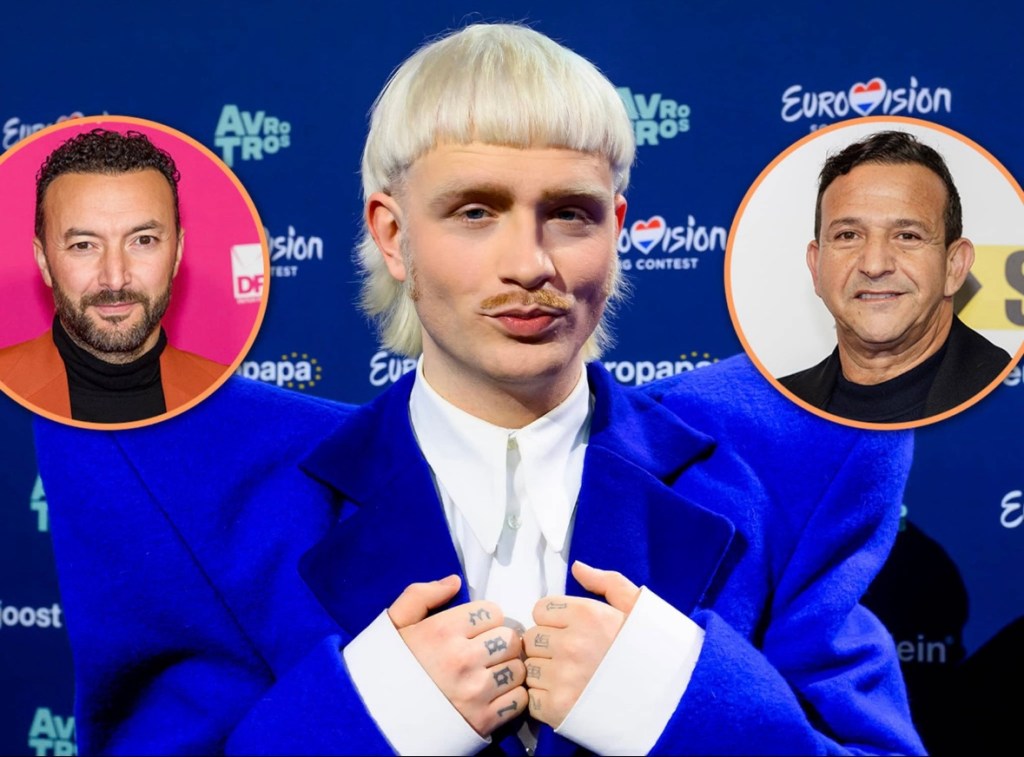
Joost Klein participates on behalf of the Netherlands with the song Europapa. He will play in the second semi-final. The artist was asked earlier this week by Nasrdin Dchar, Najib Amhali and Ramsey Nasr, among others, to boycott the Eurovision Song Contest due to Israel’s participation. “Unfortunately, it’s too big of a dilemma to pass on to a little harlequin like me,” he responded. Source: nu.nl

No Skip

Joost Klein understands “the pain” of the people who asked him in an open letter to boycott the Eurovision Song Contest because of Israel’s participation, despite the war in Gaza.

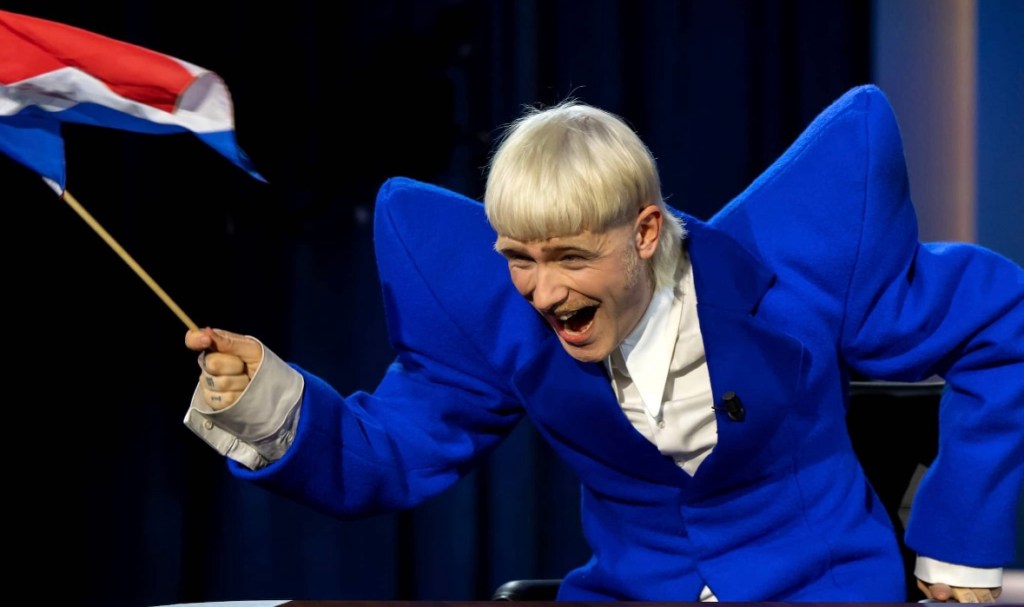
“Unfortunately, it is too big a dilemma to pass on to a little harlequin like me,” Joost said to the press present at AFAS Live in Amsterdam prior to Eurovision in Concert. “If I were a world leader, I would have done something a long time ago, I hope.”

In any case, the singer does not plan to skip the Eurovision Song Contest in Malmö, Sweden next month. “No, I have already booked. I have already signed contracts. The transfer will continue.”

Actors Nasrdin Dchar, Najib Amhali and Ramsey Nasr, among others, signed the open letter to Joost. For Eurovision in Concert, the largest Eurovision pre-party, there will be a demonstration by the pro-Palestinian organizations BDS Netherlands and Rotterdam Palestine Coalition. Source: nu.nl

Withdrawal

Durch artists Najib Amhali and Nasrdin Dchar have called on Joost Klein to withdraw from his participation in the Eurovision Song Contest. Over 250 people with a creative profession signed a letter calling for a boycott due to Israel’s participation.

“While preparations for the Eurovision Song Contest are in full swing, one of the participating countries, Israel, is carrying out a genocide of 2.3 million Palestinians,” the letter reads. Ramsey Nasr, Walid Benmbarek, Jerry Afriyie and Tofik Dibi also signed the letter.

The writers refer to Klein’s Eurovision song Europapa, in which he quotes his father. “It’s a world without borders,” Klein sings. “Your father’s utopia does not exist for Palestinians,” the letter writers respond. They “emphatically” ask Joost to consult himself about his participation in the event, which will take place in Sweden in May.

“The horrors in Gaza touch us deeply,” AVROTROS, the broadcaster responsible for the Dutch participation in the Eurovision Song Contest, responds to the call. “We also hope that there will be an immediate end to the suffering. But the Eurovision Song Contest is an apolitical music festival and not a competition between the governments of countries. This is therefore not the place where this deep-rooted conflict can be resolved.”

The pro-Palestinian organizations BDS Netherlands and Rotterdam Palestine Coalition are organizing a demonstration on Saturday just before Eurovision in Concert in Amsterdam’s AFAS Live. During this pre-party, 30 of the 37 participating countries will perform with their entry. The Israeli delegation is not present. The organization of the demonstration consists of Dutch volunteers and is not linked to the EBU, which organizes the Eurovision Song Contest. The organization previously announced that it feared reactions to the Israeli entry Eden Golan if it came to the concert.

The demonstration will take place on Saturday from 4:30 PM to 7:30 PM on the square between AFAS Live and the Johan Cruijff ArenA in Amsterdam. A similar event was also demonstrated in London last week. In several European countries, artists are being called on not to participate in an event where Israel is also welcome. Source: nu.nl

Statement EBU

Jean Philip De Tender, Deputy Director General of the EBU, says: “The European Broadcasting Union acknowledges the depth of feeling and the strong opinions that this year’s Eurovision Song Contest – set against the backdrop of a terrible war in the Middle East – has provoked. We understand that people will want to engage in debate and express their deeply held views on this matter. We have all been affected by the images, stories and the unquestionable pain suffered by those in Israel and in Gaza.

However, we wish to address the concerns and discussions surrounding this situation, especially the targeted social media campaigns against some of our participating artists.

The decision to include any broadcaster, including the Israeli’ broadcaster Kan, in the Eurovision Song Contest is the sole responsibility of the EBU’s governing bodies and not that of the individual artists. These artists come to Eurovision to share their music, culture, and the universal message of unity through the language of music.

The EBU has previously explained the reasoning for the inclusion of KAN and the differences between them as an independent broadcaster and previous participants who were excluded. Constructive debate is a positive consequence of such decisions.

However, while we strongly support freedom of speech and the right to express opinions in a democratic society, we firmly oppose any form of online abuse, hate speech, or harassment directed at our artists or any individuals associated with the contest. This is unacceptable and totally unfair, given the artists have no role in this decision.

The EBU is dedicated to providing a safe and supportive environment for all participants, staff, and fans of the Eurovision Song Contest. We will continue to work closely with all stakeholders to promote the values of respect, inclusivity, and understanding, both online and offline.

We urge everyone to engage in respectful and constructive dialogue and support the artists who are working tirelessly – on what is a music and entertainment show – to share their music with the world.”

Eurovision 2019

This week the 64th edition of the annual Eurovision Song Contest took place in Tel Aviv, Israel, following the country’s victory at the 2018 contest with the song Toy by Netta. Organised by the European Broadcasting Union (EBU) and host broadcaster the Israeli Public Broadcasting Corporation (IPBC/Kan), the contest was held at Expo Tel Aviv, and consisted of two semi-finals on 14 and 16 May, and a final on 18 May 2019. The three live shows were presented by Israeli television presenters Erez Tal, Assi Azar and Lucy Ayoub, and Israeli model Bar Refaeli.

Forty-one countries participated in the contest, with Bulgaria and Ukraine not returning after their participation in the previous edition. Bulgaria cited financial difficulties as the reason for its absence, while Ukraine, which had originally planned to participate, ultimately withdrew as a result of a controversy surrounding its national selection.

The winner was the Netherlands with the song Arcade, performed by Duncan Laurence and written by Laurence along with Joel Sjöö, Wouter Hardy and Will Knox. Italy, Russia, Switzerland and Sweden rounded out the top five; due to a voting error, Norway was originally placed fifth, but placed sixth after a correction. The Netherlands won the combined vote, but placed third in the jury vote after North Macedonia and Sweden, and second in the televote after Norway. Further down the table, North Macedonia and San Marino achieved their best results to date, finishing seventh and 19th respectively.

The EBU reported that the contest had an audience of 182 million viewers in 40 European markets, a decrease of 4 million viewers from the previous edition. However, an increase of two percent in the 15–24 year old age range was reported.

Eurovision 2018

This week the 63rd edition of the annual Eurovision Song Contest took place in Lisbon, Portugal, following the country’s victory at the 2017 contest with the song Amar pelos dois by Salvador Sobral. Organised by the European Broadcasting Union (EBU) and host broadcaster Rádio e Televisão de Portugal (RTP), the contest was held at the Lisbon Arena, and consisted of two semi-finals on 8 and 10 May, and a final on 12 May 2018. The three live shows were presented by Portuguese television presenters Filomena Cautela, Sílvia Alberto and Catarina Furtado, and Portuguese-American actress Daniela Ruah, marking the first time that the contest was presented by four hosts.

Forty-three countries participated in the contest, equalling the record of the 2008 and 2011 editions. Russia returned after their absence from the previous edition, and for the first time since 2011, no country that participated in the previous edition withdrew.

The winner was Israel with the song Toy, performed by Netta and written by Doron Medalie and Stav Beger. Cyprus, Austria, Germany and Italy rounded out the top five, with Cyprus achieving their best result to date. Israel won the public vote, and came third in the jury vote behind Austria and Sweden. Further down the table, the Czech Republicalso achieved its best result to date, finishing sixth.

The EBU reported that the contest had a worldwide audience of around 186 million viewers, surpassing the 2017 edition by over 4 million.

Eurovision 1999

Today the 44th edition of the annual Eurovision Song Contest 1999 was held at the International Convention Centre in Jerusalem, Israel. Organised by the European Broadcasting Union(EBU) and host broadcaster Israel Broadcasting Authority (IBA), the contest was held in the country following its victory at the 1998 contest with the song Diva by Dana International, and was presented by Dafna Dekel, Yigal Ravid and Sigal Shachmon.

Twenty-three countries participated in the contest. Finland, Greece, Hungary, Macedonia, Romania, Slovakia, and Switzerland, having participated in the 1998 contest, were absent due to being relegated after achieving the lowest average points totals over the past five contests or by actively choosing not to return. Meanwhile Austria, Bosnia and Herzegovina, Denmark, and Iceland returned to the contest, having last participated in 1997, while Lithuania made its first contest appearance since 1994.

For the first time since the 1976 contest the participants had full freedom to perform in any language, and not simply that of the country they represented. This led to a marked increase in the number of entries which were performed in English. Additionally, the rules were modified to make the orchestra a non-obligatory feature of the contest of which organising broadcasters were free to opt out. IBA chose not to provide an orchestra, with all entries subsequently being performed with backing tracks, and no orchestra has been included as part of the competition since.

The winner was Sweden with the song Take Me to Your Heaven, composed by Lars Diedricson, written by Gert Lengstrand and performed by Charlotte Nilsson. Iceland, Germany, Croatia, and Israel rounded out the top five, with Iceland achieving its best ever result and Croatia equalling its previous best.

Eurovision 1998

Today the 43rd edition of the annual Eurovision Song Contest 1998 took place at the National Indoor Arena in Birmingham, United Kingdom. Organised by the European Broadcasting Union (EBU) and host broadcaster the British Broadcasting Corporation (BBC) and presented by Terry Wogan and Ulrika Jonsson, the contest was held in the United Kingdom following the country’s victory at the 1997 contest with the song Love Shine a Light by Katrina and the Waves.

Twenty-five countries participated in the contest. Six participating countries in the 1997 edition were absent, with Austria, Bosnia and Herzegovina, Denmark, Iceland and Russia relegated due to achieving the lowest average points totals over the previous five contests and Italy actively choosing not to participate. These countries were replaced by Macedoniain its first contest appearance, and previously relegated and absent countries Belgium, Finland, Israel, Romania and Slovakia.

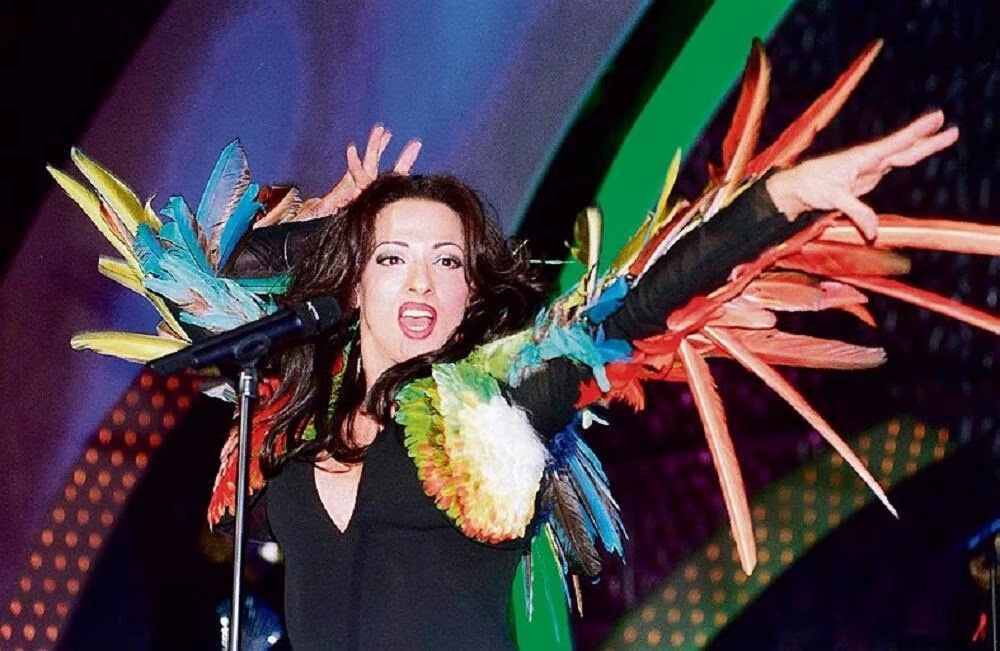
The winner was Israel with the song Diva, composed by Svika Pick, written by Yoav Ginai and performed by Dana International. The United Kingdom, Malta, the Netherlands and Croatia rounded out the top five. Dana International was the contest’s first openly transgender participant and became the contest’s first openly LGBTQ+ winning artist; however, her participation for Israel was controversial among sections of Israeli society and resulted in opposition and death threats against her in the run-up to the contest.

It was the first contest in which the results were determined predominantly through televoting, and would become the last contest in which all participants were required to perform in the language of their country and the last to feature an orchestra and live music accompaniment for the competing entries.

Eurovision 1979

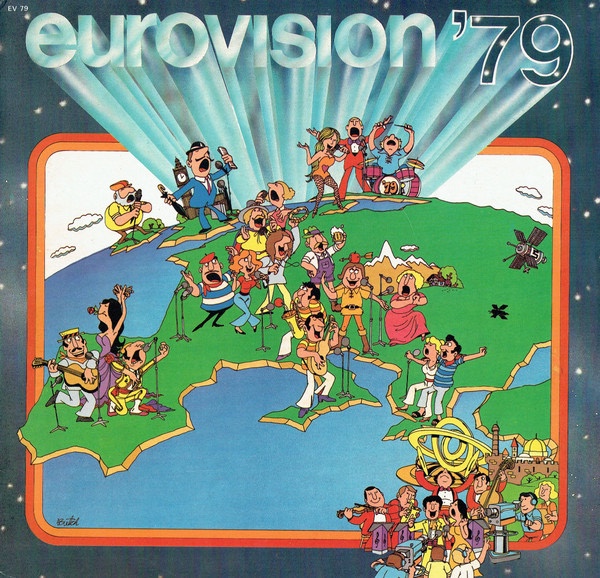
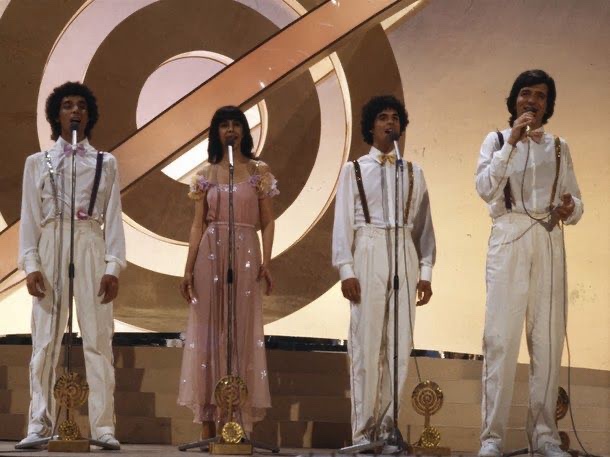
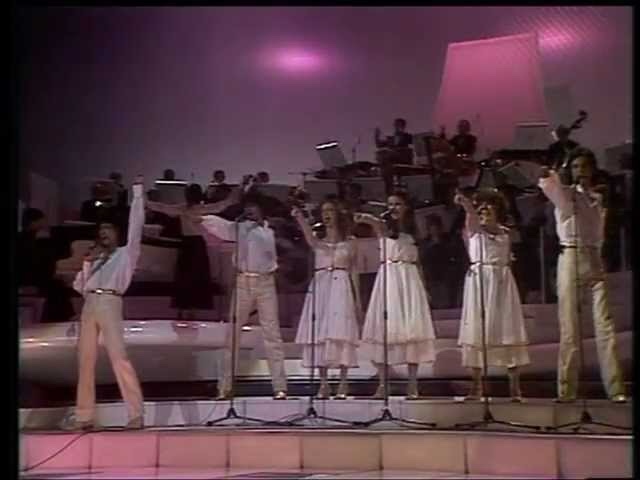
On this day in 1979, the 24th edition of the annual Eurovision Song Contest 1979 took place in Jerusalem, Israel, following the country’s victory at the 1978 contest with the song “A-Ba-Ni-Bi” by Izhar Cohen and the Alphabeta. Organised by the European Broadcasting Union (EBU) and host broadcaster Israeli Broadcasting Authority(IBA), the contest was held at the International Convention Centre and was hosted by Israeli television presenter Daniel Pe’er and singer Yardena Arazi. This was the first time that the Eurovision Song Contest was held outside Europe.

Nineteen countries participated in the contest with Turkey deciding not to participate after Arab countries had pressured it into not participating in a contest held in Israel. Yugoslavia, who had missed the 1977 and 1978 contest, also did not want to take part nor transmit the show this year for political reasons, despite a poll held earlier in which almost 100,000 people declared that they wanted Yugoslavia to return to the contest.

For the second year in a row Israel won with the song “Hallelujah”, performed by the Israeli group Milk and Honey featuring Gali Atari.

Eurovision 1978

Today the 23rd edition of the annual Eurovision Song Contest was held in Paris, France, following the country’s victory at the 1977 contest with the song L’Oiseau et l’Enfant by Marie Myriam. Organised by the European Broadcasting Union (EBU) and host broadcaster Télévision Française 1 (TF1), the contest was held at the Palais des Congrès on 22 April 1978 and was directed by Bernard Lion. The contest was presented by French television presenters Denise Fabre and Léon Zitrone. This was the first time that more than one presenter had hosted the contest as well as the first to have a male presenter since 1956.

Twenty countries participated, the highest number of competing countries in the history of the competition at the time. Denmark and Turkey both returned to the contest. Denmark had not participated since 1966, 12 years before.

The winner of the contest was Israel with the song A-Ba-Ni-Bi by Izhar Cohen and the Alphabeta. The winning entry was a love song sung in the Hebrew equivalent of Ubbi dubbi (the title is an expansion of the Hebrew word ani, meaning “I”). This was Israel’s first Eurovision win, and it was also the first winning song to be performed in one of the Semitic languages. Furthermore, it was also the only winning song to be conducted by a woman, Nurit Hirsh. Norway finished last for the fifth time, gaining the first nul points after the new voting system was implemented in 1975.