Unpleasantness

What should have been a fun musical party turned out to be a debacle for the Netherlands. Today it turned out that the Netherlands had already reported an unsafe atmosphere before the disqualification. Ireland, Lithuania and Norway also spoke out critically.

“Fuck the EBU!” These are not just the words of Eurovision commentator Cornald Maas after Joost Klein’s disqualification, they are also the words used by Irish artist Bambie Thug after the final of the Eurovision Song Contest. They both addressed the organizer of the festival, the European Broadcasting Union (EBU).

After the final, the Lithuanian entry wrote on social media that it would have been better if the entire party had been stopped after the first semi-final and now the Norwegian band Gate is also speaking out critically. “Withdrawing was an option until the last minute. We ultimately had constructive discussions with the EBU and that was just good enough for us to continue.”

Switzerland, the United Kingdom, Ireland and Portugal are all said to have threatened to withdraw due to the atmosphere behind the scenes, which was described as tense by several participants. On Tuesday it emerged that the Netherlands and Norway were also among the countries that reported the working atmosphere.

When asked, AVROTROS informed nu.nl that it had made an official report of the unsafe atmosphere behind the scenes. They already did that on Friday, when Joost Klein had not yet been disqualified.

The disqualification of Joost Klein may feel like the moment that everything went wrong for the Dutch, but there was already a lot of pressure on the event in the run-up to the Eurovision Song Contest. Israel’s participation made it perhaps the most politically charged edition in the 68 years that the festival has been held.

From the very first Eurovision events, participants were asked for their opinion on Israel’s entry, which sometimes led to emotional moments. After the final, Bambie Thug was crying to journalists because they had experienced so much pressure to ignore political opinions that it no longer felt sincere.

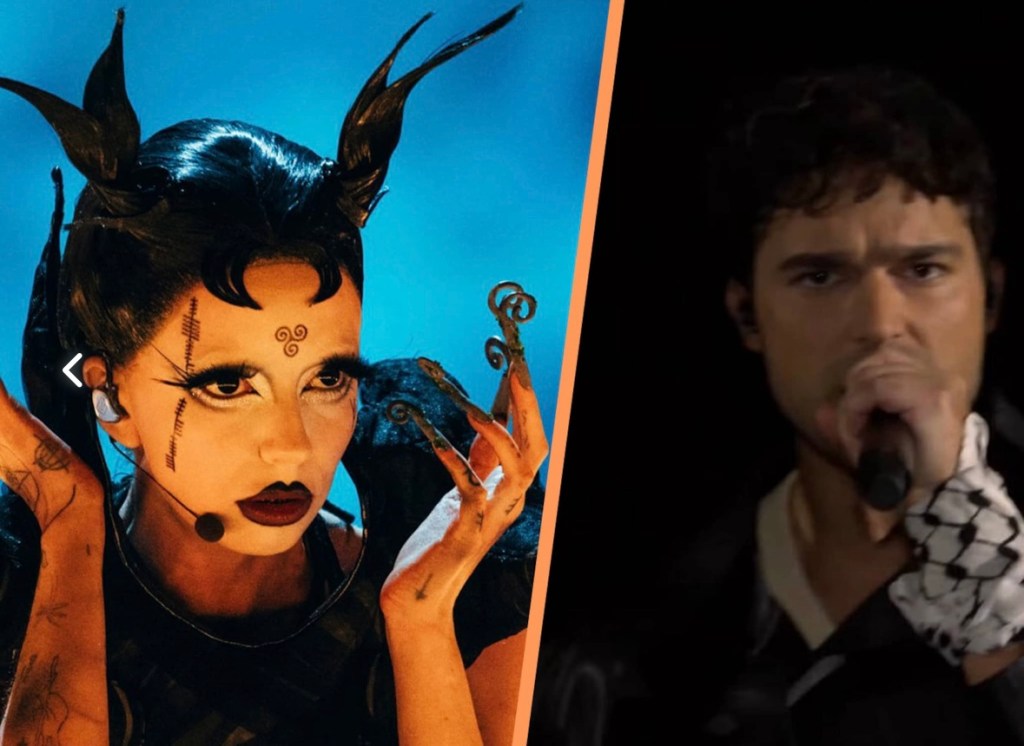
Bambie Thug is also the artist who was commissioned by the organization to remove the word ‘ceasefire’ in old Irish script from their face. The watermelon, painted on the chest of Australia’s entry was overlooked by the organization: the fruit is also seen as a statement of support for the Palestinians. Former participant Eric Saade received an angry response from the EBU after he wore a kaffiya during a performance. The scarf also symbolizes a signal of commitment to Palestine.
Things also went wrong in the commentators’ booths. For example, the Israeli colleague of Cornald Maas and Jacqueline Govaert announced the Irish entry as “the artist who speaks negatively about Israel”. The Irish delegation then filed a complaint with the EBU and the commentator was reprimanded.

The performance of Portuguese singer Iolanda during the final never appeared on social media because she had, among other things, the Palestinian flag painted on her nails. Such a political statement is prohibited according to the rules of the Eurovision Song Contest and therefore the artist could have been disqualified. It is unclear why this did not happen.

The Portuguese broadcaster RTP has not only been critical of the exclusion of Iolanda’s performance on social media, they also find it unacceptable that the EBU used an “anti-booing system” during the semi-final and final. As a result, the booing of the EBU and Israel’s entry was less received by the viewers at home than in the audience.

“For an organization like the EBU and for an organization like RTP and the European public media service, the fight against fake news, misinformation and the manipulation of information is a constant battle. It is unacceptable that this is possible. This method distorts the truth.”

AVROTROS is also critical: “We believe that when a musician performs you should always show what it does to the audience.”

As always, the European Broadcasting Union is difficult to reach, but responded to the angry reactions in an official statement. The organization places the blame mainly on the participating countries themselves.

“We find it very unfortunate that some delegations did not adhere to the rules during the event and during broadcasts. We have spoken to several delegations about incidents that have come to our attention. The EBU continues to engage with the chairmen of delegations and will do an evaluation of this Eurovision Song Contest.”

“In this way we hope to be able to move forward in a positive way, in a way where everyone respects the values of this event. Individual problems will be discussed in a subsequent meeting.” Source: nu.nl
Bambie Thug

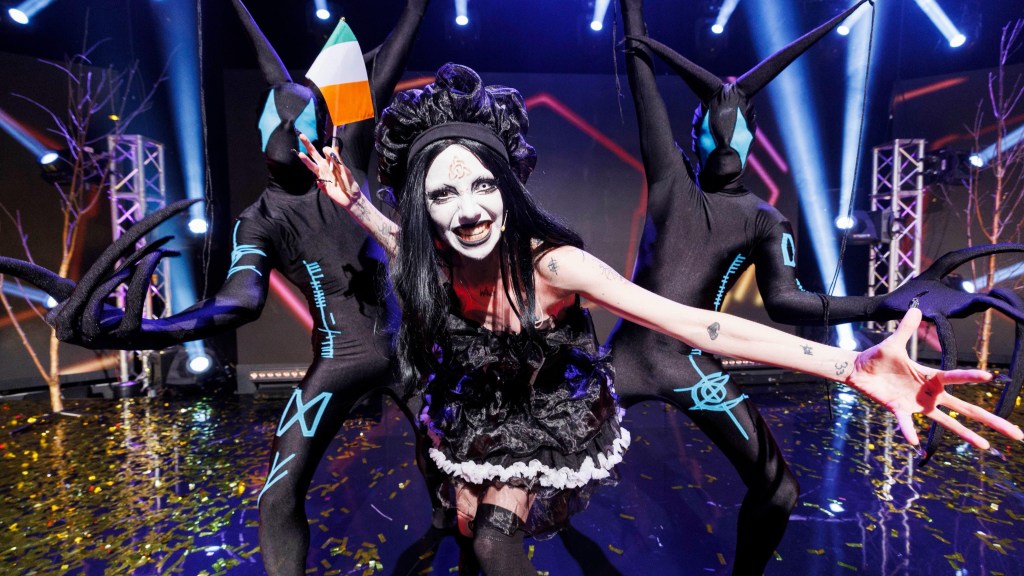
The Eurovision Song Contest has yet to start, but the Irish entry already has a nickname. For example, Bambie Thug (31) is described as ‘the witch of Eurovision’. The non-binary artist indicates that they has been practicing witchcraft for years. Although that doesn’t always have to be malicious. “I only practice good energy,” it sounds.

Thug indicates that they spends a lot of time on their powers, and are aware of the energy they emits. The most artistic wants to debunk the myths surrounding witches, and states that false views are often based on individuals based on their true nature. “People haven’t touched that special inside yet,” it sounds. “My witchcraft practices are not about dark rituals, but about embracing positive energy. I don’t drink blood, I only practice good energy.”

With the song Doomsday Blue they hope to achieve the first victory for Ireland since 1996. Thug’s song was well received during a Eurovision Party in London. We won’t know until next month whether Bambie Thug will also be able to score at the actual Eurovision Song Contest. The 68th edition of the song festival will take place from May 7 to 11. Ireland takes part in the first semi-final, Belgium in the second. Source: HLN.

Eurovision 1997

The Eurovision Song Contest 1997 was the 42nd edition of the annual Eurovision Song Contest, held on 3 May 1997 at the Point Theatre in Dublin, Ireland. Organised by the European Broadcasting Union (EBU) and host broadcaster Radio Telefís Éireann (RTÉ) and presented by Carrie Crowley and Ronan Keating, the contest was held in Ireland following the country’s victory at the 1996 contest with the song The Voice by Eimear Quinn. The 1997 contest was the seventh – and to date last – edition to be staged in Ireland, as well as the fourth to be produced by RTÉ in five years. The Point Theatre served as the host venue for the third time, following the 1994 and 1995 contests, becoming the only venue to have been the site of three Eurovision Song Contests.

Twenty-five countries participated in the contest, with a new relegation system introduced to determine which nations could participate, based on each country’s average points total in previous contests. Italy made its first appearance since 1993, and Denmark, Germany, Hungary and Russia returned after last competing in 1995, having been prevented from competing the previous year after failing to progress from that event’s qualifying round. Belgium, Finland and Slovakia, participants in the previous year’s contest, were unable to return after being excluded by the new relegation rules.

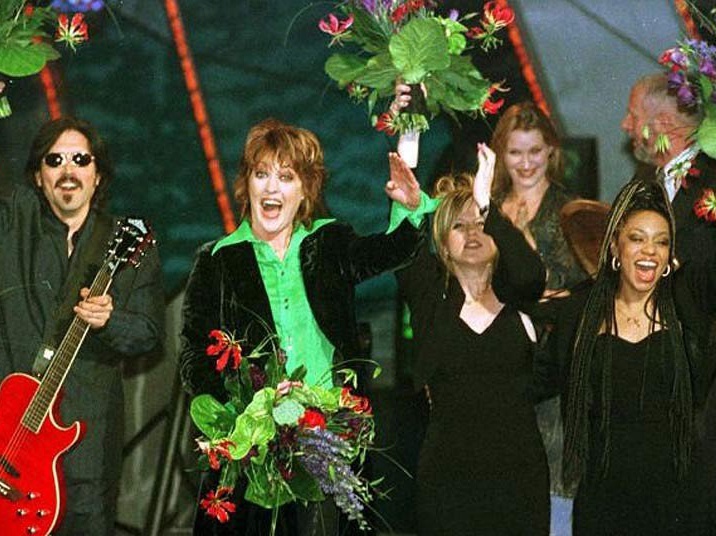
The winner was the United Kingdom with the song Love Shine a Light, written by Kimberley Rew and performed by Katrina and the Waves. Ireland, Turkey, Italy and Cyprus rounded out the top five, with Ireland earning their fifth placing in the top two within six years and Turkey and Cyprus achieving their best results to date. Five of the competing countries used televoting to determine their points, allowing the general viewing public a say in the results for the first time; following this successful trial all countries were encouraged to use this system starting from the following year’s event. Entries were also permitted for the first time to feature no live music accompaniment, with each performance being able to use only a backing track rather than utilising any part of the orchestra or any live instrumentation from the performers themselves.

The 1997 event would prove to be a watershed for the contest, with many aspects of this event leaving a lasting impact on future editions of Eurovision. These included: the first openly LGBT artist, Iceland’s Paul Oscar, selected to compete in the event; changes to contest rules led to the abandonment of live musical accompaniment in future events; a successful trial of televoting in five countries led to widespread adoption for all countries in 1998.

Eurovision 1996

The Eurovision Song Contest 1996 was the 41st edition of the Eurovision Song Contest, held on 18 May 1996 at the Oslo Spektrum in Oslo, Norway. Organised by the European Broadcasting Union (EBU) and host broadcaster Norsk rikskringkasting (NRK) and presented by Ingvild Bryn and Morten Harket, the contest was held in Norway following the country’s victory at the 1995 contest with the song Nocturne by Secret Garden.

Thirty countries submitted entries to the contest, with a non-public, audio-only qualifying round held two months before the final to reduce the number of participants from 30 to 23. The entries from Denmark, Germany, Hungary, Israel, Macedonia, Romania, and Russia were subsequently eliminated, which resulted in Germany being absent from the contest for the first time.

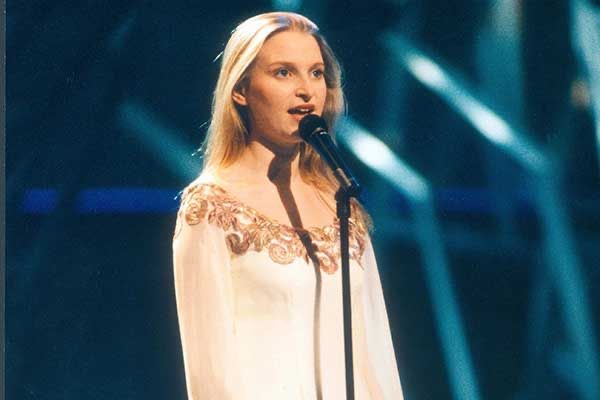
The winner was Ireland with the song The Voice, written by Brendan Graham and performed by Eimear Quinn. This gave the nation a record-extending seventh contest win, their fourth win in five years, with Graham also recording his second win as a songwriter in three years after having written the winning song at the 1994 contest. Norway, Sweden, Croatia, and Estonia took the remaining places in the top five, with Croatia, Estonia, and Portugal, which placed sixth, achieving their best results to date. This was the final contest where the results were determined solely by jury voting, with a trial use of televoting in the following year’s event leading to widespread adoption from 1998 onwards.

Eurovision 1995

Tonight the 40th edition of the annual Eurovision Song Contest was the 40th edition of the Eurovision Song Contest, held on 13 May 1995 at the Point Theatre in Dublin, Ireland. Organised by the European Broadcasting Union (EBU) and host broadcaster Radio Telefís Éireann (RTÉ), and presented by Mary Kennedy, the contest was held in Ireland following the country’s victory at the 1994 contest with the song Rock ‘n’ Roll Kids by Paul Harrington and Charlie McGettigan. It was the third consecutive contest to be held in Ireland – the first and only time in the history of the event that a country has hosted three editions in a row – and the second consecutive edition to be held in the Point Theatre in Dublin.

Twenty-three countries participated in the contest; Estonia, Finland, Lithuania, the Netherlands, Romania, Slovakia, and Switzerland were relegated as the lowest-scoring countries in the previous edition, getting replaced by Belgium, Denmark, Israel, Slovenia, and Turkey, returning after being relegated following the 1993 edition.

The winner was Norway with the song Nocturne, composed by Rolf Løvland, written by Petter Skavlan and performed by Secret Garden. Spain, Sweden, France, and Denmark rounded out the top five, with Spain achieving their best result since 1979. Croatia and Slovenia also achieved their best results so far, placing sixth and seventh respectively, while Germany finished in last place for the fourth time.

Eurovision 1994

Yesterday the 39th edition of the annual Eurovision Song Contest was held on 30 April 1994 at the Point Theatre in Dublin, Ireland. Organised by the European Broadcasting Union (EBU) and host broadcaster Radio Telefís Éireann (RTÉ), and presented by Cynthia Ní Mhurchú and Gerry Ryan, the contest was held in Ireland following the country’s victory at the 1993 contest with the song In Your Eyes by Niamh Kavanagh. It was the first time that any country had hosted two successive editions of the contest, following the previous year’s contest held in Millstreet.

Twenty-five countries participated in the contest, which for the first time featured a relegation system to reduce the number of interested participating countries. Seven new countries participated in the event, with entries from Estonia, Hungary, Lithuania, Poland, Romania, Russia and Slovakia featuring for the first time. However, Belgium, Denmark, Israel, Luxembourg, Slovenia and Turkey were unable to compete due to the new relegation rules as the lowest-scoring countries at the previous event, whereas Italy decided against participating by choice.

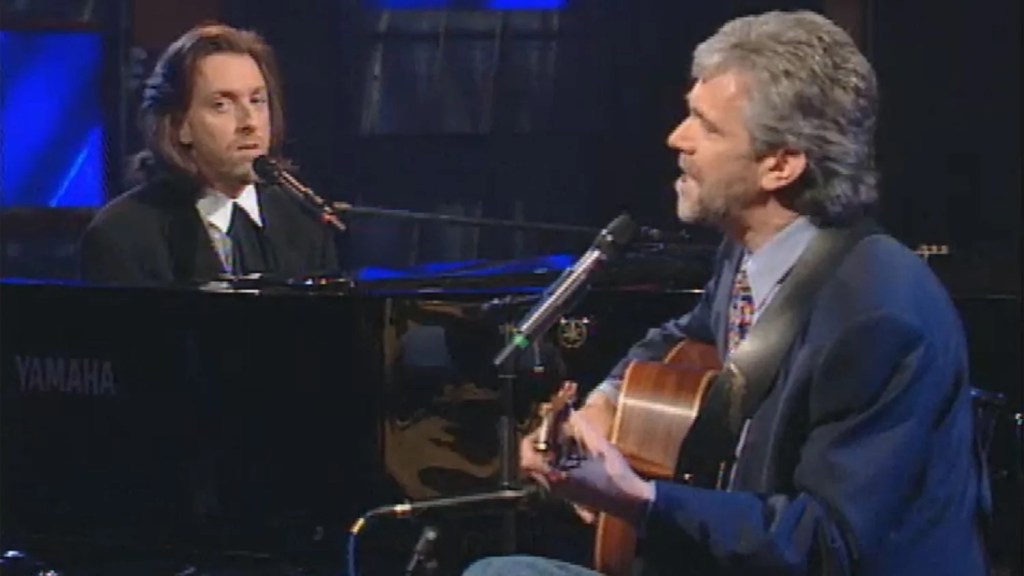
Ireland won the contest for the third year in a row, represented by the song Rock ‘n’ Roll Kids, written by Brendan Graham and performed by Paul Harrington and Charlie McGettigan. It was the first – and as of 2023 only – time that a country had won the event on three consecutive occasions, and was a record sixth win for Ireland, confirming it as the contest’s most successful nation at that point by number of wins. Poland, Germany, Hungary and Malta rounded out the top five positions, with Poland achieving the most successful result for a début entry in the contest’s history.

The 1994 contest also featured the first appearance of Riverdance. Originally a seven-minute performance of traditional Irish and modern music, choral singing and Irish dancingfeatured as part of the contest’s interval act, it was subsequently developed into a full stage show which has since become a worldwide phenomenon and catapulted the careers of its lead dancers Jean Butler and Michael Flatley.

Eurovision 1993

Yesterday the 38th edition of the annual Eurovision Song Contest was held on 15 May 1993 at the Green Glens Arena in Millstreet, Ireland. Organised by the European Broadcasting Union (EBU) and host broadcaster Radio Telefís Éireann (RTÉ), and presented by Fionnuala Sweeney, the contest was held in Ireland following the country’s victory at the 1992 contest with the song Why Me? by Linda Martin.

Twenty-five countries participated in the contest – the largest event yet held. Twenty-two of the twenty-three countries that had participated in the previous year’s event returned, with Yugoslavia prevented from competing following the closure of its national broadcaster and the placement of sanctions against the country as a response to the Yugoslav Wars. In response to an increased interest in participation from former Eastern Bloc countries following the collapse of communist regimes, three spaces in the event were allocated to first-time participating countries, which would be determined through a qualifying competition. Held in April 1993 in Ljubljana, Slovenia, Kvalifikacija za Millstreet featured entries from seven countries and resulted in the entries from the former Yugoslav republics of Bosnia and Herzegovina, Croatia and Slovenia progressing to the contest in Millstreet.

For the second year in a row, the winner was Ireland with the song In Your Eyes, written by Jimmy Walsh and performed by Niamh Kavanagh. The United Kingdom, Switzerland, France, and Norway completed the top five, with the United Kingdom achieving their second consecutive runner-up placing. Ireland achieved their fifth victory in the contest, matching the overall record held by France and Luxembourg, and joined Israel, Luxembourg and Spain as countries with wins in successive contests.

Eurovision 1992

Yesterday the 37th edition of the annual Eurovision Song Contest was held on 9 May 1992 at the Malmö Isstadion in Malmö, Sweden. Organised by the European Broadcasting Union (EBU) and host broadcaster Sveriges Television (SVT), and presented by Lydia Capolicchio and Harald Treutiger, the contest was held in Sweden following the country’s victory at the 1991 contest with the song Fångad av en stormvind by Carola.

Twenty-three countries participated in the contest – a new record number of participating countries – with the Netherlands returning to the contest following a one-year break to join the twenty-two countries which had participated in the previous year’s event.

The winner was Ireland with the song Why Me, written by Johnny Logan and performed by Linda Martin. This marked Ireland’s fourth contest win, and brought songwriter Logan his third win overall, having previously won the contest in 1980 as singer and in 1987 as both singer and songwriter. The United Kingdom, Malta, Italy, and Greece also placed in the top five, with the United Kingdom recording its thirteenth second-place position and Malta and Greece achieving their best ever results in the contest.

Eurovision 1988

Today the 33rd edition of the annual Eurovision Song Contest took place in Dublin, Ireland, following Johnny Logan’s win at the 1987 contest with the song Hold Me Now. Organised by the European Broadcasting Union (EBU) and host broadcaster Radio Telefís Éireann (RTÉ), the contest was held at the RDS Simmonscourt and was hosted by Irish broadcaster Pat Kenny and the Miss Ireland 1980 Michelle Rocca, marking the first time since the 1979 contest that two presenters had hosted the contest.

Twenty-one countries took part, after an initial plan of twenty-two, as Cyprus’ song was disqualified for breaching the contest’s rules by being published a few years earlier, in an attempt to represent the country at a prior edition of the contest. The Cypriot song had been drawn to be performed 2nd in the running order.

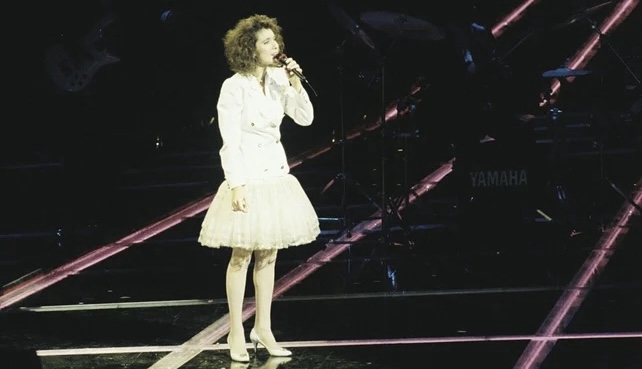
The contest helped launch an international career for two now world-famous artists, the winner for Switzerland Céline Dion and Luxembourg’s representative Lara Fabian. Canadian Céline Dion was a rising star in the French-speaking world at the time of the contest. Shortly afterwards she started recording songs in English to great worldwide success. As Dion, Belgian-Canadian Lara Fabian also achieved a successful career after the contest with becoming established in various countries worldwide, with a mainly French-sung repertoire. The UK entry was written and composed by Julie Forsyth, the daughter of the entertainer Bruce Forsyth who was present. When interviewed afterwards he was particularly annoyed at the Dutch jury not having given a vote to the UK, as they had done some work there.

The winner was Switzerland with the song Ne partez pas sans moi, performed by Canadian singer Céline Dion and composed by Atilla Şereftuğ with lyrics in French by Nella Martinetti. Switzerland beat the United Kingdom by just one point in the last vote to win the title. The victory helped launch Dion’s international career, subsequently leading her to become one of the best-selling artists of all time.

Eurovision 1987

Today the 32nd edition of the annual Eurovision Song Contest took place in Brussels, Belgium, following the country’s victory at the 1986 contest with the song “J’aime la vie” by Sandra Kim. Organised by the European Broadcasting Union (EBU) and host broadcaster Radio-télévision belge de la Communauté française(RTBF), the contest was held at the Centenary Palace on 9 May 1987 (also Europe Day) and hosted by French-Belgian singer Viktor Lazlo.

By 1986, Belgium has participated in the Eurovision Song Contest 30 times since making its debut at the first contest in 1956 along 6 other countries. Before Sandra Kim’s win, Belgium was the only one of the 7 founding countries to have never won the contest and had only twice finished in the top five (with Tonia’s fourth place in 1966 and Jean Vallée’s second place in 1978).

Twenty-two countries took part in the contest with Greece and Italy returning to the competition after their absences the previous year. This set the record for the highest number of competing countries up until that point.

The winner was Ireland with the song “Hold Me Now” by Johnny Logan, who had also won the 1980 contest. He was the first performer to have won the Eurovision Song Contest twice.

Eurovision 1981

On this day the 26th edition of the annual Eurovision Song Contest was held in Dublin, Ireland, following the country’s victory at the 1980 contest with the song “What’s Another Year” by Johnny Logan. Organised by the European Broadcasting Union (EBU) and host broadcaster Radio Telefís Éireann (RTÉ), the contest was held at the RDS Simmonscourt and was hosted by Irish television journalist Doireann Ní Bhriain.

Twenty countries participated in the contest, equalling the record of the 1978 edition. Cyprus made their début this year, while Israel and Yugoslavia both returned to the competition, after their one-year and five-year absences, respectively. Morocco and Italy decided not to participate.

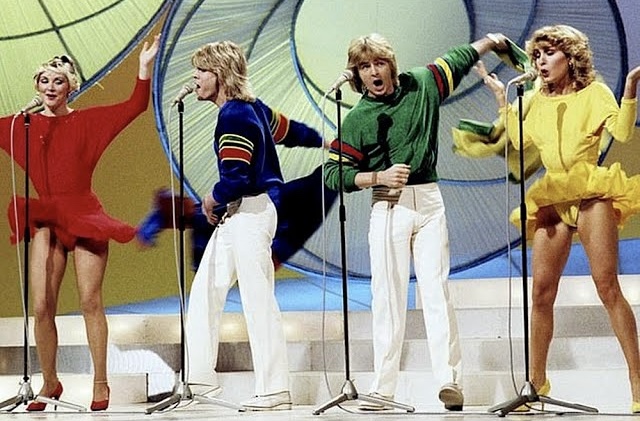
The winner was the United Kingdom with the song Making Your Mind Up, performed by Bucks Fizz, written by Andy Hill and John Danter. Germany finished second for the second consecutive year, while France finished third. Norway again finished last, with its third nul points in the contest.

Bucks Fizz’s win launched the group’s hugely successful international career. Their performance on the Eurovision stage included a dance-routine where the two male members ripped the skirts off the two female members only to reveal mini-skirts, and today stands as one of the most defining moments in the contest’s history.

Eurovision 1980

Today the 25th edition of the annual Eurovision Song Contest was held in The Hague, Netherlands, and was organised by host broadcaster Nederlandse Omroep Stichting (NOS) – which agreed to stage the event after Israel, having won in both 1978 and 1979, declined to host it for a second successive year – and the European Broadcasting Union (EBU). The contest was held at the Nederlands Congresgebouw and was hosted by Dutch actress Marlous Fluitsma, although each song was introduced by a presenter from the participating nation (in some cases, this was the same person providing the commentary).

Nineteen countries took part this year, with Monaco and the previous year’s winner Israel deciding not to participate, and Turkey returning. Morocco, notably, made its only appearance in the contest.

The winner was Ireland with the song What’s Another Year, sung by Johnny Logan and written by Shay Healy.

Eurovision 1971

On this day in 1971, the 16th edition of the annual Eurovision Song Contest was held in Dublin, Ireland, following the country’s victory at the 1970 contest with the song All Kinds of Everything by Dana. Organised by the European Broadcasting Union (EBU) and host broadcaster Radio Telefís Éireann (RTÉ), the contest was held at the Gaiety Theatre, and was hosted by Irish television presenter Bernadette Ní Ghallchóir.

Eighteen countries participated in the contest, equalling the record of the 1965 and 1966 editions. Austria returned after their two-year absence, while Finland, Norway, Portugal and Sweden all returned after having boycotted the competition the previous year. On the other hand, Malta competed for the first time.

The winner was Monaco with the song Un banc, un arbre, une rue, performed by Séverine, written by Yves Dessca, and composed by Jean-Pierre Bourtayre. This was Monaco’s first and only victory in the contest. This was also the only time in the contest’s history, where the second and third-placed entrants were also awarded.

Eurovision 1970

Tonight the 15th edition of the annual Eurovision Song Contest took place in Amsterdam, Netherlands. Organised by the European Broadcasting Union (EBU) and host broadcaster Nederlandse Omroep Stichting (NOS), the contest was held at the RAI Congrescentrum, and was hosted by Dutch television presenter Willy Dobbe.

Twelve countries participated in the contest this year. This was the lowest number of participants since the 1959 edition. The reason was that Finland, Norway, Portugal, Sweden and Austria all boycotted the 1970 edition, officially because they felt that the contest marginalised smaller countries and was no longer good television entertainment, though it is rumoured that this was also in protest of the four-way tie result that had occurred in 1969.

The winner of the competition was Ireland with the song All Kinds of Everything, performed by Dana, and written by Derry Lindsay and Jackie Smith. This was Ireland’s first of their eventual record seven victories in the contest. The United Kingdom finished in second place for the seventh time, while Germany ended up in third place – the best result for the country at the time. This was also the only time that Luxembourg received nul points.