Eurovision 2011

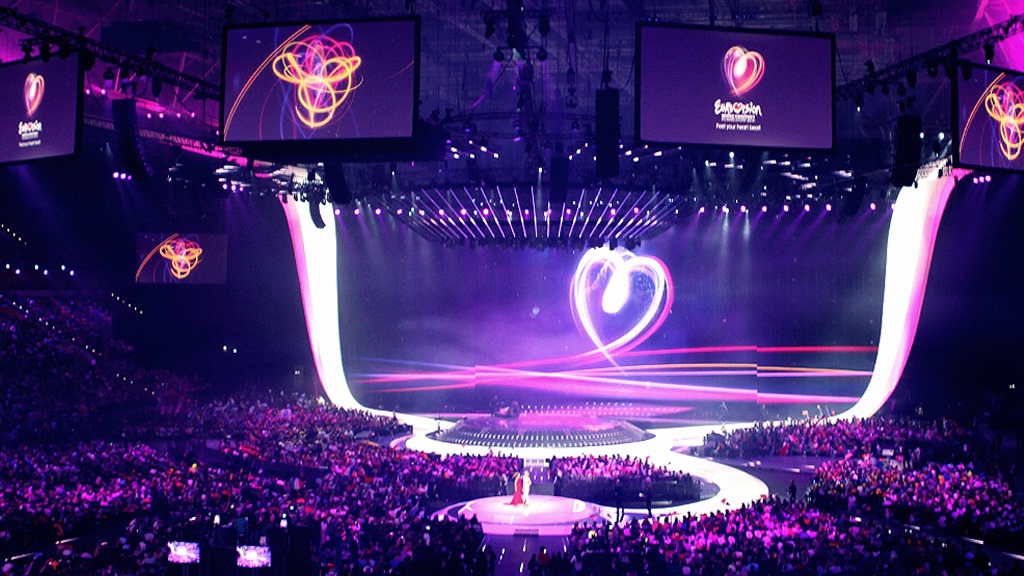
This week the 56th edition of the annual Eurovision Song Contest took place in Düsseldorf, Germany, following the country’s victory at the 2010 contest with the song Satellite by Lena. Organised by the European Broadcasting Union (EBU) and host broadcasters Arbeitsgemeinschaft Rundfunkanstalten Deutschland (ARD) and Norddeutscher Rundfunk (NDR), the contest was held at the Düsseldorf Arena and consisted of two semi-finals on 10 and 12 May, and a final on 14 May 2011. The three live shows were presented by German comedians Anke Engelke and Stefan Raab, and television presenter Judith Rakers.
Forty-three countries participated in the contest, equalling the record for the 2008 edition. Four countries returned to the contest this year; Austria returned after their last participation in 2007, Hungary returned after their last participation in 2009, San Marino returned after their very first participation in 2008. Italy also returned to the contest after their last participation fourteen years earlier, in 1997.

The winner was Azerbaijan with the song Running Scared, performed by Ell and Nikki and written by Stefan Örn, Sandra Bjurman and Iain James Farquharson. This was Azerbaijan’s first victory in the contest, after only 4 years of participation. It was also the first male-female duo to win the contest since 1963. Azerbaijan won the televote and combined vote, while Italy won the jury vote and came second overall. Sweden, Ukraine and Denmark rounded out the top five. Apart from Italy, the only other Big Five country to make the top 10 was host nation Germany, finishing tenth. The United Kingdom followed closely behind, finishing eleventh. This was the first time since the juries were reintroduced alongside the televoting in 2009 that the winner did not place first in the jury voting; Italy was the jury winner, while Azerbaijan was the televote winner. Georgia, finishing ninth, equalled their best result from 2010.

The broadcast of the final won the Rose d’Or award for Best Live Event.

Typo

The letter W has brought shame to administrators in the German city of Düsseldorf. The city had printed a booklet with activities for the guests of the Eurovision Song Contest on May 14.

The highlight was an ‘Aktionstag der Schulen’ (action day of the schools). But due to a typo it read ‘Aktionstag der Schwulen’ (day of action for gays).

A sticker with the correct spelling has now been placed over the typographical error in the 65,000 booklets. This also happened in 35,000 English-language brochures, where the typo had already been translated into Gay’s day of action.

There was also a huge error on the front page of the English version. It said Wielcome to Düsseldorf in large letters, instead of Welcome to Düsseldorf.

Employees crossed out the extra i on the 35,000 booklets with a pen. There was no time for a reprint.

Eurovision 2010

This week the 55th edition of the annual Eurovision Song Contest took place in Oslo, Norway, following the country’s victory at the 2009 contest with the song Fairytale by Alexander Rybak. Organised by the European Broadcasting Union (EBU) and host broadcaster Norsk rikskringkasting (NRK), the contest was held at the Telenor Arena, and consisted of two semi-finals on 25 and 27 May, and a final on 29 May 2010, tying with the 1999 edition for the contest hosted the latest. The three live shows were presented by Norwegian television presenters Erik Solbakken and Nadia Hasnaoui and singer Haddy N’jie.

Thirty-nine countries took part in the contest, with Georgia returning after its one-year absence. Meanwhile, Andorra, the Czech Republic, Hungary and Montenegro ceased their participation, mainly for reasons related to the 2007–2008 financial crisis. Lithuania originally announced its non-participation, but was later among the participants confirmed by the EBU.

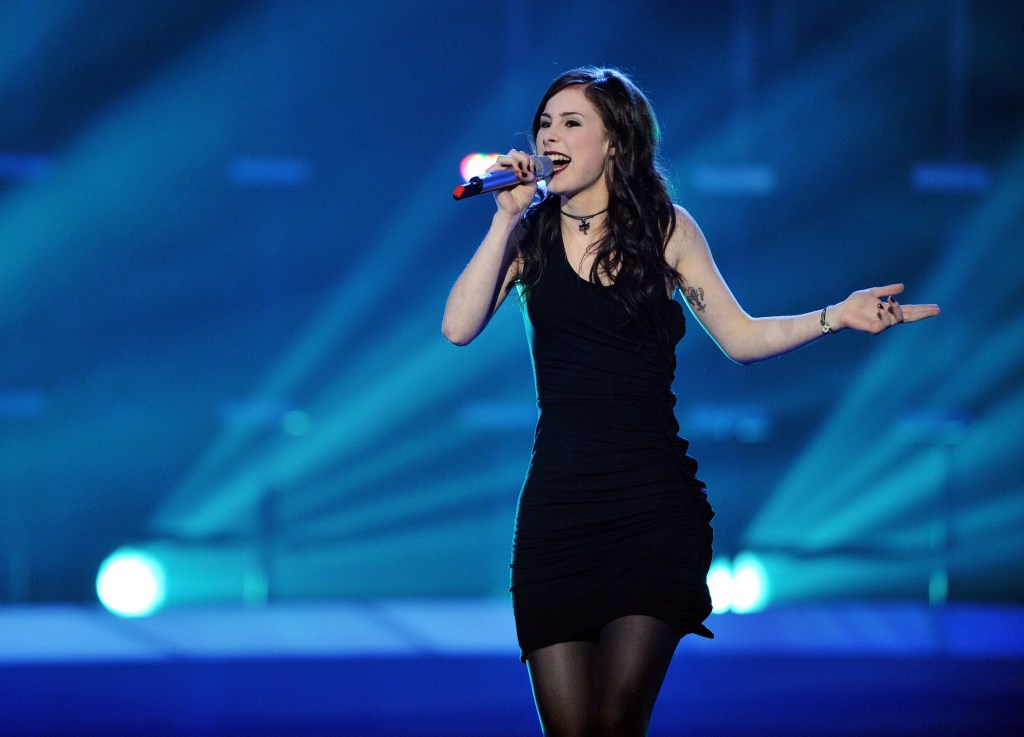
The winner was Germany with the song Satellite, performed by Lena and written by American Julie Frost and Denmark’s John Gordon. The song won both the jury vote and televote and was Germany’s second victory in the contest, following 1982. It was also its first win as a unified country. It was also the first win for one of the Big Four countries since the rule’s introduction in 2000. Turkey, Romania, Denmark and Azerbaijan rounded out the top five. Romania, finishing third, equalled their best result from 2005, while further down the table, Georgia achieved their best result to date, finishing ninth. For the first time since the introduction of semi-finals in 2004, Sweden failed to qualify for the final. The last time Sweden was absent from a Eurovision final was in 1976.

The global financial crisis at the time affected how the event was run; the host broadcaster NRK was forced to sell its broadcast rights for the 2010 FIFA World Cup to TV 2 and Viasat in order to finance the event.

Prior to the contest, the EBU announced that the voting system used in the semi-finals would change from previous years to balance jury voting with televoting. A return of accompaniment by orchestra was also proposed, but ultimately did not occur.

Eurovision 1983

Today the 28th edition of the annual Eurovision Song Contest was held in Munich, West Germany, following the country’s victory at the 1982 contest with the song Ein bißchen Frieden by Nicole. Although this was Germany’s first victory, 1983 was the second time Germany had hosted the contest, having previously done so in 1957. Organised by the European Broadcasting Union (EBU) and host broadcaster Bayerischer Rundfunk (BR) on behalf of the Arbeitsgemeinschaft der öffentlich-rechtlichen Rundfunkanstalten der Bundesrepublik Deutschland (ARD), the contest was held at the Rudi-Sedlmayer-Halleon and was hosted by German dancer Marlene Charell.

Twenty countries took part this year, with France, Greece and Italy all returning this year, while Ireland decided not to participate.

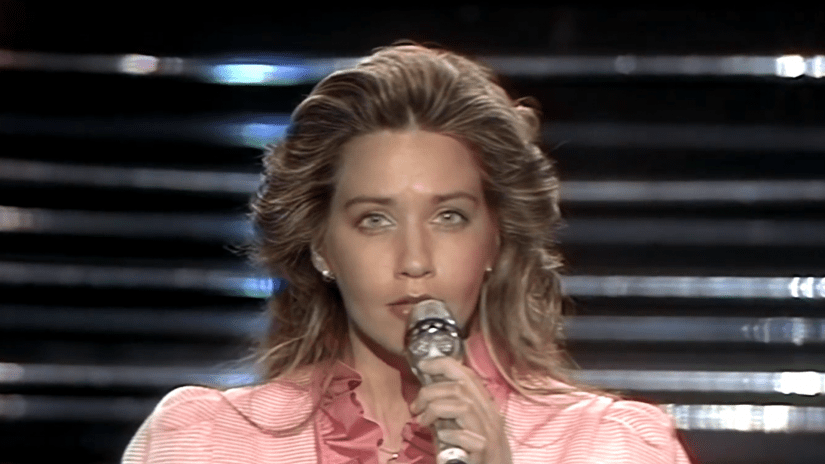
The winner was Luxembourg with the song Si la vie est cadeau by Corinne Hermes, which equalled the record of 5 victories set by France in 1977. This record would in turn be beaten by Ireland in 1994. It was also the second year in a row where the winning entry was performed last on the night and the second year in a row in which Israel won 2nd place. For the third year in a row, at least one country ended up with nul points, and in this case, it happened to be two countries, Spain and Turkey, neither of whom were able to get off the mark.

The 1983 contest was the first to be televised in Australia, via Channel 0/28 (now the Special Broadcasting Service) in Sydney and Melbourne. The contest went on to become popular in Australia, leading to the country’s eventual debut at the 60th anniversary contestin 2015.

Eurovision 1982

Today the 27th edition of the annual Eurovision Song Contest 1982 took place in Harrogate, United Kingdom, following the country’s victory at the 1981 contest with the song Making Your Mind Up by Bucks Fizz. Organised by the European Broadcasting Union (EBU) and host broadcaster British Broadcasting Corporation(BBC), the contest was held at the Harrogate International Centre and was hosted by English TV presenter and newsreader Jan Leeming.

Eighteen countries took part in the contest with Greece deciding not to enter this year. Due the downsizing of their national broadcasters, France lost the rights to participating at the contest and so was also forced to withdraw.

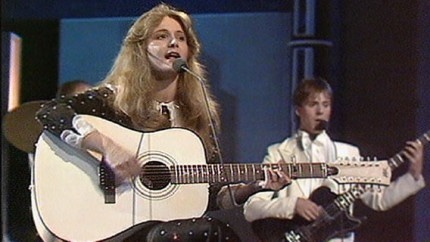
The winner was Germany with the song Ein bißchen Frieden by Nicole. This was the first time that Germany had won the contest after having competed every year since the contest’s inception. Germany received 1.61 times as many points as runner-up Israel, which was a record under the current scoring system until 2009, when Norway received 1.78 times as many points as Iceland. The song also cemented Ralph Siegel and Bernd Meinunger, the song’s composers, into German Eurovision tradition, writing 18 Eurovision songs between them before and after “Ein bißchen Frieden”, 13 of which were for Germany.

Eurovision 1957

Today, the second edition of the annual Eurovision Song Contest took place. Organised by the European Broadcasting Union (EBU) and host broadcaster Hessischer Rundfunk (HR) on behalf of ARD, the contest, originally known as the Grand Prix Eurovision de la Chanson Européenne 1957 (English: Eurovision Grand Prize of European Song 1957) was held on Sunday 3 March 1957 and was hosted at the Großer Sendesaal des hessischen Rundfunksin Frankfurt, West Germany by German actress Anaid Iplicjian.

Ten countries took part, with Austria, Denmark, and the United Kingdom competing for the first time and joining the original seven participating countries from the first contest in 1956. A number of changes to the rules from the previous year’s event were enacted, with each country now represented by only one song, which could be performed by up to two performers on stage. The voting system received an overhaul, with each country’s jury now comprising ten individuals which awarded one vote each to their favourite song. The results of the voting were now conducted in public, with a scoreboard introduced to allow the process to be followed by viewers and listeners at home. Jurors were also for the first time not allowed to vote for the song from their own country.

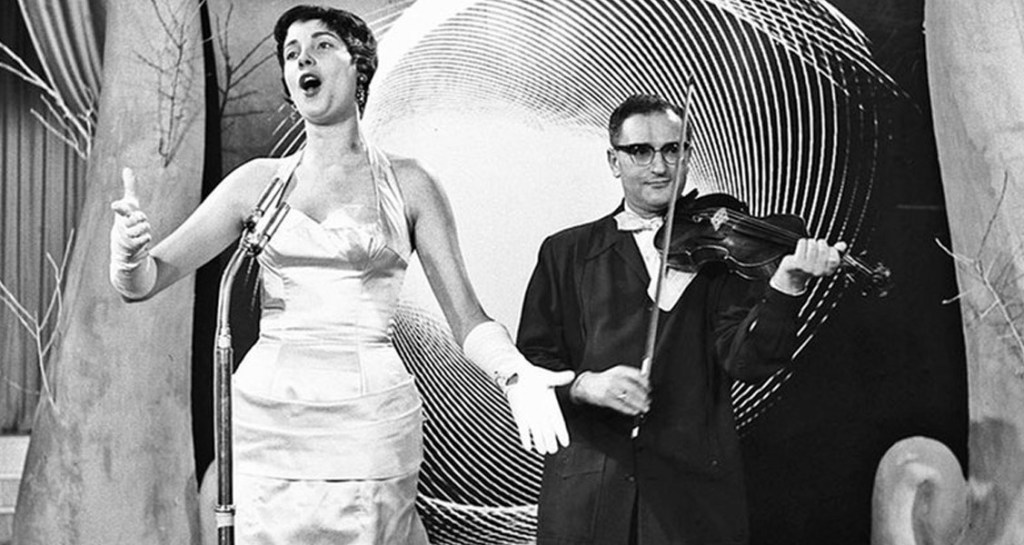
The winner of the contest was the Netherlands, with the song Net als toen performed by Corry Brokken. This was Brokken’s second appearance as a participant, after previously representing the Netherlands in 1956; her victory marked the first of five Dutch wins in the contest as of 2023.