
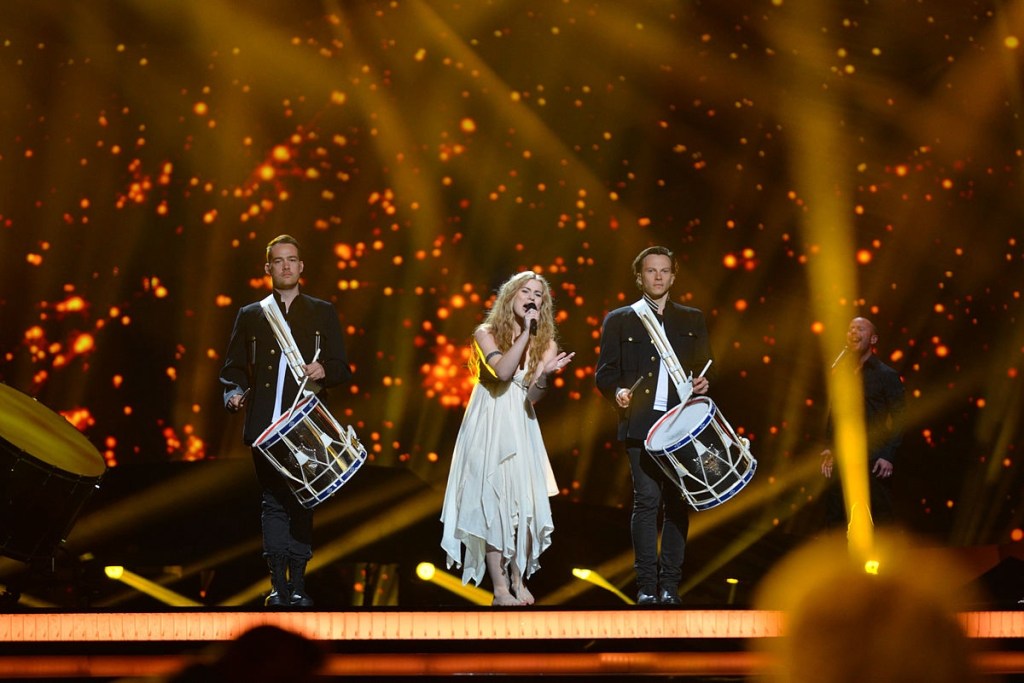
This week the 59th edition of the annual Eurovision Song Contest took place in Copenhagen, Denmark, following the country’s victory at the 2013 contest with the song Only Teardrops by Emmelie de Forest. Organised by the European Broadcasting Union (EBU) and host broadcaster Danish Broadcasting Corporation(DR), the contest was held at B&W Hallerne, and consisted of two semi-finals on 6 and 8 May, and a final on 10 May 2014. The three live shows were presented by Danish television presenter Lise Rønne, musician Nikolaj Koppeland actor Pilou Asbæk.

Thirty-seven countries participated in the contest; this included the return of Poland and Portugal after absences of two years and one year respectively. Overall, there were two fewer countries competing compared to the previous year, making thirty-seven participants, the smallest number since 2006. Bulgaria, Croatia, Cyprus and Serbia announced that they would not be taking part.
The winner was Austria with the song Rise Like a Phoenix, performed by Conchita Wurst and written by Charley Mason, Joey Patulka, Ali Zuckowski, and Julian Maas. The entry won both the jury vote and televote. Austria’s first victory was 48 years earlier in 1966, which at the time was the longest gap between wins. The Netherlands, Sweden, Armenia and Hungary rounded out the top five, with the Netherlands achieving their best result since its victory in 1975, Hungary achieving its best result since its fourth place in 1994, and Armenia equalling its best result from 2008. Of the Big Five countries, only Spain achieved a place in the top ten, while France finished in last place for the first time in its Eurovision history. Meanwhile, San Marino and Montenegro both qualified for the final for the first time.
A new record of 195 million viewers for the contest was reported. The host broadcaster DR and the EBU won the International TV Award at the Ondas Awards for their production of the contest. The show organisers from Copenhagen spent in total DKr 112 million on the contest, three times more than the expected costs, and were furthermore accused of nepotism.


 euro-vision.blog