Belgium Questions Participating

The VRT has doubts about a future participation in the Eurovision Song Contest. The Belgian broadcaster wants the organizer European Broadcasting Union to provide full transparency about the scoring. The VRT also wants to debate Israel’s participation with all countries.

“We have no indications that the scoring was not done correctly, but we do ask the EBU for full transparency,” says a spokesperson for the VRT. “The question is mainly whether the current voting system guarantees a fair reflection of the opinions of the viewers and listeners.” Twenty votes can be cast per person, which according to the broadcaster could lead to manipulation.

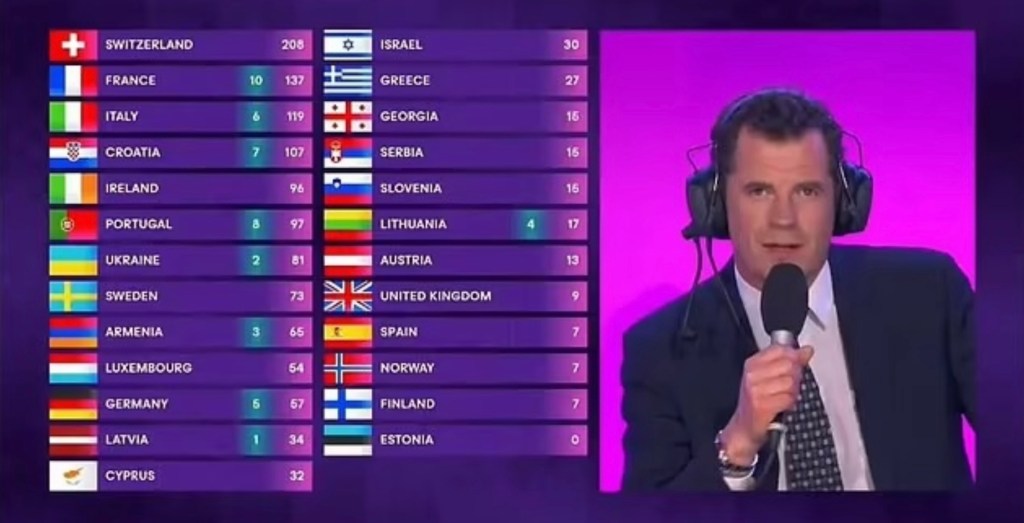
The statement from the Belgian broadcaster comes after the Spanish public broadcaster RTVE asked the European Broadcasting Union (EBU) to investigate the votes of viewers. RTVE finds it strange that Israel, despite protests against the country’s participation in the Song Contest, received twelve points from the Spanish public. Both the Belgian and Spanish professional juries gave Israel zero points.

The EBU states that the voting procedure was correct. “It is important to emphasize that the Eurovision Song Contest voting procedure is among the most advanced in the world. In each participating country, the result is carefully checked and verified by a large team to rule out suspicious or irregular voting patterns,” EBU boss Martin Green told the Belgian news agency Belga.

Green says that he takes the concerns of the broadcasters seriously in the evaluation of the last edition.

RTVE also wants a broad debate about Israel’s participation. This initiative is supported by the VRT. “We at VRT have noticed that the Song Contest as it is currently organized is less and less a unifying and apolitical event,” says the VRT. “It is increasingly at odds with the original standards and values ​​of the event and those of the public broadcaster.”

The VRT says that it works well with the EBU on “many levels”. But without a clear answer to his concerns, the Belgian broadcaster questions future participation.

The VRT cannot decide on participation in the next edition. Then it is the turn of the French-language Belgian broadcaster RTBF, with which the VRT alternates, to decide on participation in the event.

Israel came second in the singing competition on Saturday behind Austria. Israel’s participation has been controversial since the 2024 edition due to the war in Gaza. The EBU defends Israel’s participation because, according to the organization, the Eurovision Song Contest is a “non-political music event”. Source: nu.nl
Letter to the Editor

According to the EBU, the Public Prosecution Service’s decision to dismiss the case does not detract from the fact that, according to the EBU, Klein acted in violation of EBU rules. His disqualification was therefore justified according to the EBU. Unfortunately, it does not state which rule was violated that justifies such a draconian punishment as disqualification.

Continuing to maintain the publicly stated view that Joost Klein committed a disqualifying act is without a doubt a defamatory accusation. After all, anyone who deliberately attacks someone’s honour or good name by accusing them of a certain act with the apparent aim of publicising it commits the criminal offence of defamation. AvroTros could therefore file a complaint of defamation against the EBU.

All the more so now that the consequences of the disqualification have also manifested themselves in the Netherlands and the Netherlands can therefore be regarded as the place where the crime of defamation was committed.

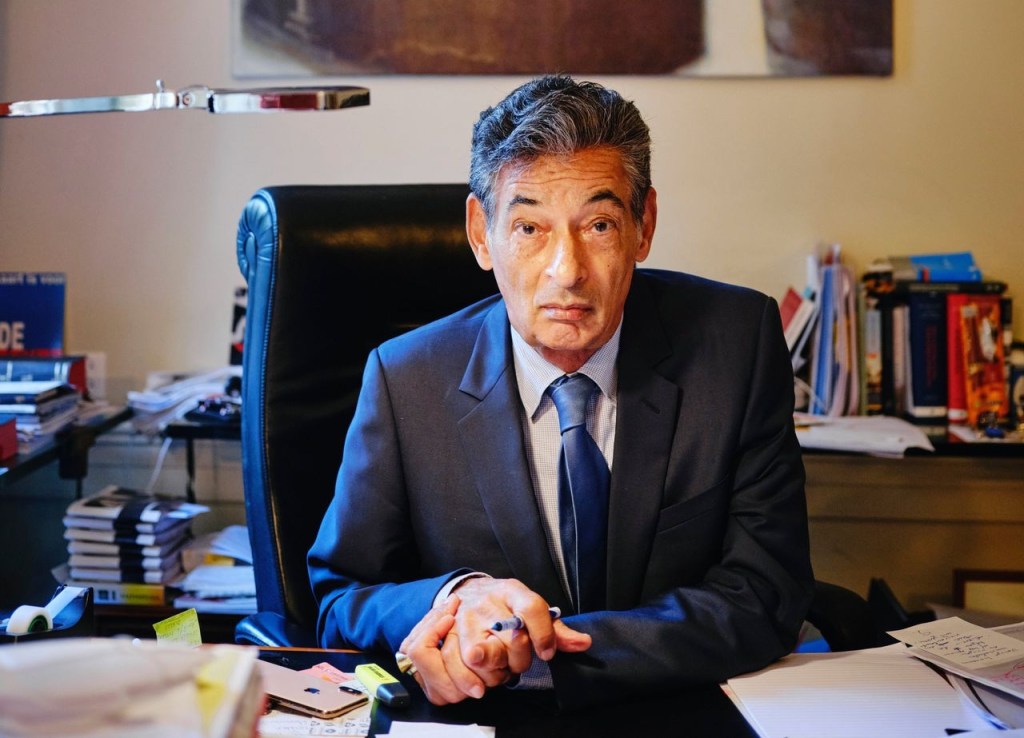
Gerard Spong, Amsterdam.

The above concerns a letter to the editor of de Volkskrant, from the Dutch lawyer Gerard Spong, in which he indicates that the statement of the EBU, without reason for the disqualification, is libel and that an official complaint can be filed against this. I wonder if AVROTOS or Joost Klein will take action on this. Personally, I would consider this a strong action. 😊

Adjustments 2025

The Eurovision Song Contest (EBU) organisation is making a number of organisational adjustments in the run-up to the next edition. The changes follow the results of an independent investigation into the last edition in May in Malmö, Sweden.

Among other things, a new director will be appointed, who will oversee the work of the show’s current executive supervisor, Martin Österdahl. The organisation announced this in a press release on Monday.

In addition to appointing the new director, the EBU will also focus on clarifying the rules for delegations, working more with fan clubs and influencers and strengthening security measures.

Several participants, including Swiss winner Nemo and Irish Bambie Thug, were critical after the Song Contest in Sweden. The atmosphere behind the scenes was said to have been “very intense”. The EBU was also criticised for the disqualification of Dutch participant Joost Klein after an incident with a camerawoman. In addition, the Israeli entry reported bullying behind the scenes.

AVROTROS says it is pleased that serious recommendations are being made. “It seems that the EBU wants to make serious work of structural changes,” says a spokesperson for the broadcaster. “We will closely monitor whether words are converted into actions in the coming period and will consider our participation in 2025 on that basis.”

Doubts

Only when AVROTROS is confident that the Song Contest will be structurally adjusted to “put the artists and their musical message central again”, will the broadcaster consider participating for future Eurovisions.

Earlier this week, the European Broadcasting Union (EBU) announced that it had commissioned an independent investigation into its own organisation.

The EBU did this after complaints about an unsafe atmosphere at the last edition of the Eurovision Song Contest. The Song Contest delegations will be questioned (anonymously) for this investigation.

AVROTROS, like other participating broadcasters, has been asked to cooperate in an investigation by the EBU. The broadcaster has decided to cooperate “with the necessary reservations”.

“AVROTROS believes that a broader, in-depth and truly independent investigation is needed to address structural problems.”

According to the broadcaster, not only the working methods of the organisation and the EBU in Malmö should be investigated by “a recognised and independent research agency”.

AVROTROS also wants an investigation into “the independent role and mandate of the committee of delegated participating countries, the rules, procedures and appeal options for complaints and the increased pressure on the artists and delegations in the run-up to and during the Song Festival”.

The broadcaster still believes that the disqualification of Dutch participant Joost Klein was unnecessary and disproportionate. Klein is the first artist to be excluded from participation while the Song Festival was already underway.

The singer is said to have made a threatening gesture towards a camerawoman. The Justice Department is currently investigating the incident.

The NPO (Dutch Public Broadcasting) agrees with the criticism of the broadcaster. “We support the conditions that AVROTROS sets for a possible subsequent participation”, a spokesperson said. Source: nu.nl

EBU Admits Mistake

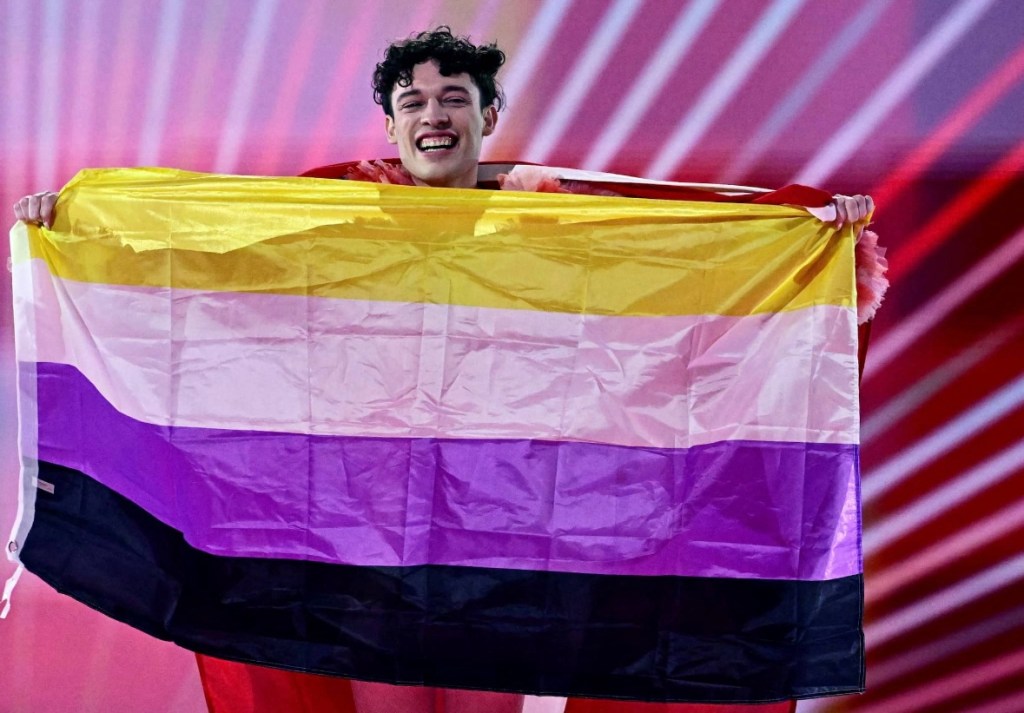
The Eurovision Song Contest organization acknowledges that the flag policy at the door of the Malmö Arena was not working well this year, with people wrongly having to hand in their rainbow or other pride flags.

“Pride flags were not banned and were welcome alongside the flags of the participating countries,” the European Broadcasting Union (EBU) assured on Instagram.

“However, sometimes things do not go as planned during complex live events and we recognize that we could have done better. We regret that people were wrongly forced to hand in their flag or felt that this prevented them from being their authentic selves.”

The organization felt compelled to write something about its flag policy after a post appeared on Instagram earlier in the day to mark the start of Pride Month. Many followers called the post “hypocritical”, as Swiss winner Nemo claimed that they were not allowed to take the non-binary flag on stage. The artist had to “smuggle it in”.

The EBU emphasizes that it is “incredibly proud” of Nemo and all non-binary, trans and queer fans. “We are grateful to them for bringing this to our attention,” the EBU statement reads.

The European flag was also not allowed inside the music event. European Commissioner Margaritis Schinas subsequently asked the EBU for clarification. The broadcasting association then gave the “sensitive global political context” as an explanation. “It was never our intention to discredit the EU flag itself,” the EBU said. Source: nu.nl

After Party

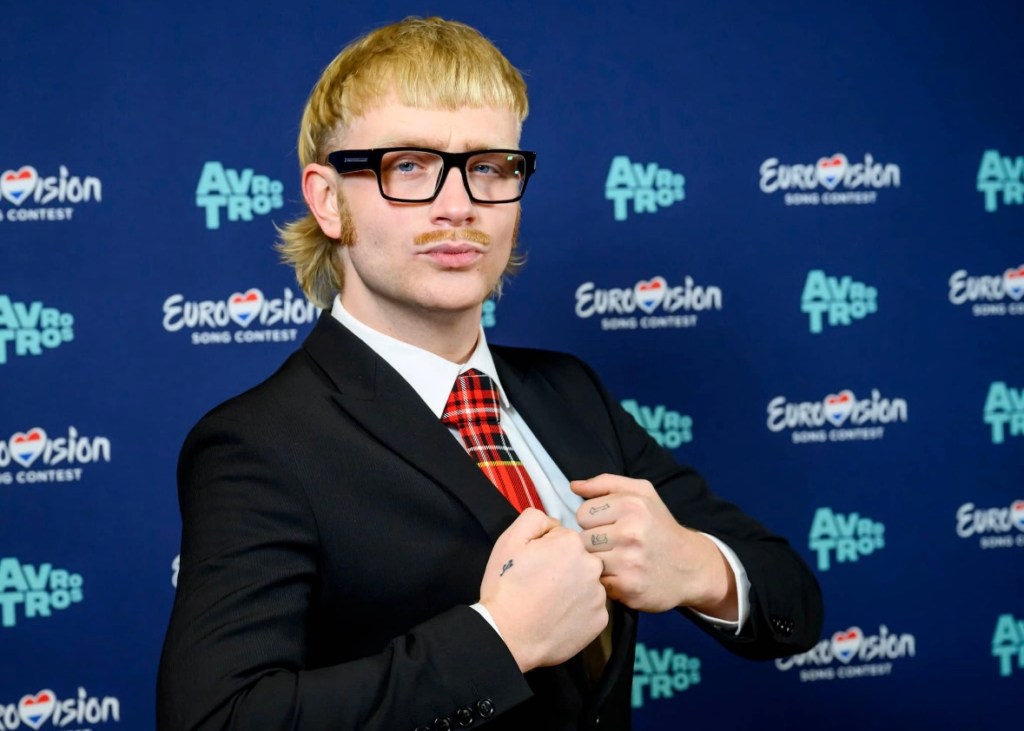
Things are going “pretty well” with Joost Klein, who participated in the Eurovision Song Contest on behalf of the Netherlands but was disqualified hours before the final. This is what Twan van de Nieuwenhuijzen, Head of Delegation at AVROTROS, said to RTL Boulevard on Sunday.

“It was an eventful weekend with a lot of emotions, which have still not fully settled or been processed. We are of course very disappointed,” says Van de Nieuwenhuijzen, who is also chairman of the selection committee. The entire delegation watched the final of the Eurovision Song Contest on Saturday evening, while enjoying “pizza, cola and a few glasses of wine”.

“Joost is doing quite well,” Van de Nieuwenhuijzen continues. Klein even went to an official Eurovision afterparty on the night from Saturday to Sunday. “Joost is a handsome and strong personality. That’s how he stands and that’s how he deals with it.”

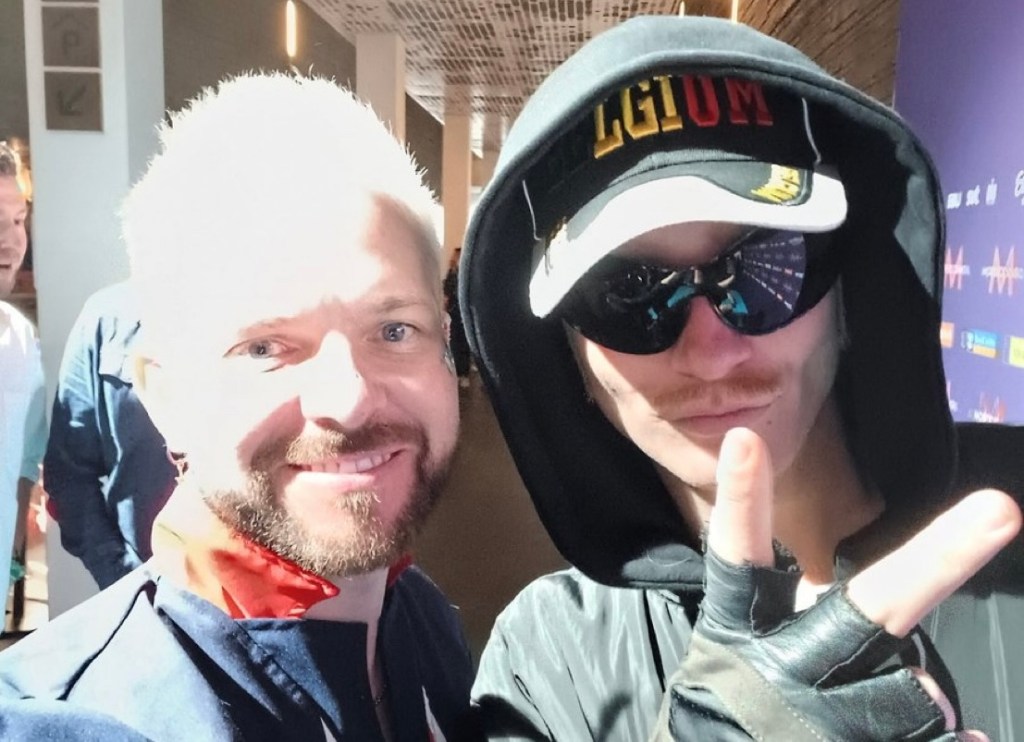
X shows a photo of a Eurovision fan and Klein at the party. “I’m not into negativity,” Klein reportedly said about his presence at the afterparty. The fan also shares a fragment of dancing to Europapa during the party. Source: nu.nl

Photo from X (@EurovisionShane).

Highlight

For me, highlight of the Eurovision Song Contest 2024 was the hilarious and awkward moment for Martin Österdahl, supervisor of the EBU, who -while the public booed loudly-had to give the points for the country that they disqualified today.

Hoogtepunt van het Eurovisie Songfestival 2024 was voor mij het hilarische en gênante moment voor Martin Österdahl, toezichthouder van de EBU, die -terwijl het publiek hem luid uitjouwde- de punten moest geven voor het land dat ze vandaag diskwalificeerden.

Statement EBU

Jean Philip De Tender, Deputy Director General of the EBU, says: “The European Broadcasting Union acknowledges the depth of feeling and the strong opinions that this year’s Eurovision Song Contest – set against the backdrop of a terrible war in the Middle East – has provoked. We understand that people will want to engage in debate and express their deeply held views on this matter. We have all been affected by the images, stories and the unquestionable pain suffered by those in Israel and in Gaza.

However, we wish to address the concerns and discussions surrounding this situation, especially the targeted social media campaigns against some of our participating artists.

The decision to include any broadcaster, including the Israeli’ broadcaster Kan, in the Eurovision Song Contest is the sole responsibility of the EBU’s governing bodies and not that of the individual artists. These artists come to Eurovision to share their music, culture, and the universal message of unity through the language of music.

The EBU has previously explained the reasoning for the inclusion of KAN and the differences between them as an independent broadcaster and previous participants who were excluded. Constructive debate is a positive consequence of such decisions.

However, while we strongly support freedom of speech and the right to express opinions in a democratic society, we firmly oppose any form of online abuse, hate speech, or harassment directed at our artists or any individuals associated with the contest. This is unacceptable and totally unfair, given the artists have no role in this decision.

The EBU is dedicated to providing a safe and supportive environment for all participants, staff, and fans of the Eurovision Song Contest. We will continue to work closely with all stakeholders to promote the values of respect, inclusivity, and understanding, both online and offline.

We urge everyone to engage in respectful and constructive dialogue and support the artists who are working tirelessly – on what is a music and entertainment show – to share their music with the world.”