This week the 59th edition of the annual Eurovision Song Contest took place in Copenhagen, Denmark, following the country’s victory at the 2013 contest with the song Only Teardrops by Emmelie de Forest. Organised by the European Broadcasting Union (EBU) and host broadcaster Danish Broadcasting Corporation(DR), the contest was held at B&W Hallerne, and consisted of two semi-finals on 6 and 8 May, and a final on 10 May 2014. The three live shows were presented by Danish television presenter Lise Rønne, musician Nikolaj Koppeland actor Pilou Asbæk.
Thirty-seven countries participated in the contest; this included the return of Poland and Portugal after absences of two years and one year respectively. Overall, there were two fewer countries competing compared to the previous year, making thirty-seven participants, the smallest number since 2006. Bulgaria, Croatia, Cyprus and Serbia announced that they would not be taking part.
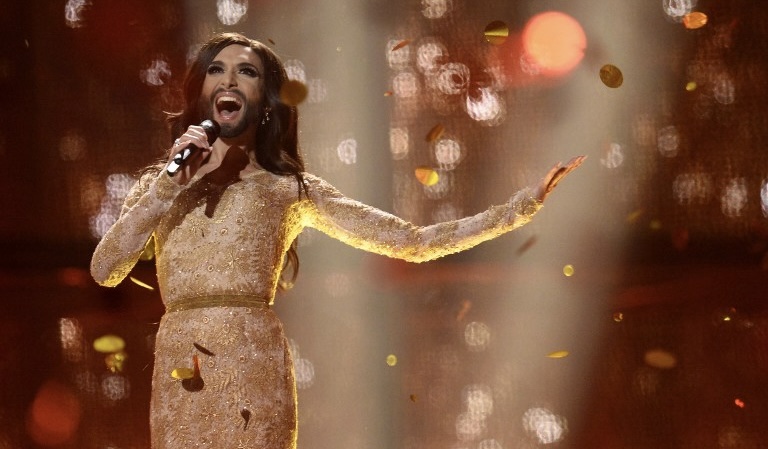
The winner was Austria with the song Rise Like a Phoenix, performed by Conchita Wurst and written by Charley Mason, Joey Patulka, Ali Zuckowski, and Julian Maas. The entry won both the jury vote and televote. Austria’s first victory was 48 years earlier in 1966, which at the time was the longest gap between wins. The Netherlands, Sweden, Armenia and Hungary rounded out the top five, with the Netherlands achieving their best result since its victory in 1975, Hungary achieving its best result since its fourth place in 1994, and Armenia equalling its best result from 2008. Of the Big Five countries, only Spain achieved a place in the top ten, while France finished in last place for the first time in its Eurovision history. Meanwhile, San Marino and Montenegro both qualified for the final for the first time.
A new record of 195 million viewers for the contest was reported. The host broadcaster DR and the EBU won the International TV Award at the Ondas Awards for their production of the contest. The show organisers from Copenhagen spent in total DKr 112 million on the contest, three times more than the expected costs, and were furthermore accused of nepotism.
Een week geleden ontving ik de officiële cd van het Eurovisie SongFestival met alle inzendingen voor 2014. Na een week de songs te hebben aangehoord, ben ik van mening dat er dit jaar geen uitschieters tussen zitten. Over twee weken begint de eerste halve finale en hieronder lees je mijn mening over wat we dan (op 6 mei) kunnen verwachten.
Armenië start de eerste halve finale op 6 mei. Aram MP3 zingt het nummer ‘Not alone‘. Het nummer begint met een pianoriedeltje en lijkt een ballad te zijn, maar halverwege wordt er -volgens Eurovisie-traditie- flink geschreeuwd onder begeleiding van strijkers en synthesizerbliepjes. Not my cup of tea, zeg maar.
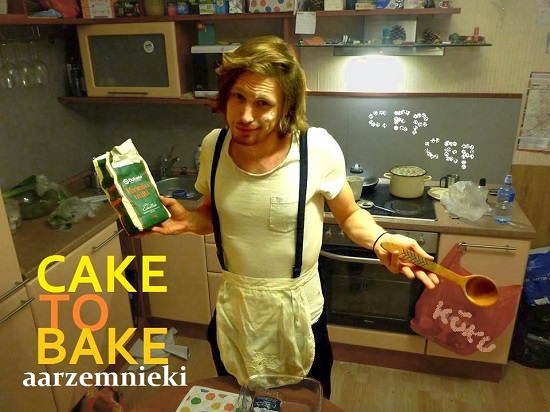
Als tweede kandidaat mag Letland optreden. De groep Aarzemnieki zingt het aanstekelijke ‘Cake to Bake‘. Halverwege het beluisteren van het nummer zat ik de eerste keer al mee te zingen. De zanger zingt over dat hij diverse wereldproblemen heeft opgelost, maar het bakken van een cake blijkt voor hem toch wel een hele opgave te zijn. Favoriet!
Hierna volgt Estland die Tanja naar Kopenhagen stuurt. Zij zingt het nummer ‘Amazing‘. Het nummer is een typisch uptempo songfestivalnummer. Niet echt zo amazing dus.
Het winnende land van twee jaar geleden, Zweden, denkt te winnen door Sanna Nielsen naar hun buurland te sturen en het nummer ‘Undo‘ te laten zingen. In zweden is een hele cultuur omtrent het songfestival met diverse festivals (Melodifestivalen). Beetje jammer, dat men zo’n zwakke ballad als winnaar ziet. IJsland als vijfde kandidaat in de eerste halve finale neemt een sprong in de tijd. Begin jaren tachtig om precies te zijn. In Pollapönk hebben ze een Adam & the Ants-kloon gevonden. Het nummer ‘No Prejudice‘ zou zo een hit uit 1982 kunnen zijn, maar inmiddels zijn we op het vaste land ruim 30 jaar verder. Jammer.
Albanië kiest veilig en stuurt Hersi, een zangeres die zingt als Shakira. Het nummer ‘One Night’s Anger‘ lijkt mij dan ook voor één nacht meer dan voldoende. Doei!
Laten we hopen dat Rusland dit jaar niet wint, anders moet ik het songfestival volgend jaar boycotten. De mensenrechten zijn in dat land nog steeds on(r)echt. Gelukkig mogen de zusjes Tolmachevy, die optreden onder de naam The Tolmachevy Twins het nummer ‘Shine‘ ten gehore brengen. Een mooie ballad, die in de finale op 10 mei vast nog wel eens gezongen zal worden. Maar iedere inzending met de titel ‘Shine‘ is sowieso kansloos op het songfestival. Toch?
Azerbeidzjan laat zangeres Dilarə Kazımova het nummer ‘Start a Fire‘ zingen. Een mooie ballad, maar wederom niet een die er uitschiet in deze halve finale, maar het gaat vast door naar de finale op 10 mei.
Onder het mom van dertien in een dozijn stuurt Oekraïne zangeres Maria Jaremtsjoek. Zij brengt een simpel, nietszeggend songfestivalnummer als ‘Tick-Tock‘ ten gehore. Misschien dat Oekraïne wat punten van Rusland mag ontvangen?
Toen ik de inzending van België voor het eerst hoorde, dacht ik een aardige ballad te horen, mooi gezongen door een Belgische dame. Toen ik het boekje van de cd inkeek, bleek de uitvoerend artiest geen vrouw, maar de gezette Axel Hirsoux te zijn. Zijn ‘Mother‘ vind ik een hele mooie ballad. Van mij mag Axel dik door naar de finale.
Moldavië stuurt zangeres Cristina Scarlat naar Denemarken. Christina vraag zich in het nummer ‘Wild Soul‘ af of ze wel een mens is, want ze kent geen genade. Ikzelf ken op momenten als deze ook geen genade. Het nummer is te zwak voor een finaleplek. Go home Moldavia, see you next year.
De republiek San Marino stuurt haar inwoonster Valentina Monetta naar het festival. Ze zingt de ballad ‘Maybe (forse)‘. Wederom een ballad die net echt opvalt. Helaas voor San Marino mag Italië pas hun stem uitgeven in de tweede halve finale op 8 mei.
Als dertiende deelnemer in deze halve finale, zorgt Portugal voor een vrolijke noot. Zangeres Suzy zingt ‘Quero Ser Tua‘. Een Zouk nummer. Heerlijk zomers en zoals ik al zei: Vrolijk! Quero Ser Meu, Suzy. Eén van mijn favorieten.
De discussie gaat al weken in Nederland. Halen we dit jaar weer de finale of mogen we na 6 mei alweer naar huis? Ilse en Waylon brengen als The Common Linnets het nummer ‘Calm After The Storm‘ ten gehore. Ikzelf vind het een heerlijk rustig nummer, maar of de rest van Europa dat ook vindt? Ik hoop van wel. Het nummer verdient wel een plek in de finale.
Na het rustige intermezzo van de Hollanders mag namens Montenegro de zanger Sergej Ćetković het podium betreden. Met zijn ‘Moj Svijet‘ valt hij na de vorige act zeker niet op. Misschien dat de stemmende buurlanden voor een finaleplaats zorgen?
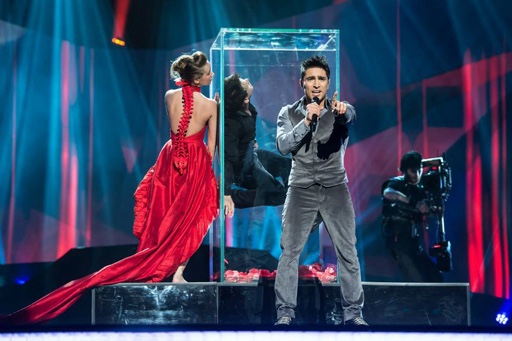
Als laatste kandidaat van deze eerste halve finale stuurt Hongarije de zanger András Kállay-Saunders met het nummer ‘Running‘ het podium op. Het nummer begint rustig, maar al snel rent het in een rap tempo naar een nummer dat mij doet denken aan ‘Maniac‘ van Michael Sembello. Om vervolgens weer terug te zakken naar een balladachtig nummer en in het refrein weer te versnellen. Ik hou van hardlopen, maar zonder interval. Op dit nummer ren ik achteruit. Of weg.
Ik heb nog niet op YouTube kunnen kijken hoe de songs live ten uitvoering worden gebracht, want ervaring heeft mij geleerd dat hele mooie liedjes op de cd in een live-uitvoering heel anders in het gehoor liggen. Dus mijn mening kan de komende weken nog wijzigen. Mocht je heel nieuwsgierig zijn, naar alle inzendingen (en heb je Spotify), klik dan hier voor alle 37 inzendingen van de 59e editie van het Eurovisie SongFestival.
“I’ve got a cake to bake, and got no clue at all.”
The organization of the Eurovision Song Contest is tightening the voting rules because Azerbaijan bribed jury members and televoters in 2013.
The Eastern European country is said to have hired Lithuanian students to influence the vote. Azerbaijan finished second with 234 points, behind winner Denmark.
Singer Farid Mammodov’s song Hold Me received twelve points from Russia, Lithuania, Montenegro, Malta, Israel, Hungary, Greece, Georgia, Bulgaria and Austria. Azerbaijan itself gave twelve points to Gravity by the Ukrainian singer Zlata Ognevich.
The EBU (European Broadcasting Union) says the fraud was discovered on time and that the counting was fair. Still, the rules will be tightened for next time. Normally when a country is caught committing fraud there is a three-year ban, but in this case the Azerbaijan organization had nothing to do with the case. This year Denmark is organizing the Eurovision Song Contest. Source: Televizier.nl
This week the 58th edition of the annual Eurovision Song Contest took place in Malmö, Sweden, following the country’s victory at the 2012 contest with the song Euphoria by Loreen. Organised by the European Broadcasting Union (EBU) and host broadcaster Sveriges Television (SVT), the contest was held at the Malmö Arena, and consisted of two semi-finals on 14 and 16 May, and a final on 18 May 2013. The three live shows were presented by Swedish comedian and television presenter Petra Mede, being the first time only one host had presented the show since the 1995 contest. Former Swedish entrant Eric Saade acted as the green room host in the final.
Thirty-nine countries participated in the contest, with Armenia returning after its one-year absence. Bosnia and Herzegovina, Portugal, Slovakia and Turkey all ceased their participation for various reasons. Slovakia and Turkey have yet to return to the contest since.
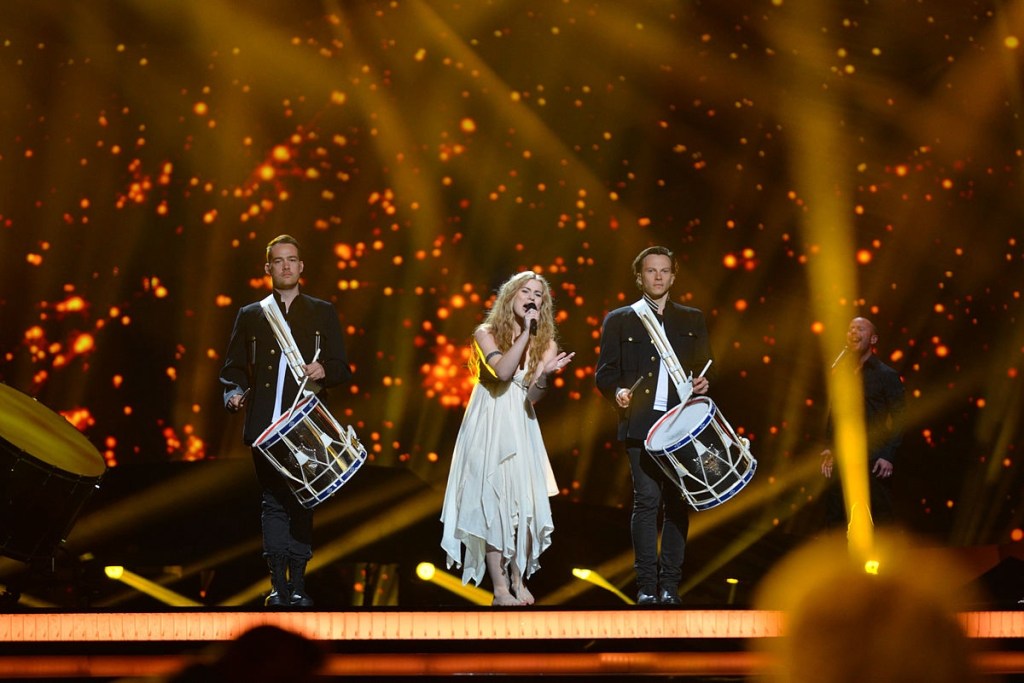
The winner was Denmark with the song Only Teardrops, performed by Emmelie de Forest and written by Lise Cabble, Julia Fabrin Jakobsen and Thomas Stengaard. The song had the highest average score in both the televote and jury vote. Azerbaijan, Ukraine, Norway and Russia rounded out the top five.
This year marked the reintroduction of the Parade of Nations, a concept which was first used in the contest from 1959 to 1963 (with the exception of 1962) before making a one-off return in 1983. The concept had also been used, on-and-off, in the Junior Eurovision Song Contest since 2004. It sees all countries performing in the final presenting themselves with their national flags before the contest begins. This year, the contestants entered the main stage by walking across a bridge over the audience. This idea has subsequently continued in every edition of the contest onwards.
The EBU reported that 170 million viewers watched the semi-finals and final of the 2013 edition.
Today the 45th edition of the annual Eurovision Song Contest 2000 took place in Stockholm, Sweden, following the country’s victory at the 1999 contest with the song “Take Me to Your Heaven” by Charlotte Nilsson. Organised by the European Broadcasting Union (EBU) and host broadcaster Sveriges Television (SVT), the contest was held at the Globe Arena. The contest was presented by Swedish television presenters Kattis Ahlström and Anders Lundin.
Twenty-four countries took part in the contest. Latvia participated for the first time, while Slovakia, Greece and Hungary decided not to compete, citing financial reasons. Finland, Macedonia, Romania and Switzerland returned after their relegation from the previous edition. Russia also returned, after their last participation in 1997. Meanwhile, Bosnia and Herzegovina, Lithuania, Poland, Portugal and Slovenia were relegated due to having the lowest average scores over the previous five editions.
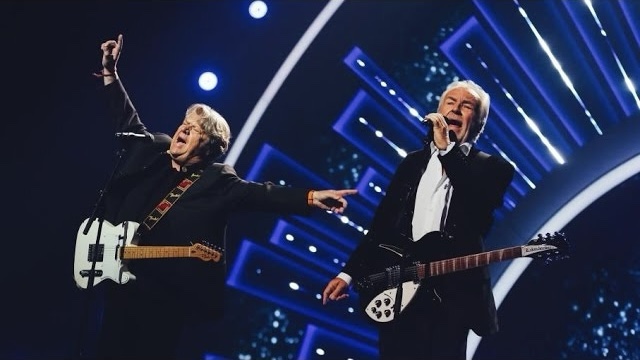
The winner was Denmark with the song “Fly on the Wings of Love”, performed by the Olsen Brothers and written by the oldest brother Jørgen Olsen. This was Denmark’s second victory in the contest, following their win in 1963 almost 4 decades earlier. Russia, Latvia, Estonia and Germany rounded out the top five. Both Russia and Estonia achieved their best result in the contest up to this point, while Latvia achieved the best placing for a debuting country since Poland’s second-place finish in 1994. On the day of their victory, Jørgen Olsen was 50 years and 61 days of age, making him the oldest artist yet to win the contest. The combined ages of the Olsen Brothers make them the oldest aged act ever to win the contest.
Sponsored by Microsoft, the contest was also broadcast in Australia, Canada, Japan, the United States, and via the Internet for the first time.
In the Netherlands, NOS decided to take the contest off air halfway through because of the Enschede fireworks disaster that happened earlier that day, so it could use the channel for continuous news broadcasts. Later, NOS declared that it was both for practical reasons as well as because they found it “inappropriate to broadcast a light entertainment programme on the night of such a catastrophic event”. As a result, televoting had to be suspended and the Dutch votes were given by a stand-by jury instead. The contest was later rebroadcast in full on 12 June 2000.
Today was a warm, almost tropical day in the Netherlands. We spent the day on the beach in Den Helder and heard about the fireworks disaster on our little transistor radio. In the evening, back home in Almere, we continued to watch the broadcast via the BBC, after the NOS took the contest off the air.
Today in 1964, the 9th edition of the annual Eurovision Song Contest took place in Copenhagen, Denmark, following the country’s victory at the 1963 contest with the song Dansevise by Grethe and Jørgen Ingmann. Organised by the European Broadcasting Union (EBU) and host broadcaster Danmarks Radio (DR), the contest was held at Tivolis Koncertsal on 21 March 1964, and was hosted by Danish TV presenter Lotte Wæver.
Sixteen countries participated in the contest. Portugal made its debut this year, whereas Sweden decided not to enter.
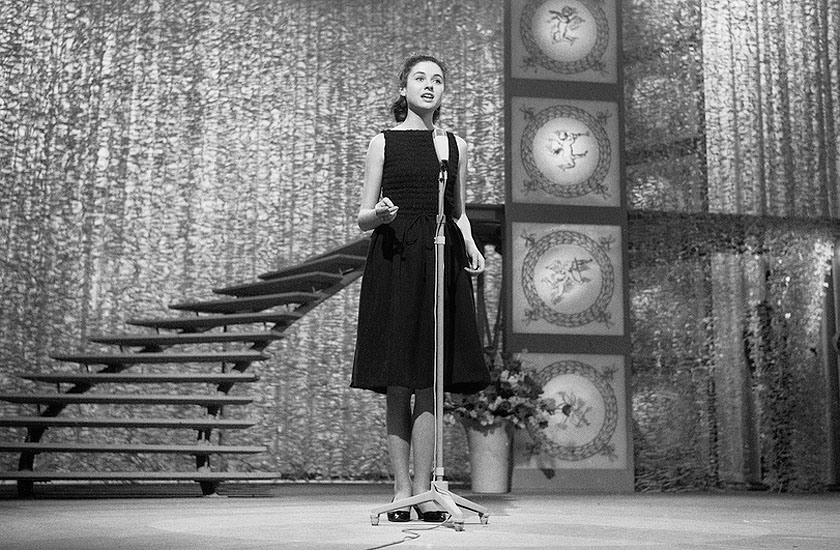
The winner of the contest was Italy with the song Non ho l’età, performed by Gigliola Cinquetti, written by Nicola Salerno and composed by Mario Panzeri. At the age of 16 years and 92 days, Gigliola Cinquetti became the youngest winner of the contest yet; a record she held until 1986. The entry had one of the widest margins of victory ever witnessed in the competition. It garnered almost three times as many points as the second-placed song.
Besides the 1956 contest, the 1964 contest is the only other one of which there are no surviving video recordings.
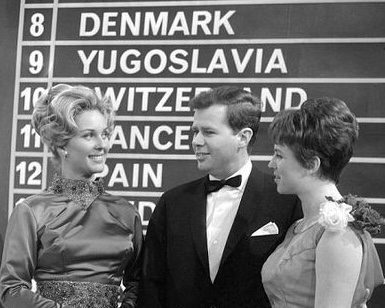
Today the 8th edition of the annual Eurovision Song Contest took place in London, United Kingdom. It was organised by the European Broadcasting Union (EBU) and host broadcaster British Broadcasting Corporation (BBC), who agreed to stage the event after France, who had won the 1962 edition, declined to host it due to financial shortcomings, also having hosted the competition in 1959 and 1961. The contest was held at the BBC Television Centre on Saturday 23 March 1963 and was hosted by Katie Boylefor a second time.
Sixteen countries participated in the contest, the same countries that had participated the previous year.
The contest this year was won by Denmark with the song Dansevise, performed by Grethe and Jørgen Ingmann. This was the first victory for any of the Nordic countries. Four countries got nul points, with Finland, Norway and Sweden failing to score any points for the first time and the Netherlands for the second time, becoming the first country to go two years in a row without scoring a single point.




 euro-vision.blog