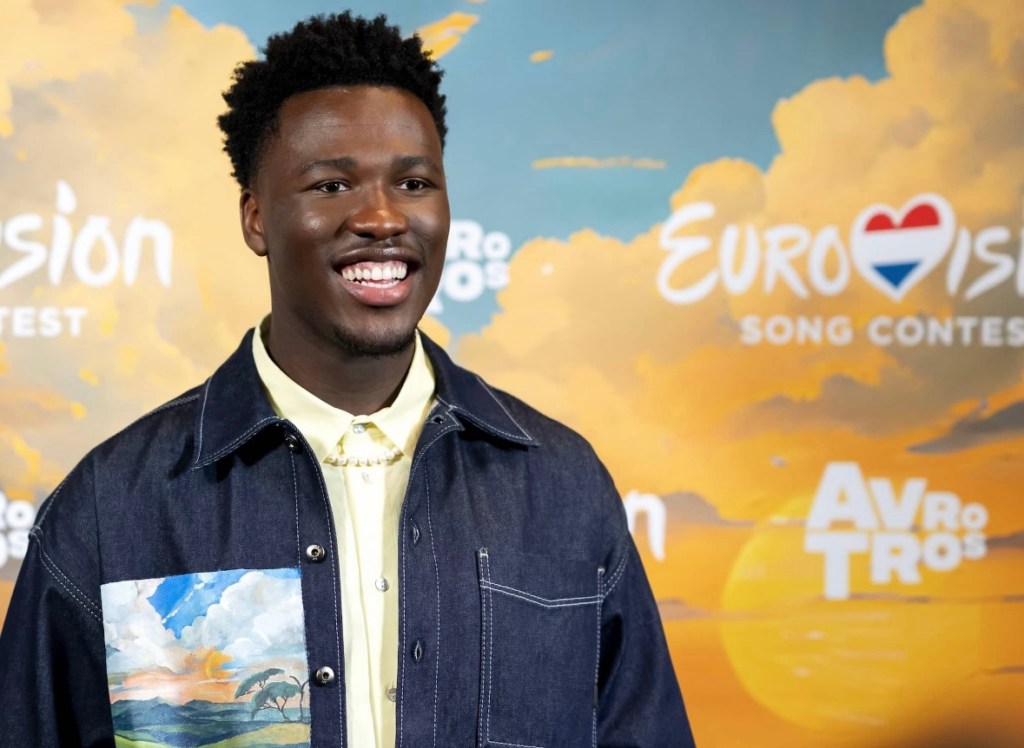
Claude Sings First Time

Claude performed his song C’est La Vie on television for the first time on Saturday at Eva, and for a small audience. The singer will be taking the French-English song to the Eurovision Song Contest in Basel.

Claude performed while walking through the corridors of Eva. At the end, he stood in the rain with a group of dancers. He sang the song in tune, although he was a bit nervous.

At the beginning of the broadcast, Claude said that he was a bit nervous about performing the song to an audience. “I actually didn’t have any tension until I saw all these people sitting there and thought: oh, there will be a lot more of them soon.”

The singer gave a little hint of his Eurovision performance: he will be dancing. He did not want to give any more details about the choreography for C’est La Vie.

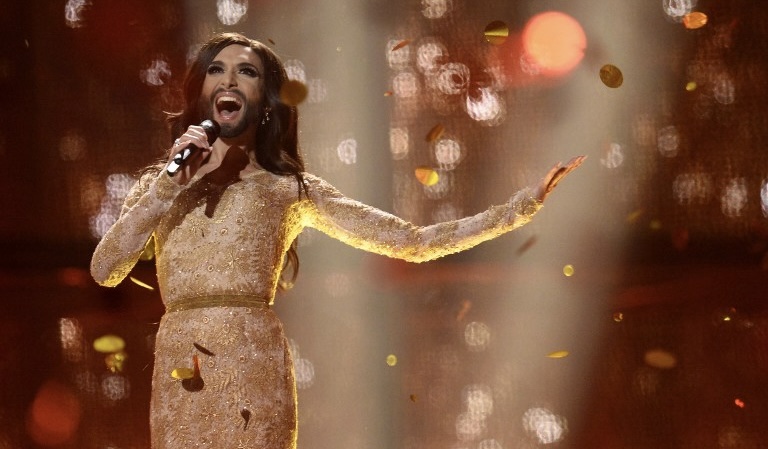
The Eva broadcast focused on the first time that Claude watched the Eurovision Song Contest. That was in 2014, when Conchita Wurst won. A very small part of that winning song can be heard in the clip of C’est La Vie.

Wurst had come to the studio especially for Claude. The Austrian artist sang Rise Like a Phoenix and gave Claude a tip: “Don’t party. There will be time for that later.”

Claude’s mother was seen in the broadcast in a previously recorded interview. She said that she is proud of her son. In an interview with NU.nl, she said earlier that she thinks that C’est La Vie tells very well what she taught her children: that life sometimes takes strange turns, but you have to keep going. “I always told my children: one day it will be okay.”

Eva’s broadcast was a special one: normally the AVROTROS program is on from Monday to Thursday. Due to the World Cup distances, there was no broadcast on Thursday and the Claude special was recorded.

The first semi-final of the Eurovision Song Contest in Basel – Claude will appear on stage – is on May 13. The second semi-final is two days later and the final is on Saturday 17 May. Nu.nl reports from Basel and follows Claude closely. Source: nu.nl

Eurovision 2015

This week the 60th edition of the annual Eurovision Song Contest took place in Vienna, Austria, following the country’s victory at the 2014 contest with the song Rise Like a Phoenix by Conchita Wurst. Organised by the European Broadcasting Union(EBU) and host broadcaster Österreichischer Rundfunk (ORF), the contest was held at the Hall D of the Wiener Stadthalle and consisted of two semi-finals on 19 and 21 May, and a final on 23 May 2015. The three live shows were presented by Austrian television presenters Mirjam Weichselbraun, Alice Tumler and Arabella Kiesbauer, while the previous edition’s winner Conchita Wurst acted as the green room host.

Forty countries participated in the contest, with Australia making a guest appearance. Cyprusand Serbia returned, after their one-year absence, while the Czech Republic returned after their last participation in 2009. Meanwhile, Ukraine announced their non-participation due to financial and political crises related to the Russo-Ukrainian War.

The winner was Sweden with the song Heroes, performed by Måns Zelmerlöw and written by Anton Malmberg Hård af Segerstad, Joy Deb and Linnea Deb. This was the country’s second win in three years, having also won in 2012. Sweden won the jury vote and had the highest combined points, but placed third in the televote behind Italy and Russia. Overall the latter two countries placed third and second respectively, and Belgium and Australia rounded out the top five. Further down the table, Montenegro achieved its best result since its independence, finishing thirteenth.

For the first time, the top four of the contest all scored 200 points or better. Russia’s entry A Million Voices became the first non-winning Eurovision song to score over 300 points. Austria and Germany became the first countries since 2003 to score no points in the final, with Austria also becoming the first (and to date, only) host country to fail to score a point.

The EBU reported that over 197 million viewers worldwide watched the contest, beating the 2014 viewing figures by 2 million.

Eurovision 2014.

This week the 59th edition of the annual Eurovision Song Contest took place in Copenhagen, Denmark, following the country’s victory at the 2013 contest with the song Only Teardrops by Emmelie de Forest. Organised by the European Broadcasting Union (EBU) and host broadcaster Danish Broadcasting Corporation(DR), the contest was held at B&W Hallerne, and consisted of two semi-finals on 6 and 8 May, and a final on 10 May 2014. The three live shows were presented by Danish television presenter Lise Rønne, musician Nikolaj Koppeland actor Pilou Asbæk.

Thirty-seven countries participated in the contest; this included the return of Poland and Portugal after absences of two years and one year respectively. Overall, there were two fewer countries competing compared to the previous year, making thirty-seven participants, the smallest number since 2006. Bulgaria, Croatia, Cyprus and Serbia announced that they would not be taking part.

The winner was Austria with the song Rise Like a Phoenix, performed by Conchita Wurst and written by Charley Mason, Joey Patulka, Ali Zuckowski, and Julian Maas. The entry won both the jury vote and televote. Austria’s first victory was 48 years earlier in 1966, which at the time was the longest gap between wins. The Netherlands, Sweden, Armenia and Hungary rounded out the top five, with the Netherlands achieving their best result since its victory in 1975, Hungary achieving its best result since its fourth place in 1994, and Armenia equalling its best result from 2008. Of the Big Five countries, only Spain achieved a place in the top ten, while France finished in last place for the first time in its Eurovision history. Meanwhile, San Marino and Montenegro both qualified for the final for the first time.

A new record of 195 million viewers for the contest was reported. The host broadcaster DR and the EBU won the International TV Award at the Ondas Awards for their production of the contest. The show organisers from Copenhagen spent in total DKr 112 million on the contest, three times more than the expected costs, and were furthermore accused of nepotism.