Pride

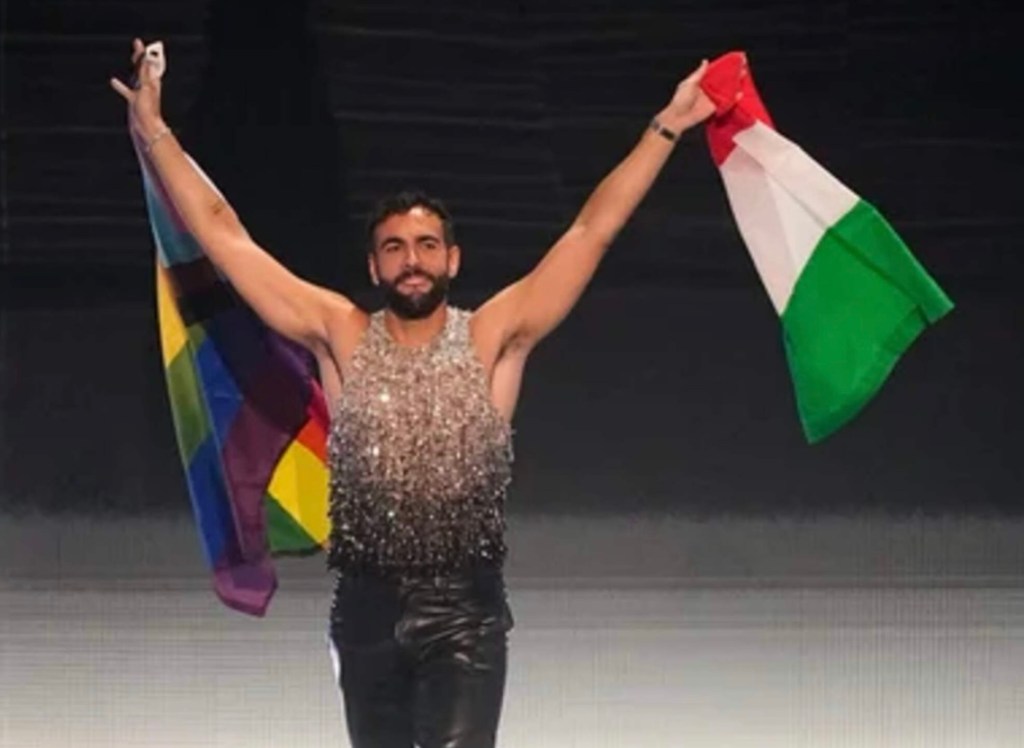
AVROTROS objects to the decision of the European Broadcasting Union (EBU) to ban pride flags at the Eurovision Song Contest. According to the broadcaster, the flag is not a political statement.

The broadcaster made the decision after consultation with the interest group COC. Both parties believe that the ban on the rainbow flag sends the wrong message. “Especially in these times, when the human rights of the LGBTQIA+ community are under pressure, it is not a good signal to ban these flags at the Song Contest,” says the COC, which describes the conversation with AVROTROS as “pleasant and constructive”.

The EBU previously determined that participants may only display flags of the country they represent in official places, such as the stage and the Green Room. AVROTROS wants pride flags to fall outside this policy. “We would like to see if we can get something moving. We hope that the EBU is open to that.”

AVROTROS had previously supported the general flag ban, but emphasized that the change of course was not a result of the conversation with the COC. “We previously indicated that we regretted that flags were banned from the rainbow community.” Source: nu.nl.
Doubts

Only when AVROTROS is confident that the Song Contest will be structurally adjusted to “put the artists and their musical message central again”, will the broadcaster consider participating for future Eurovisions.

Earlier this week, the European Broadcasting Union (EBU) announced that it had commissioned an independent investigation into its own organisation.

The EBU did this after complaints about an unsafe atmosphere at the last edition of the Eurovision Song Contest. The Song Contest delegations will be questioned (anonymously) for this investigation.

AVROTROS, like other participating broadcasters, has been asked to cooperate in an investigation by the EBU. The broadcaster has decided to cooperate “with the necessary reservations”.

“AVROTROS believes that a broader, in-depth and truly independent investigation is needed to address structural problems.”

According to the broadcaster, not only the working methods of the organisation and the EBU in Malmö should be investigated by “a recognised and independent research agency”.

AVROTROS also wants an investigation into “the independent role and mandate of the committee of delegated participating countries, the rules, procedures and appeal options for complaints and the increased pressure on the artists and delegations in the run-up to and during the Song Festival”.

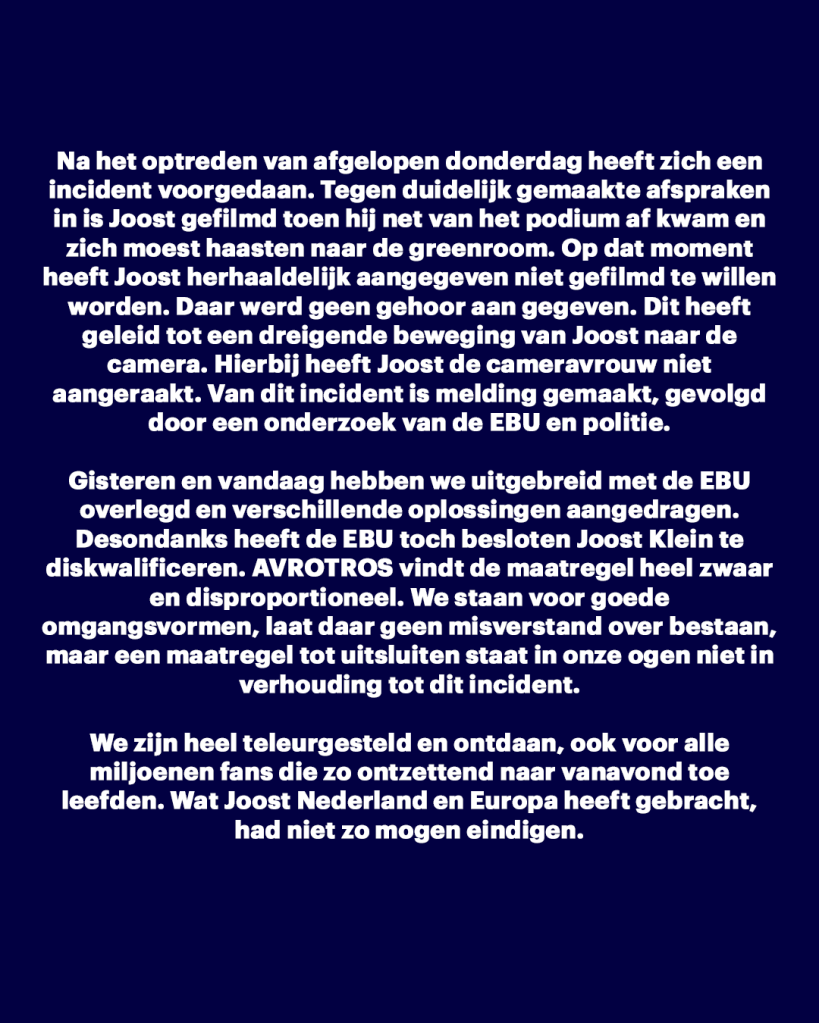
The broadcaster still believes that the disqualification of Dutch participant Joost Klein was unnecessary and disproportionate. Klein is the first artist to be excluded from participation while the Song Festival was already underway.

The singer is said to have made a threatening gesture towards a camerawoman. The Justice Department is currently investigating the incident.

The NPO (Dutch Public Broadcasting) agrees with the criticism of the broadcaster. “We support the conditions that AVROTROS sets for a possible subsequent participation”, a spokesperson said. Source: nu.nl