According to the EBU, the Public Prosecution Service’s decision to dismiss the case does not detract from the fact that, according to the EBU, Klein acted in violation of EBU rules. His disqualification was therefore justified according to the EBU. Unfortunately, it does not state which rule was violated that justifies such a draconian punishment as disqualification.
Continuing to maintain the publicly stated view that Joost Klein committed a disqualifying act is without a doubt a defamatory accusation. After all, anyone who deliberately attacks someone’s honour or good name by accusing them of a certain act with the apparent aim of publicising it commits the criminal offence of defamation. AvroTros could therefore file a complaint of defamation against the EBU.
All the more so now that the consequences of the disqualification have also manifested themselves in the Netherlands and the Netherlands can therefore be regarded as the place where the crime of defamation was committed.
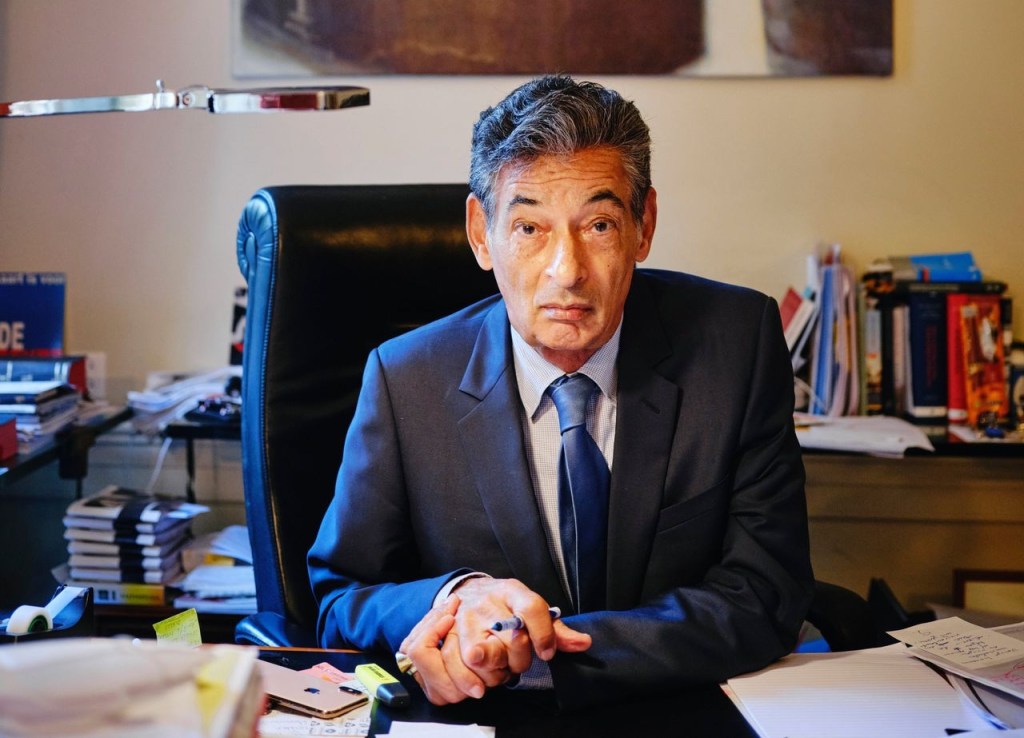
Gerard Spong, Amsterdam.
The above concerns a letter to the editor of de Volkskrant, from the Dutch lawyer Gerard Spong, in which he indicates that the statement of the EBU, without reason for the disqualification, is libel and that an official complaint can be filed against this. I wonder if AVROTOS or Joost Klein will take action on this. Personally, I would consider this a strong action. 😊
The European Broadcasting Union (EBU) still fully supports the decision to disqualify Joost Klein from the Eurovision Song Contest in Malmö. The Swedish authorities decided on Monday to discontinue the investigation into the artist.
EBU boss Jean Philip De Tender states in the statement that the Swedish authorities’ investigation was about whether a criminal offence had been committed and not “whether Mr Klein behaved inappropriately and violated the rules of the Eurovision Song Contest”.
According to De Tender, the Swedish authorities’ decision not to prosecute Klein therefore has “no influence” on the decision to disqualify the singer. The EBU therefore continues to support the decision.
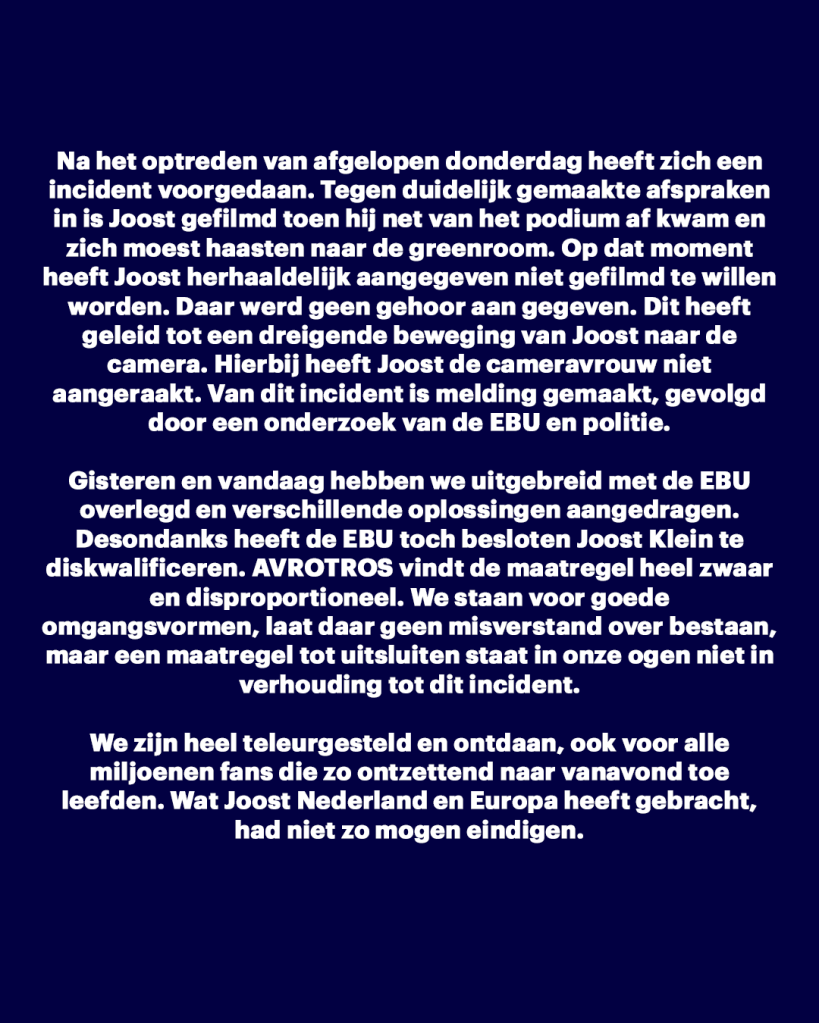
The Dutch entry for the Eurovision Song Contest was disqualified in May after an incident behind the scenes of the event. The singer allegedly made a threatening gesture towards a camerawoman.
On Monday it was announced that the Swedish authorities had decided to discontinue the investigation into the incident with Klein due to a lack of evidence. According to the investigators, it cannot be proven that Klein’s action “led to serious fear” or that he “had such intentions”.
Klein’s manager said that the singer is “incredibly happy and relieved” that the investigation into the alleged violent incident has been stopped. “We, as a team, are incredibly happy and relieved that this uncertain period has now come to an end. Finally we can say it out loud: there was never a reason for this case.”
AVROTROS wants to have a meeting with the EBU in the short term, in which Klein’s “unjustified disqualification” will be central.
The investigation into the incident involving Joost Klein at the Eurovision Song Contest has been discontinued. The Swedish Public Prosecution Service reported on Monday that there was a lack of evidence. This means that Klein will not be prosecuted.
The Swedish Public Prosecution Service writes that the investigation into a 26-year-old man who allegedly threatened a camerawoman has been closed. The investigation shows that Klein made a movement in which he hit her camera.
According to the public prosecutor, the incident happened quickly and the stories of Klein, the camerawoman and witnesses differ. Therefore, it is not possible to determine what exactly happened.
“Today, the investigation is closed because it cannot be proven that the act caused real fear and that this was the man’s intention,” writes prosecutor Fredrik Jönsson. Dutch witnesses were also heard for the case. Last month it was announced that the Dutch Public Prosecution Service had reported this to the Swedish Public Prosecution Service.
AVROTROS writes in a response that it finds Klein’s disqualification “unnecessary and disproportionate from the start”. “That is now also the case. We are still very disappointed that the Europapa adventure of Joost Klein and the whole of the Netherlands was brutally ended in this way. The next step is to have a meeting with the EBU management about this matter in the short term.”
In May, Klein was disqualified from the Eurovision Song Contest because of the incident, thus making Eurovision Song Contest history: never before had a country been disqualified while the event was already underway.
The singer qualified for the final on behalf of the Netherlands with the song Europapa. On the day of the final, it became clear that Klein was not welcome on the Eurovision stage that evening. The decision led to anger at AVROTROS.
AVROTROS has expressed its doubts about participating in next year’s Eurovision Song Contest, if the organiser European Broadcasting Union (EBU) does not implement changes to its policy. Several delegations complained this year about an unpleasant atmosphere behind the scenes at the Eurovision Song Contest.
Klein himself has not yet shared his side of the story in the media. Since the Eurovision Song Contest, he has hinted several times that he wants to participate again in 2025. For example, during his performance at Pinkpop, he shouted “2025, why not?” and posted “Eurovision 2025” on his Instagram account.
Norway, like the Netherlands, is waiting for the time being to confirm its participation in the next Eurovision Song Contest. Stig Karlsen, head of the Norwegian delegation, first wants to hear what improvements the organiser of the Song Contest wants to implement.
Karlsen told the newspaper Aftenposten that Norway intends to participate again in 2025, but that changes are needed. “We have not yet confirmed our participation,” he said. According to the Norwegians, the outcome of the ongoing investigation into the last edition of the Song Contest is important. “We cannot go into another year with so many conflicts and protests,” Karlsen said.
The Norwegian broadcaster NRK has asked the organiser of the Song Contest, the European Broadcasting Union (EBU), to consider the participation of countries that are in the middle of an armed conflict, such as Israel. “Perhaps such countries that cause noise should temporarily step aside,” Karlsen suggested.
On Thursday, AVROTROS and the NPO announced that the Netherlands will only participate next year if the EBU implements or promises a number of changes. Earlier this week, the European broadcasting association announced an independent investigation into various complaints about an unsafe atmosphere during the event in Malmö.
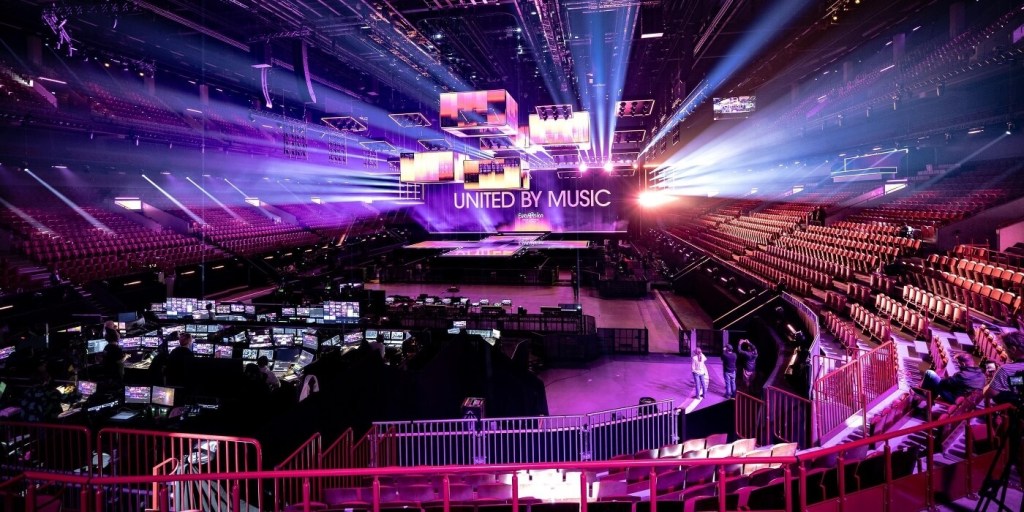
The last edition of the Eurovision Song Contest in Malmö, Sweden, was an eventful one. For example, some people did not agree that Israel was allowed to participate despite the war in Gaza, which led to demonstrations in Malmö.
Some delegations did not always feel safe or noticed a tense atmosphere. Several countries filed complaints with the EBU and artists, including the Norwegian band Gate, also considered withdrawing.
Only when AVROTROS is confident that the Song Contest will be structurally adjusted to “put the artists and their musical message central again”, will the broadcaster consider participating for future Eurovisions.
Earlier this week, the European Broadcasting Union (EBU) announced that it had commissioned an independent investigation into its own organisation.
The EBU did this after complaints about an unsafe atmosphere at the last edition of the Eurovision Song Contest. The Song Contest delegations will be questioned (anonymously) for this investigation.
AVROTROS, like other participating broadcasters, has been asked to cooperate in an investigation by the EBU. The broadcaster has decided to cooperate “with the necessary reservations”.
“AVROTROS believes that a broader, in-depth and truly independent investigation is needed to address structural problems.”
According to the broadcaster, not only the working methods of the organisation and the EBU in Malmö should be investigated by “a recognised and independent research agency”.
AVROTROS also wants an investigation into “the independent role and mandate of the committee of delegated participating countries, the rules, procedures and appeal options for complaints and the increased pressure on the artists and delegations in the run-up to and during the Song Festival”.
The broadcaster still believes that the disqualification of Dutch participant Joost Klein was unnecessary and disproportionate. Klein is the first artist to be excluded from participation while the Song Festival was already underway.
The singer is said to have made a threatening gesture towards a camerawoman. The Justice Department is currently investigating the incident.
The NPO (Dutch Public Broadcasting) agrees with the criticism of the broadcaster. “We support the conditions that AVROTROS sets for a possible subsequent participation”, a spokesperson said. Source: nu.nl
The European Broadcasting Union (EBU) has ordered an independent investigation into its own organisation, following complaints about an unsafe atmosphere at the last edition of the Eurovision Song Contest in Sweden. Sources reported this to RTL Boulevard and AD.
The independent investigation would consist of (anonymously) questioning participating Eurovision delegations.
The Netherlands made an official report of an unsafe atmosphere in the Malmö Arena. AVROTROS confirmed to NU.nl that there was an unsafe atmosphere in the so-called delegation bubble in particular.
The Netherlands was not the only one to speak out: artists from Lithuania, Switzerland, Portugal, Ireland and Norway, among others, were critical of the atmosphere behind the scenes, which was described as tense. Norway’s entry, the band Gate, told the Norwegian newspaper Aftenposten that they had considered withdrawing until shortly before the final.
The EBU previously responded to the angry reactions in an official statement. The organisation mainly blamed the participating countries themselves. “We find it very unfortunate that some delegations did not adhere to the rules during the event and during broadcasts. We have spoken to various delegations about incidents that have come to our attention. The EBU will continue to talk to the chairs of the delegations and will conduct an evaluation of this Song Festival”, the statement read. Now the organization is having itself investigated after all.
Joost Klein is the first artist in the history of the Song Festival to be excluded from participation while the festival was already underway. The artist is said to have made a threatening gesture towards a camerawoman. The Justice Department is currently investigating the incident.
AVROTROS, the broadcaster that covers the Song Festival for the Netherlands, has announced that it will respond to the investigation at a later date.
The Eurovision Song Contest organization acknowledges that the flag policy at the door of the Malmö Arena was not working well this year, with people wrongly having to hand in their rainbow or other pride flags.
“Pride flags were not banned and were welcome alongside the flags of the participating countries,” the European Broadcasting Union (EBU) assured on Instagram.
“However, sometimes things do not go as planned during complex live events and we recognize that we could have done better. We regret that people were wrongly forced to hand in their flag or felt that this prevented them from being their authentic selves.”
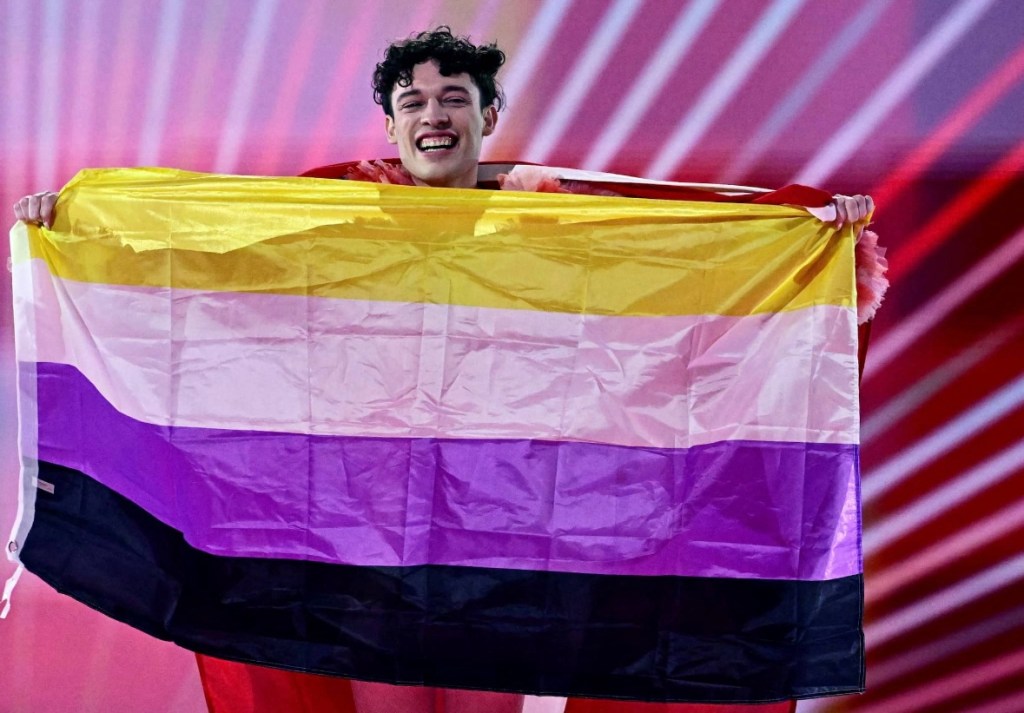
The organization felt compelled to write something about its flag policy after a post appeared on Instagram earlier in the day to mark the start of Pride Month. Many followers called the post “hypocritical”, as Swiss winner Nemo claimed that they were not allowed to take the non-binary flag on stage. The artist had to “smuggle it in”.
The EBU emphasizes that it is “incredibly proud” of Nemo and all non-binary, trans and queer fans. “We are grateful to them for bringing this to our attention,” the EBU statement reads.
The European flag was also not allowed inside the music event. European Commissioner Margaritis Schinas subsequently asked the EBU for clarification. The broadcasting association then gave the “sensitive global political context” as an explanation. “It was never our intention to discredit the EU flag itself,” the EBU said. Source: nu.nl
We will never know what would have happened if Joost Klein had been allowed to participate in the final of the Eurovision Song Contest, but he impressed Europe even with disqualification. The singer stormed the charts with Europapa last week.
The final of the Eurovision Song Contest attracts millions more viewers every year than the semi-finals that take place during the week. Klein missed his chance to appeal to this large audience because he was disqualified after the second semi-final. Yet this is not reflected in his chart success.
Europapa is the most listened to entry of the year on Spotify. The counter now stands at more than 83 million streams, a significant part of which have of course also been collected in the Netherlands.
He keeps the Italian Angelina Mango at bay, who has been played 72 million times with her hit la noia. Europapa peaked at 22nd place on Spotify’s global hit list a few days after the Eurovision Song Contest. That’s higher than any other entry.
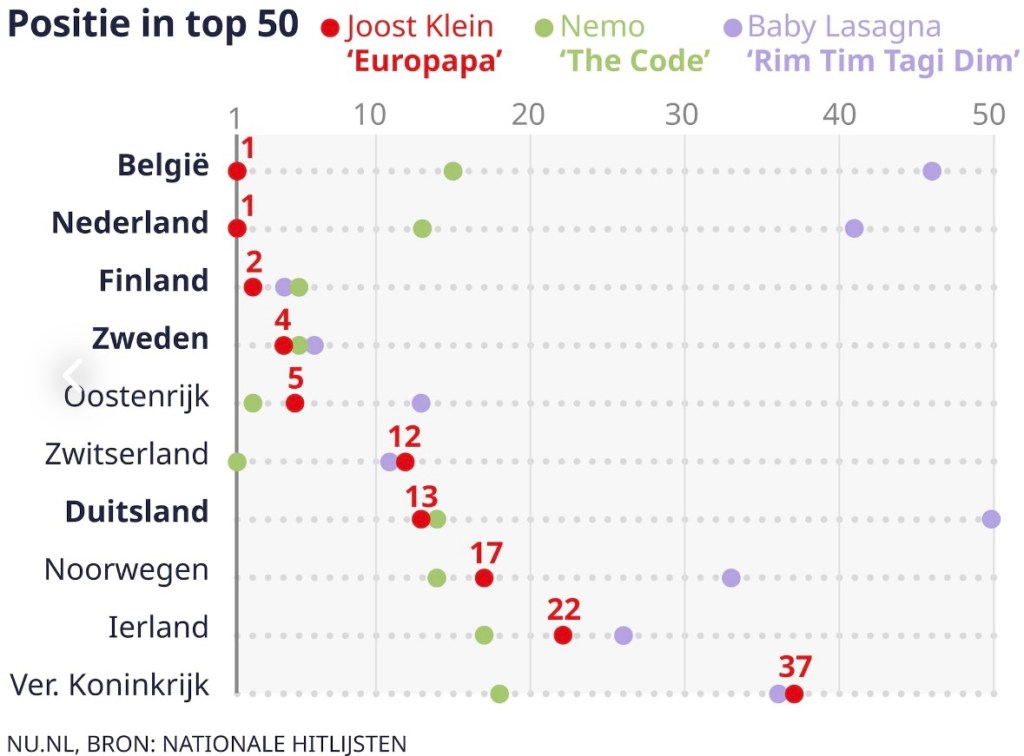
Joost Klein is also doing well in the official charts in Europe. It took first place in the Baltic states of Estonia, Latvia and Lithuania, and is at the top among our southern neighbors. In addition, Klein is the highest ranked Eurovision participant in Sweden, Finland and Germany. There he leaves the eventual winner, Nemo from Switzerland, behind him.
Nemo is also doing well in the charts with their winning song The Code. In many European countries they rank highly and in their home country the song is in first place. Baby Lasagna from Croatia, which received the most votes from the public and finished second, can also count on chart success. His Rim Tim Tagi Dim is the most frequently and highly rated after the songs of Joost and Nemo.
Klein’s success is not limited to Europe. The singer is also heavily played in the United States, where the Eurovision Song Contest is not very popular. Billboard reports that American users accounted for more than 7 percent of the 23 million Spotify streams. The last time a Eurovision song achieved such a large share of listeners in the US was when the Italian band Maneskin became successful worldwide.
Europapa’s figures are extra striking, because Klein largely performs the song in Dutch, Billboard reports. Europapa was listened to a total of 1.75 million times in the US last week, which is more than twice as many times as Nemo’s The Code.
Klein has not yet managed to find a place in the official American chart Billboard Hot 100. However, he is at fourteenth place in Billboard’s dance chart. Source: nu.nl.
Joost Klein did not threaten anyone during the incident after the second semi-final of the Eurovision Song Contest. This is what his lawyer Jan-Ake Fält said to the Swedish broadcaster SVT. According to the lawyer, the singer denies having committed any criminal offences.
Klein was disqualified from the final of the Eurovision Song Contest last weekend due to an incident with a camerawoman. “As I understand it, there was an agreement between him and the organization,” the lawyer explains. “Because it is a sensitive moment for him, he would not be filmed leaving the stage. He would be met by his team, but still the camerawoman was there.”
According to the lawyer, Klein asked her to stop filming, which she did not do. “Then he pushed the camera, but he denies threatening her.”
The lawyer tells ANP that Klein is having a hard time with the situation. “He of course feels completely distraught by everything that has happened. And rightly so, because it has been completely taken out of context. Of course he is sad that he was not allowed to participate in the Eurovision Song Contest as a result.”
According to SVT, the case should occur in Sweden at the beginning of June. The police use a faster procedure for the investigation, because there is enough evidence. So he will hear within a few weeks whether he will be prosecuted or not. Source: nu.nl
This is my last publication/forwarding on the ‘Joost News’ until there has been a ruling by the Swedish court.
What should have been a fun musical party turned out to be a debacle for the Netherlands. Today it turned out that the Netherlands had already reported an unsafe atmosphere before the disqualification. Ireland, Lithuania and Norway also spoke out critically.
“Fuck the EBU!” These are not just the words of Eurovision commentator Cornald Maas after Joost Klein’s disqualification, they are also the words used by Irish artist Bambie Thug after the final of the Eurovision Song Contest. They both addressed the organizer of the festival, the European Broadcasting Union (EBU).
After the final, the Lithuanian entry wrote on social media that it would have been better if the entire party had been stopped after the first semi-final and now the Norwegian band Gate is also speaking out critically. “Withdrawing was an option until the last minute. We ultimately had constructive discussions with the EBU and that was just good enough for us to continue.”
Switzerland, the United Kingdom, Ireland and Portugal are all said to have threatened to withdraw due to the atmosphere behind the scenes, which was described as tense by several participants. On Tuesday it emerged that the Netherlands and Norway were also among the countries that reported the working atmosphere.
When asked, AVROTROS informed nu.nl that it had made an official report of the unsafe atmosphere behind the scenes. They already did that on Friday, when Joost Klein had not yet been disqualified.
The disqualification of Joost Klein may feel like the moment that everything went wrong for the Dutch, but there was already a lot of pressure on the event in the run-up to the Eurovision Song Contest. Israel’s participation made it perhaps the most politically charged edition in the 68 years that the festival has been held.
From the very first Eurovision events, participants were asked for their opinion on Israel’s entry, which sometimes led to emotional moments. After the final, Bambie Thug was crying to journalists because they had experienced so much pressure to ignore political opinions that it no longer felt sincere.
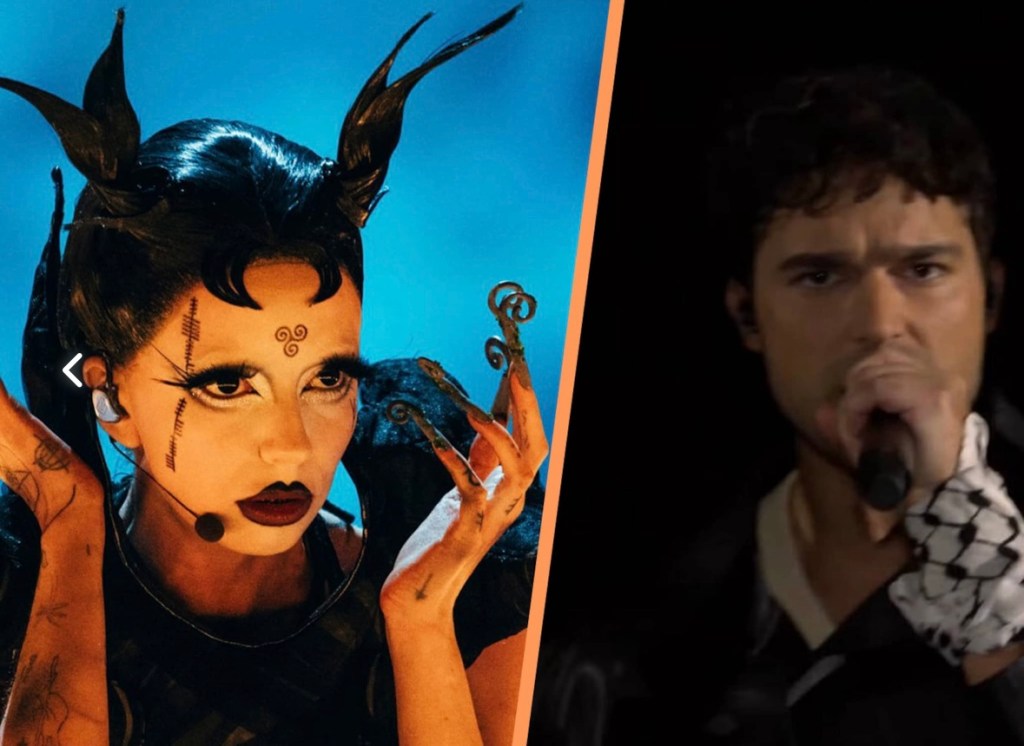
Bambie Thug is also the artist who was commissioned by the organization to remove the word ‘ceasefire’ in old Irish script from their face. The watermelon, painted on the chest of Australia’s entry was overlooked by the organization: the fruit is also seen as a statement of support for the Palestinians. Former participant Eric Saade received an angry response from the EBU after he wore a kaffiya during a performance. The scarf also symbolizes a signal of commitment to Palestine.
Things also went wrong in the commentators’ booths. For example, the Israeli colleague of Cornald Maas and Jacqueline Govaert announced the Irish entry as “the artist who speaks negatively about Israel”. The Irish delegation then filed a complaint with the EBU and the commentator was reprimanded.
The performance of Portuguese singer Iolanda during the final never appeared on social media because she had, among other things, the Palestinian flag painted on her nails. Such a political statement is prohibited according to the rules of the Eurovision Song Contest and therefore the artist could have been disqualified. It is unclear why this did not happen.
The Portuguese broadcaster RTP has not only been critical of the exclusion of Iolanda’s performance on social media, they also find it unacceptable that the EBU used an “anti-booing system” during the semi-final and final. As a result, the booing of the EBU and Israel’s entry was less received by the viewers at home than in the audience.
“For an organization like the EBU and for an organization like RTP and the European public media service, the fight against fake news, misinformation and the manipulation of information is a constant battle. It is unacceptable that this is possible. This method distorts the truth.”
AVROTROS is also critical: “We believe that when a musician performs you should always show what it does to the audience.”
As always, the European Broadcasting Union is difficult to reach, but responded to the angry reactions in an official statement. The organization places the blame mainly on the participating countries themselves.
“We find it very unfortunate that some delegations did not adhere to the rules during the event and during broadcasts. We have spoken to several delegations about incidents that have come to our attention. The EBU continues to engage with the chairmen of delegations and will do an evaluation of this Eurovision Song Contest.”
“In this way we hope to be able to move forward in a positive way, in a way where everyone respects the values of this event. Individual problems will be discussed in a subsequent meeting.” Source: nu.nl
Things are going “pretty well” with Joost Klein, who participated in the Eurovision Song Contest on behalf of the Netherlands but was disqualified hours before the final. This is what Twan van de Nieuwenhuijzen, Head of Delegation at AVROTROS, said to RTL Boulevard on Sunday.
“It was an eventful weekend with a lot of emotions, which have still not fully settled or been processed. We are of course very disappointed,” says Van de Nieuwenhuijzen, who is also chairman of the selection committee. The entire delegation watched the final of the Eurovision Song Contest on Saturday evening, while enjoying “pizza, cola and a few glasses of wine”.
“Joost is doing quite well,” Van de Nieuwenhuijzen continues. Klein even went to an official Eurovision afterparty on the night from Saturday to Sunday. “Joost is a handsome and strong personality. That’s how he stands and that’s how he deals with it.”
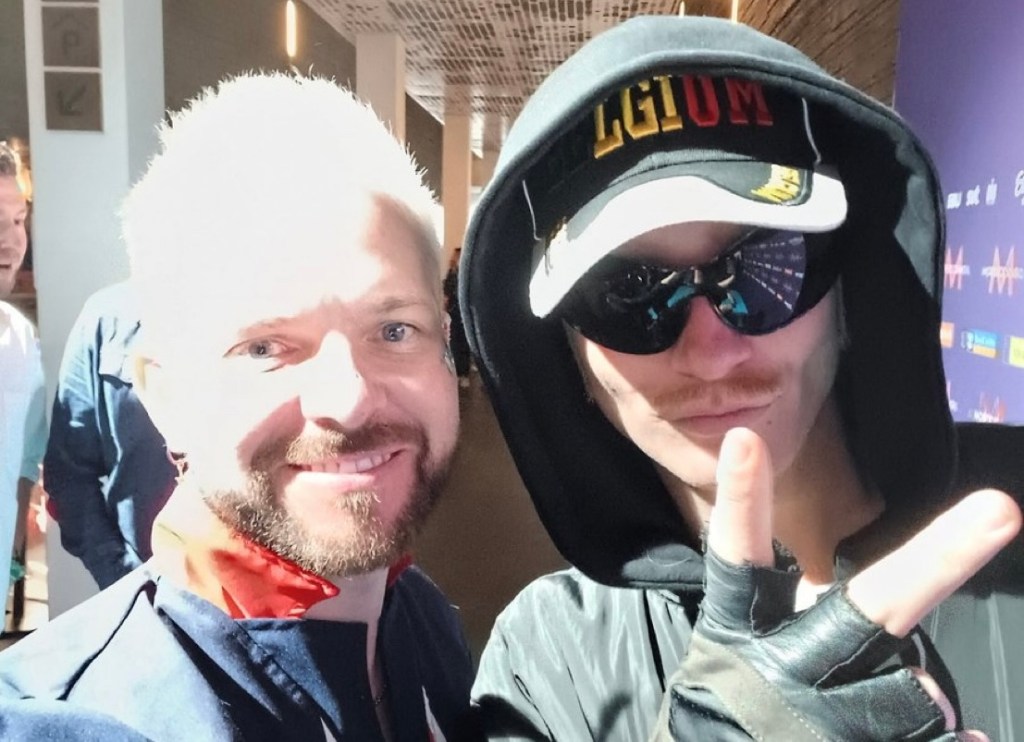
X shows a photo of a Eurovision fan and Klein at the party. “I’m not into negativity,” Klein reportedly said about his presence at the afterparty. The fan also shares a fragment of dancing to Europapa during the party. Source: nu.nl
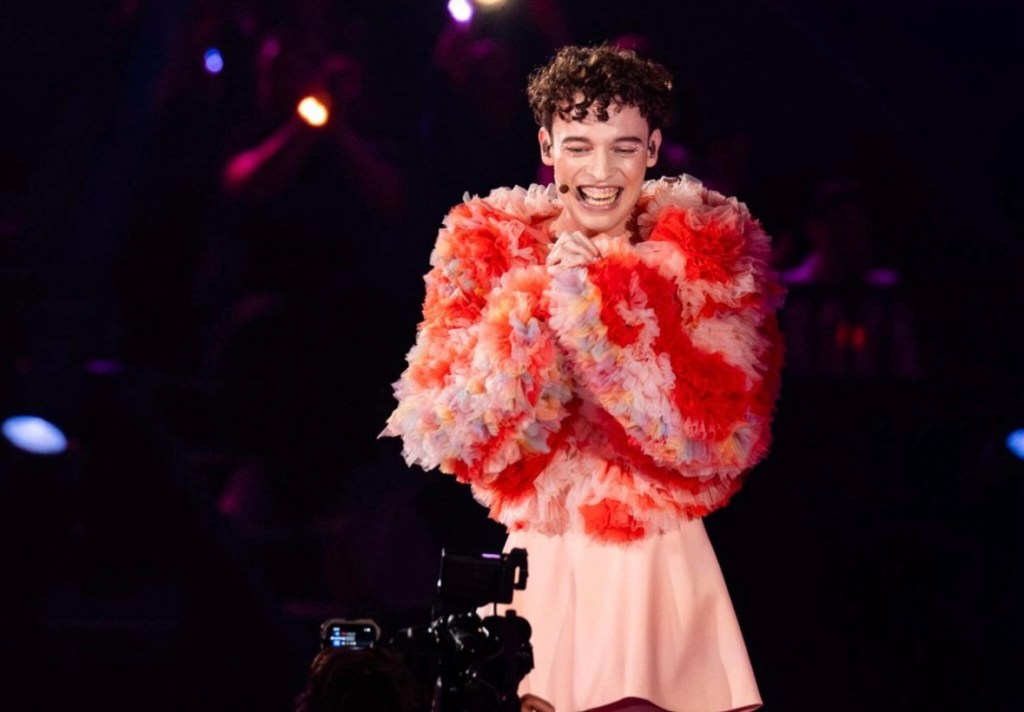
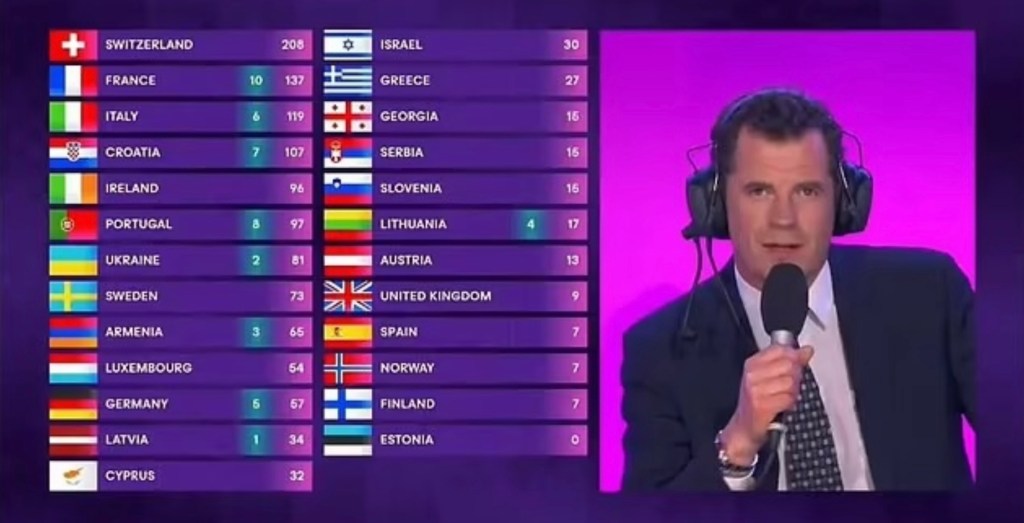
Switzerland is the winner of the Eurovision Song Contest 2024. Singer Nemo won with the song The Code. The Netherlands has been disqualified and Joost Klein was therefore missing on Saturday evening.
Nemo won the jury points convincingly: a total of 21 countries awarded ‘twelve points’ to The Code. The Netherlands also gave the most points to the Swiss song.
Switzerland, on the other hand, did not win the televoting. Ukraine received by far the most points from the viewers at home, after which it was Israel who emerged from the televote with the most points.
Nemo is the first non-binary person to win the Eurovision Song Contest. “I hope this match continues to deliver on its promise and stand for peace and dignity for all,” they said after the win.
Joost Klein was not allowed to perform his Europapa during the final of the Eurovision Song Contest. He was told earlier on Friday that he was excluded from the match because he had been involved in an incident. Klein allegedly made a threatening movement towards a female employee. Source: nu.nl.
For me, highlight of the Eurovision Song Contest 2024 was the hilarious and awkward moment for Martin Österdahl, supervisor of the EBU, who -while the public booed loudly-had to give the points for the country that they disqualified today.
Hoogtepunt van het Eurovisie Songfestival 2024 was voor mij het hilarische en gênante moment voor Martin Österdahl, toezichthouder van de EBU, die -terwijl het publiek hem luid uitjouwde- de punten moest geven voor het land dat ze vandaag diskwalificeerden.
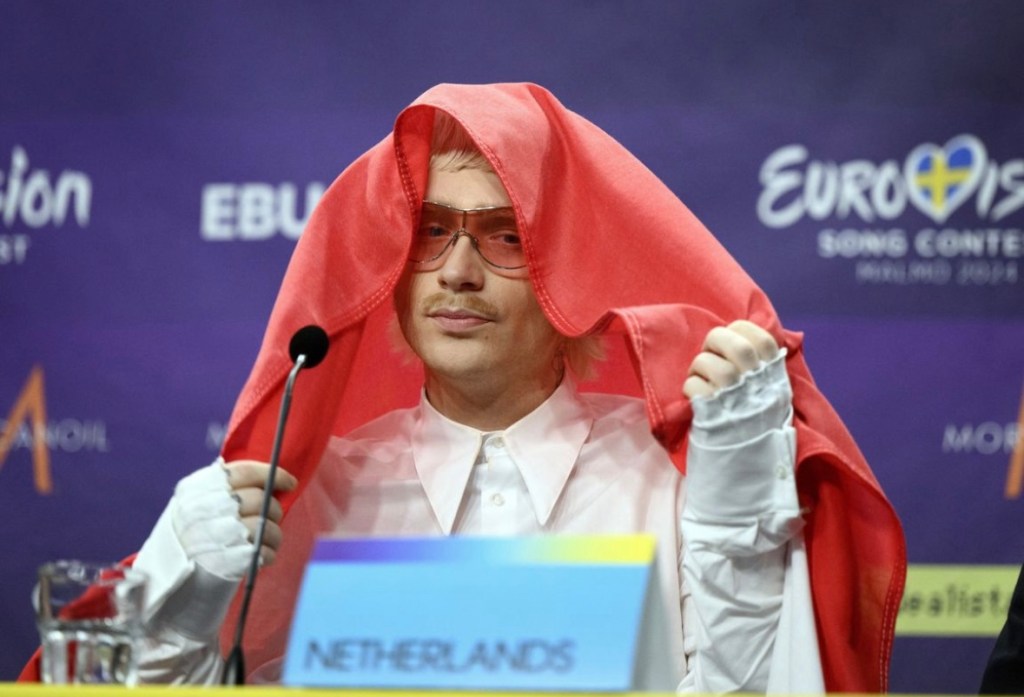
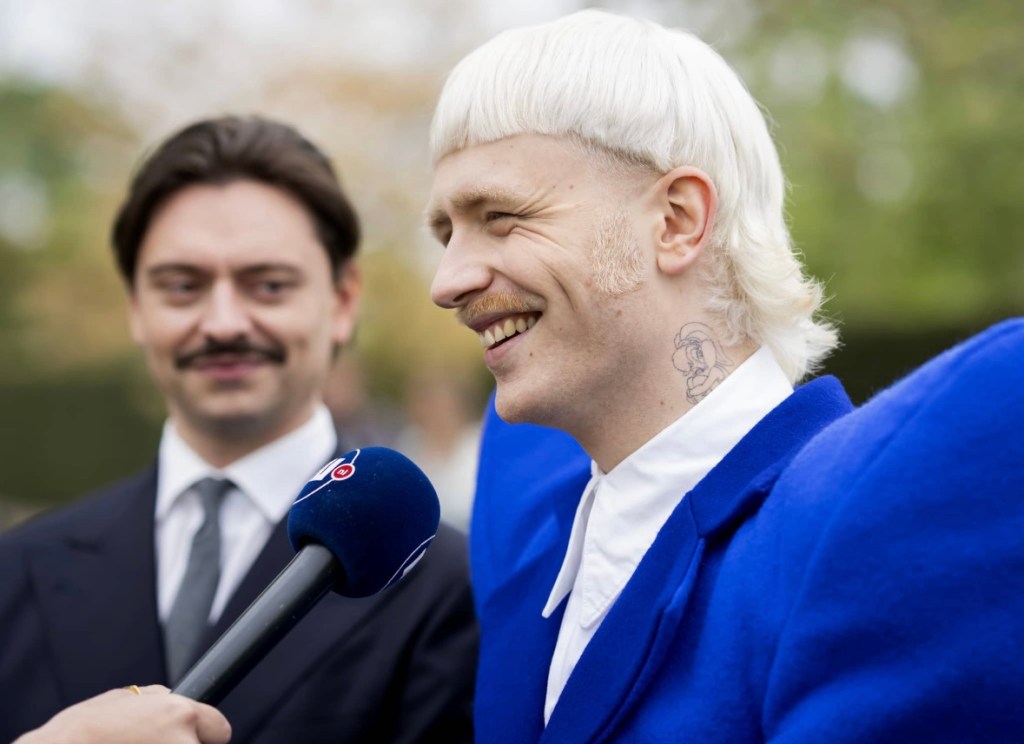
The Dutch artist Joost Klein will not be competing in the Grand Final of this year’s Eurovision Song Contest.
Swedish police have investigated a complaint made by a female member of the production crew after an incident following his performance in Thursday night’s Semi Final. While the legal process takes its course, it would not be appropriate for him to continue in the Contest.
We would like to make it clear that, contrary to some media reports and social media speculation, this incident did not involve any other performer or delegation member.
We maintain a zero-tolerance policy towards inappropriate behaviour at our event and are committed to providing a safe and secure working environment for all staff at the Contest. In light of this, Joost Klein’s behaviour towards a team member is deemed in breach of Contest rules.
The Grand Final of the 68th Eurovision Song Contest will now proceed with 25 participating songs. Source; EBU.
I think EBU’s decision is way over the top (my opinion for now). Joost is charged with allegations of intimidation, but let’s wait until ‘proven’ guilty. When Joost seems to be innocent, AVROTROS should submit a substantial claim for damages for all costs incurred, because money, that is what the EBU is all about (just check where main sponsor Marrocanoil is originated) United by Music, my ass. United by Money. Right now, I am done.
Joost Klein is suspected of threatening an employee of the Eurovision Song Contest. The alleged incident took place on Thursday evening at the Malmö Arena, Swedish police said.
The employee filed a report on Friday. The investigation has now been completed, a police spokesperson told NU.nl on Saturday. The spokesperson does not want to confirm that Joost is the suspect.
In addition to the suspect, the police also interviewed the person who filed the report and a number of witnesses. The investigation has been transferred to the public prosecutor.
On Friday, the EBU, which organizes the Eurovision Song Contest, had already announced that Joost was involved in an incident. That is why his rehearsal and his performance for the jury assessment did not take place on Friday. The EBU did not want to say at the time what had happened in the incident.
It is not yet clear whether Joost will be allowed to perform in the final of the Eurovision Song Contest on Saturday evening. Source: nu.nl
Joost Klein is not allowed to participate in the jury show of the Eurovision Song Contest. The investigation into the incident that emerged earlier today has not yet been completed, AVROTROS reports.
AVROTROS informs the Dutch press that the European Broadcasting Union (EBU) has not given permission to participate in the show taking place in the Malmö Arena tonight. The professional jury therefore assesses the performance from the second semi-final.
The EBU is investigating an incident involving Klein. No further details have been shared. According to rumors from the Swedish broadcaster SVT, it concerns a violent incident in which the artist is involved. This has not been confirmed in any way.
The EBU speaks of “discussions” that are still ongoing with broadcaster AVROTROS. It is now unclear when anything will be decided.
Tonight would be an important moment for Klein: half of the points awarded on Saturday evening will already be determined during the jury show. On the evening before the final, professional juries submit their points.
During the rehearsal of the finale it became clear that something was going on around Klein. The artist should have been fifth on stage, but the Netherlands was skipped and rehearsals went straight to Israel. Klein did participate in the flag parade that is part of the opening ceremony.
Belarus was refused to participate in 2021 due to the political connotation of the song that the country wanted to submit. In the 68 years that the Eurovision Song Contest has been taking place, it has never happened that a country has been disqualified during the festival. Source: nu.nl
Joost Klein skipped his place in the Eurovision Song Contest rehearsal on Friday afternoon. The European Broadcasting Union is investigating an “incident” involving the artist. It is unclear what is going on.
“We are currently investigating an incident surrounding the Dutch entry. Klein will not rehearse for the time being,” the statement said. The EBU will not comment further.
It is unclear whether Klein will still be allowed to do his rehearsals at a later date. No statements are made in the audience about Klein’s absence.
AVROTROS, the broadcaster that accompanies Klein during the Eurovision Song Contest, was not available for comment. Source: nu.nl.
The Netherlands has secured a place in the final of the Eurovision Song Contest. Joost Klein and his Europapa are through to the final on Saturday, May 11.
Klein was the third to hear that he has a place in the final. So the artist didn’t have to sit in suspense for too long. It is not yet clear which half he will be in: that will be determined by the organization at a later time.
Latvia, Norway and Austria are also through to the final on Saturday. Furthermore, Israel, Estonia and Greece managed to get a ticket for the final. In addition, Switzerland, Georgia and Latvia can also take the stage again on Saturday in the hope of winning the Eurovision Song Contest.
The Belgian singer Mustii is not through. Denmark, Malta, San Marino, the Czech Republic and Albania also do not go to the final.
Croatia, Ukraine and Ireland already managed to qualify for the final of the Eurovision Song Contest on Tuesday. Furthermore, Serbia, Portugal and Slovenia qualified for the final, as did Lithuania, Finland, Cyprus and Luxembourg. Australia, Poland, Azerbaijan, Moldova and Iceland then canceled.
Spain, Italy, Germany, the United Kingdom, France and Sweden are automatically through to May 11. Source: nu.nl
“We have ticket buyers from 89 countries coming to Malmö,” says Martin Österdahl. “The United States is the second biggest ticket buyer.”
At last year’s Eurovision Song Contest, Graham Norton identified him as “Mr. Eurovision” and said he just calls him “the boss.” While almost everyone on the production team for the Eurovision Song Contest does their work behind the cameras, the European Broadcasting Union’s executive supervisor Martin Österdahl is visible every year on the live broadcast. When it comes time to reveal the votes of the participating countries, the hosts turn to Österdahl to confirm that the votes of the juries and the public are checked and that there is a verified result. He then tells the hosts that they are “good to go.”
Before he was named executive supervisor in 2020, Österdahl was executive producer of the Eurovision Song Contest in 2013 and 2016, both produced by Sveriges Television (SVT) following Sweden’s victories in 2012 and 2015. He has also produced past versions of Melodifestivalen, Sweden’s televised national final to select the country’s entry for the annual Eurovision competition.
To find out what to watch for in the 2024 contest airing next week, Billboard talked to Österdahl via Zoom to get a preview of this year’s 68th edition of the popular pan-European event.
How are things in Malmö with just a few days to go before the two semi-finals and grand final of the 2024 contest?
The rehearsals are going really well. All the delegations are here now. I wish the world could see what the atmosphere is like. People are hugging, high-fiving. It’s great to be together again and great to be getting the job done.
What are five things we should be looking out for this year?
The first thing is that for the first time ever, we are finally going to see the Big Five and the host country perform full-length performances on stage [in the semi-finals], which is great. We’ve never done that before, as you know. It will give more entertainment to the viewers and more value to the fans, so I think that’s a great change.
In recent history, the Big Five (France, Germany, Italy, Spain and the United Kingdom – the five countries that contribute the most to the production budget) don’t have to compete in the semi-finals to qualify for the grand final, so we would only see snippets in the two semi-finals. Why was this change made?
We’re very much about the even playing field and we have felt from time to time that the Big Five perhaps had a disadvantage. We’ve looked at ways to correct that. The Big Five have been doing much better recently, but still we feel the time is right to make this change now. And it has to do with [the second thing to watch out for].
That is to increase the engagement in this show. For an entertainment show in Europe, we have a lot of young viewers. We’re quadrupling the channel average when it comes to reach and the youth segments, which is fantastic, but the voting system is quite old fashioned with SMS [texting] and televoting and also the fact you had to wait for two hours before you can cast your vote. So we’re trying out this new thing this year where you can vote in the grand final from the very top of the show. If you see something that you like, you can cast your vote, which is something that is more in line with the behavior of young people today, who are used to interacting straightaway with the shows.
We introduced the rest-of-the-world vote last year and we’re increasing the window for that to be 24 hours before the show, so that people in Asia and in South America don’t have to sit up and watch this live on Central European Time. We get votes from 180 countries around the world in the show, so we want to embrace that love for Eurovision in other parts of the world.
How did that rest-of-the-world vote work last year?
Very well. We do a show called the Junior Eurovision Song Contest as well and we’ve had an online voting platform for that. We did a show in Warsaw a couple of years ago during the darkest days of the pandemic, so we couldn’t have the delegations on site. There were pre-recorded performances from the different countries. And then we had a studio in Warsaw where I sat with the presenters and the interval acts and Polish TV did a great job with that.
But when we saw the online voting come in, it was a real eye-opener for me, because there were 12 participating countries as opposed to 40 in Eurovision and it’s a kid show. We saw the votes coming in from 180 countries around the world on this European kids’ show. It was amazing, so I thought, “We need to tap into this.” My expectations are high when it comes to the engagement here.
Does the fact that U.S. viewers can watch live on Peacock greatly increase the number of people watching?
Yes, the engagement from the U.S. is great. The United States is the second biggest ticket buyer [for the live shows]. If you forget about [host country] Sweden, the biggest country of ticket buyers is the U.K. followed by the U.S. Amazing, right? We have ticket buyers from 89 countries coming to Malmö.
And what is the third thing we should watch out for?
Celebration. We have so much to celebrate this year. Sweden has taken the number one position now alongside Ireland with seven wins in history. Loreen is only the second ever female artist to win twice and she and Johnny Logan are the only artists to have won twice, so we’re celebrating that. And of course, it’s 50 years since ABBA won with “Waterloo” and we’re going to celebrate all these things in the show, so that’s another one to look out for.
How exactly are we going to celebrate “Waterloo” and ABBA in the show?
There’s an easy reply to that. Tune into the show and you’ll see.
I didn’t think you were going to give that one away. And the fourth thing to watch out for?
Number four, you should look out for the new hit phenomena. When I started working on Eurovision a long time ago, we used to refer to the classics like Celine Dion and ABBA when it came to who had the international global hits from this show, but that’s not the case anymore. We churn out international hits every year and you’ve probably seen the success of Duncan Laurence, Rosa Linn and Måneskin. That’s a really exciting trend with modern day Eurovision and I think it’s going to continue. It’s a really strong field this year.
Alright, you’ve given us four things to watch out for. What is the fifth?
Number five is that we’re going to have a really exciting climax to this show. The Eurovision Song Contest voting sequence is arguably one of the longest, but also one of the most nail-biting sequences of any show on TV and I think this year we don’t really have one standout favorite. We’ve got a couple who are talked about a lot but not that one standout. So I think it’s going to be exciting this year and I think it’s going to lead to a really exciting climax.
Speaking of the voting sequence, do you track the ratings on different parts of the show, and if so, how does this part of the contest do?
Normally the voting sequence is the most viewed part of the show.
In the past, some years were runaways and we knew who the winner was going to be long before the final vote was cast. Other years we didn’t know until the last moments.
When Loreen first won in Baku [in 2012], everyone knew 35 minutes before the show ended that she was going to win, because you could do the math. But we still had to go around all of these countries and listen to their 12 and 10 and eight points. It seemed this show deserved a better climax, so that’s when we made that change [to report the juries votes first and add in the public voting at the very end] and now it’s all down to the very last delivery of points.
One last question. As an EBU official, how would you describe your interaction with the production team, which is from the host broadcaster.
My job covers a lot of different areas, but when it comes to the production, this is a co-production between 37 different national broadcasters in Europe and beyond and as such it needs a central coordinator or supervisor for the whole thing and that’s me. That means I have final say in all questions, including all of the show content. I work very closely with the producers every year. My main mission is to transfer knowledge and best practice. Of course, this year it’s special, because the knowledge is already here and it’s my old team. We work together really well. Source: Billboard.
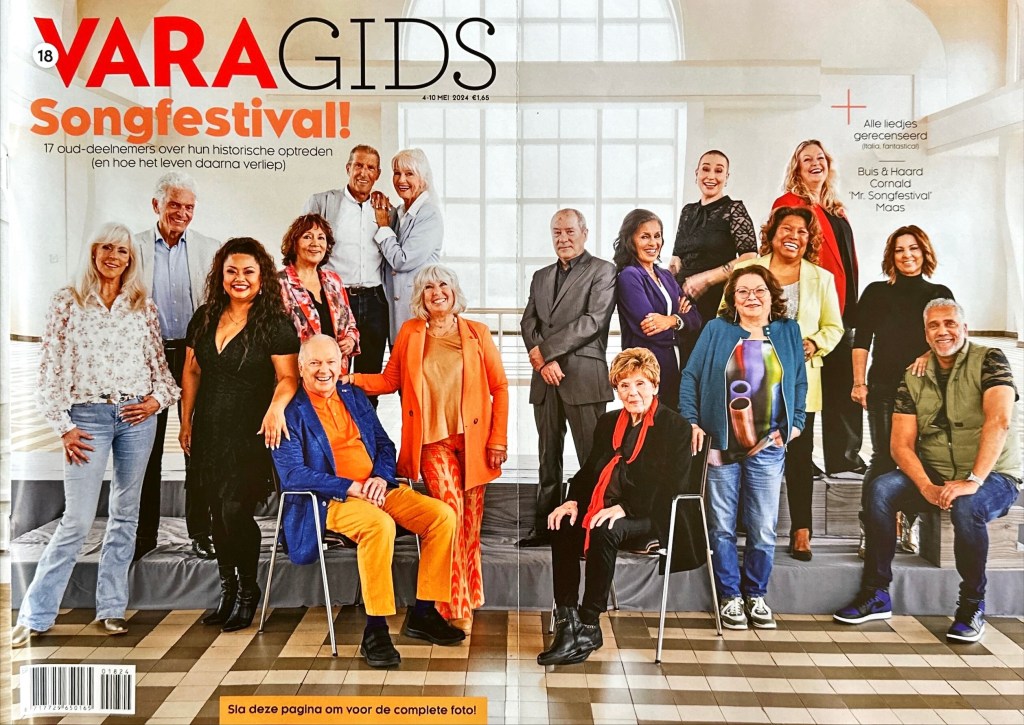
The Dutch TV Guides pay attention to the Eurovision Song Contest this week. The VARA GIDS pays attention to seventeen former Dutch acts.
Ben Cramer (77) De Oude Muzikant (1973)
I sang five songs in the national contest. It was certain that I would participate, but the audience decided which song I would sing at the Eurovision Song Contest. Afterwards I understood why they chose that song: it was a song in six-eighths time. The hit I had two years before Eurovision, ‘De clown’, was also in six-eighths time. These songs are recognizable and sing-alongs for the audience.
The bookmakers ranked this song at number six. I think the fact that I came fourteenth was mainly due to technology. The sound was so bad, everyone complained about it. During the dress rehearsal I stopped singing halfway through, which was absolutely not allowed. I said: ‘Sorry, but this is not possible!’ I received applause from the audience, because they all agreed. But what I didn’t know at the time was that the jury was also watching. And I had to deal with a very angry director, because I quit. In the final TV recording he took his revenge.
Look, the Eurovision Song Contest is not just about the song, but also about the TV registration, and that was deliberately very bare here. Because of the argument. The orchestra sat in the dark and the musician sat in the back. I can’t help but feel that that had an influence on the final score. I have always continued singing this song, and introduce it with the joke: I came, I saw, and I could go again.
Linda Wagenmakers (48) No Goodbyes (2000)
The first time I heard ‘No Goodbyes’ it was a completely different version than how we know it now. At the time it was still a kind of Spanish summer hit. Jerry Wolff then turned it into what it is today: a party song that really explodes. With my team we then came up with the act, with the dress and the dancers from Fame that came out from under the dress. We made the most of everything, even in the national finals. I’m a real Song festival fan, ever since Sandra Kim won with ‘J’aime la vie’.
It was bizarre to notice how much attention there was about the act itself. Especially from the press. At one point, journalists even broke into the rehearsal room to see what the act would be like and what dress I would wear. In the weeks leading up to the performance, it was really only about that dress. I thought: why is this so important for the Netherlands? Isn’t there anything important happening in the world? Of course it happened, because on the day itself there was a fire works disaster in Enschede, which meant that the live broadcast of the final wasn’t broadcast on Dutch TV. My participation in the Eurovision Song Contest has created a huge audience. Afterwards I often performed the song. And in that dress.
Michelle (42) Out on my own (2001)
The National Song Contest was the first big performance I did. I was only nineteen at the time and won right away, I didn’t understand it at all. I thought it was bizarre and intense . I was a very insecure teenager. It was not easy, also because I started to get to know myself during that period.
After my participation, I was at a crossroads in my life: continue with my career and use the Eurovision Song Contest as a springboard or continue at the conservatory, where I studied singing and cello. Because I wasn’t sure what I wanted to do, I chose the latter. I didn’t want to jump into something that I wasn’t sure would be right for me.
‘Out on my own’ contains the beautiful sentence ‘Free in the choices of my life’. That’s how it really felt at the time when I sang it. I can make conscious choices in my life! I’m in control! Sometimes I’m a bit insecure, and in those moments I tell myself: you have the choice , you decide. I still sing the song, but in a 2.0 version , with different chords and a bit more jazzy. I retrained as a nurse four years ago and I still enjoy making music. But people always have an opinion. With a few of former Eurovision participants we sometimes jokingly call ourselves ‘our trauma club’, because there is a lot of comments coming your way, for example Mia (van Dion, ed). She has suffered so much misery, we should be more aware of that.
Ronnie Tober (79) Morgen (1968)
The line “I was on the road for so long” kept coming up in the chorus and I thought, damn, they’ll never get each other. The end came suddenly without you, my distant wife? So that conclusion was correct.
We traveled to London with a very small delegation. Conductor Dolf van der Linden came along and someone from record company Phonogram. I had a stack of biographies with me in three languages and that was it.
Afterwards there was a cocktail party organized by the BBC with the declared winner Cliff Richard, but he came second behind Spain. He didn’t say anything , walked around with a big smile and said ‘next time better.
I am very grateful that I participated. As a result, I have seen a lot of the world with performances in Belgium, France, Poland , Spain and Greece and a show in Germany at the WDR with Üdo Jurgens. Even though I came last, it still felt like I had won. Life doesn’t make or break , and it’s a good push for your career. I would participate again in a heartbeat, after all, those Russian grandmothers who represented their country in 2012 came second. I almost forget the most important thing; I met my husband Jan after a preliminary round of the Eurovision Song Contest in Arnhem during drinks at the White Horse Club. It was an immediate hit and that’s now 58 years ago.
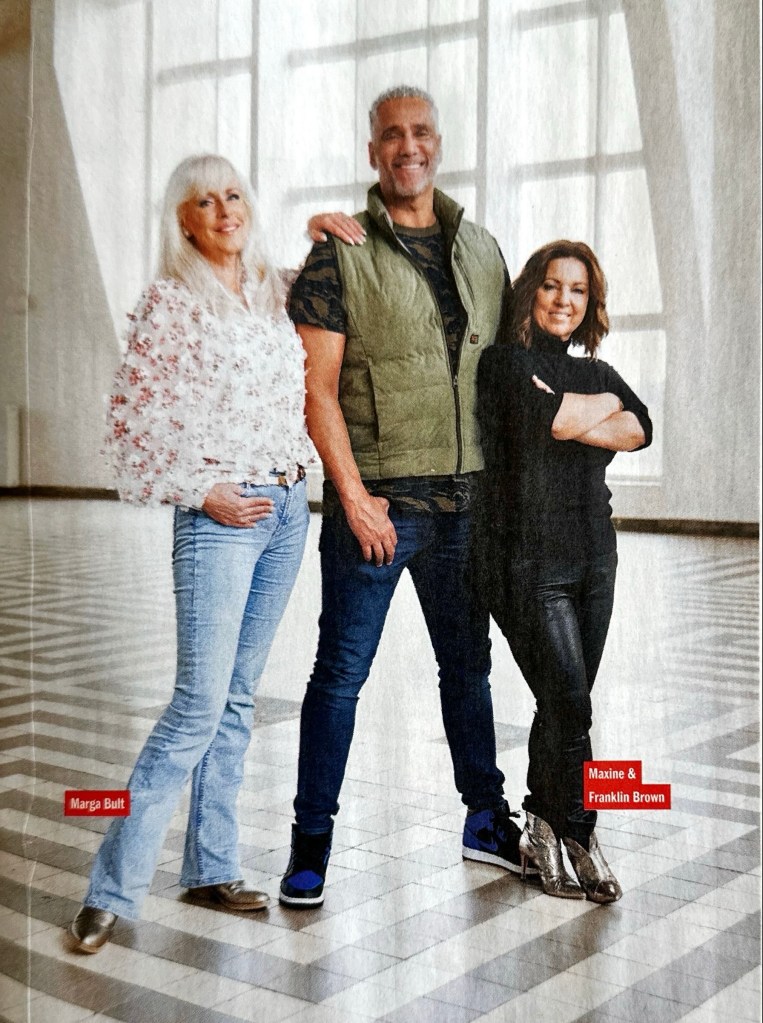
Marga Bult (67) Rechtop in de Wind (1987)
There is a time before and after ‘Rectop in de Wind’. The song has proven to be a benchmark in my life. It meant the end of girl group Babe, with which I had already had hits, and was the start of my solo career.
The song finished fifth, after the Netherlands had not reached the top ten for years. People still respond so enthusiastically to the song. After 37 years, I have never given a concert where not everyone knows this song. The younger generations also know it, through their parents. A few years ago I sang it at a De Toppers concert. I was curious if people would still like it. Well, the whole place went up! Seven hundred thousand men!
The text is particularly popular: for example, people found out that they were gay through this song. Or they discovered that their marriage was no longer working. Upright in the wind – that sentence catches, something happens. The song still fits me like a glove, you keep experiencing new things. Whenever I was having a hard time, I thought about the song and its predictive value. Then I was singing on stage again and thought: yes, I can sing this song for myself too. I was in the middle of what I was singing about. I would sing it with a smiling face, but with a sad heart. I am also amazed by this song. Nowadays I sometimes see the audience I have to perform in front of and think: they’re quite young. But then they blow the roof off.
Maxine (53) & Franklin Brown (62) De Eerste Keer (1996)
Maxine: The title ‘The first time’ is very apt for me: the Eurovision Song Contest was my first major performance. Franklin: And the first time we worked together. We were introduced by John de Mol and Ruth Jacott. When we met there was an immediate click. Maxine: We thought: this is it. Franklin: ‘The first time’ is still regularly played on the radio. A few weeks ago we did it live on Radio 538 and since then the phone has been ringing off the hook again. But even when we sing the song at a party, everyone sings along. Also young people. It’s just a catchy and cheerful song. Maxine has been singing in the Edwin Evers Band for years, where she sings the song regularly. I have been touring for years with my band, the Tiny Little Big Band, more jazz and soul, and the audience still asks for this song. So we also sing it separately from each other regularly. She has a tape with my voice on it, and I have a tape with her voice on it. Maxine: Singing became my job in 1997, before that I still worked at the Social Insurance Bank in Breda. And that is only because of the Eurovision Song Contest.
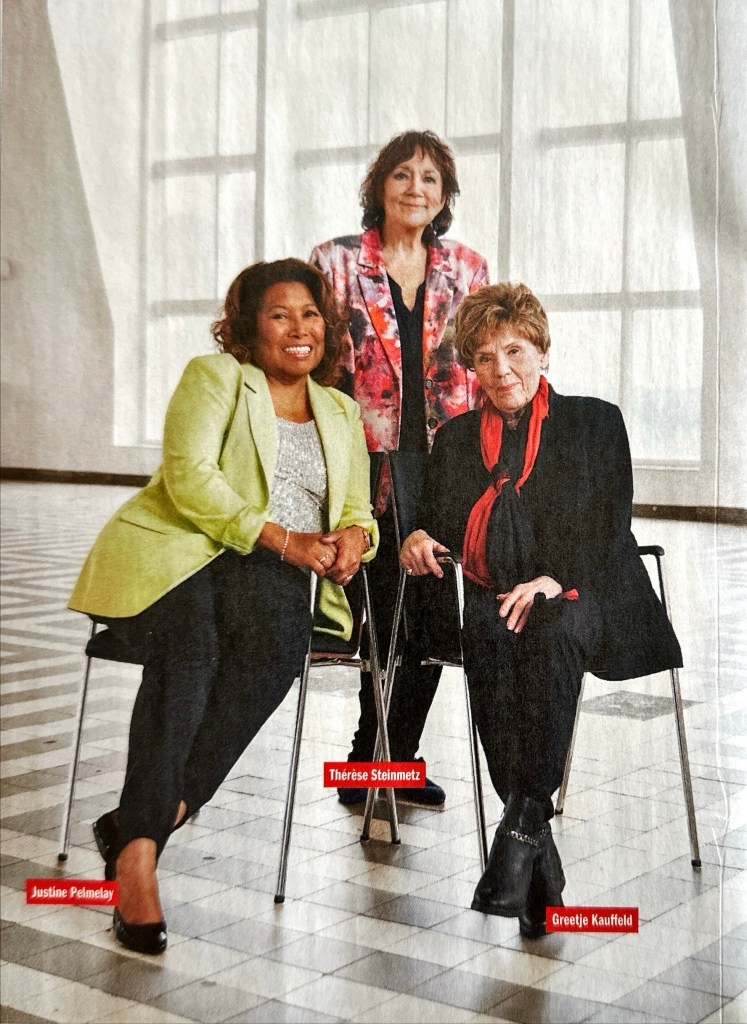
Justine Pelmelay (65) Blijf Zoals Je Bent (1989)
Jan Kisjes wrote this song for his wife. When I sang it I was in the middle of a divorce. My ex had to read from the newspaper that I had another boyfriend, that didn’t get the beauty prize. So that text had a special meaning for me. But I didn’t know then that ‘Stay the way you are’ would become the anthem of the entire LGBT+ movement. I didn’t know that scene at all at the time.
Everyone still sings along to this, very beautiful. And everyone know the text, although everyone gets something different out of it. Some people have come out of the closet because of this song, I received cards from people who started a new life and it is played at funerals. And all because of that one sentence: ‘Stay as you are.
The moment I received the invitation for this photo shoot, I was diagnosed with leukemia. If I don’t improve, stem cell therapy will follow. I trust that there will be a good outcome, but now I’m performing a little less. Hopefully again later, because I think I’m singing the song better and better. I’m getting older, my backpack is filled with new life experiences and new encounters.
Thérèse Steinmetz (90) Ring-dinge-ding (1967)
‘If I want to drink vodka in the morning and spontaneously chat with the baker’, I thought it was the funniest sentence. ‘Ring -dinge ding’ was written for a young girl and I wasn’t that young anymore, that’s why.
Participating in the Eurovision Song Contest was a very fun and unexpected experience and a special event. I did an awful lot after that . I immediately won a festival in Belgium and I was able to pack my bags for an eight- day festival in Poland. In 1970 I won the Golden Deer Festival of Brasov in Romania. That lasted a whole week and you were able to show quite a bit of your repertoire. Big names from that time came: Josephine Baker performed there and Dalida but also Charles Trenet.
Musically speaking, I think the Eurovision Song Contest has little to offer these days . Many acts don’t get further than two chords. Oh, everyone will think: what an old, grumpy lady, but that’s not me at all.
Greetje Kauffeld (84) Wat Een Dag (1961)
I haven’t sung the song for a long time, but recently I started singing it a little more often. It’s not an easy song. ‘I even picked flowers in the park/Across the street with impunity – that part is really difficult, so much text!
When I joined, I had already made quite a career in Germany . And that went really well. Shortly after my participation , I moved from the Netherlands to Stuttgart, then to Munich. I traveled all over the country, at the time there were these big TV shows where I also participated. A golden time. Later I moved back to the Netherlands, I got married , but I always continued to work in Germany, because German fans are very loyal, they still remember me there, I recently performed there with a big band, very special.
‘Wat Een Dag’ hasn’t been part of my repertoire for a long time, because I’m always in Germany. When I started singing it again later, I discovered how good it was. I have gradually come to love ‘Wat Een Dag’ more and more.
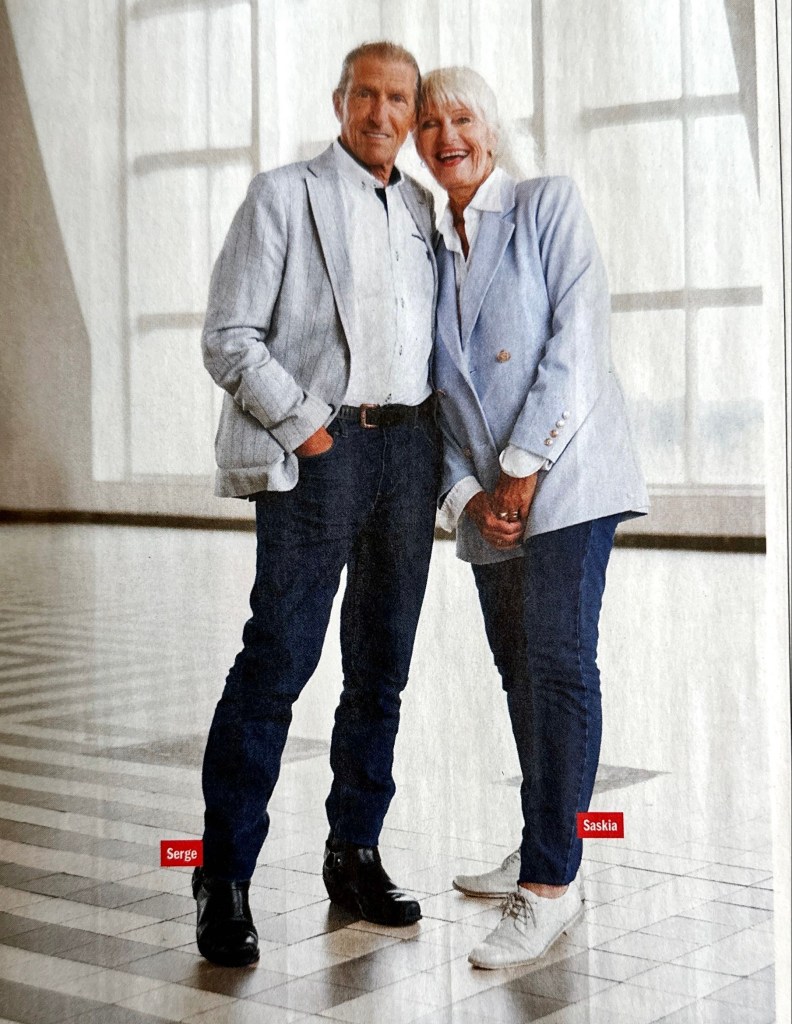
Saskia (77) & Serge (78) Tijd (1971)
Serge: We were approached in 1970 to participate in the national contest for Eurovision. They were looking for an original Dutch song. Saskia: That came suddenly, because we filled in for The Shepherds last minute. Serge: We received a call on Tuesday afternoon asking if we had an original Dutch song that we could share on Wednesday morning. Then we wrote the song ‘Het Spinnewiel’, and that turned out to be a kind of coincidence. We didn’t win, but we were nationally known because of that. The following year we were invited to the festival and came sixth with ‘Tijd’. Saskia: While we thought that we didn’t stand a chance with this, because there is no chorus in it. I thought it was a bit of a calm song, fado-like, and that turned out to be the case: we got twelve points from Portugal. Serge: After our participation came European success with several TV specials made in other countries, including Portugal. We had hits in America, where we had the opportunity to build a career. There we performed in front of 24,000 people and were offered a recording contract. We were at Johnny Cash’s house. Saskia: And we met Roy Orbison, Don Everly… we just went to the pub with them. Serge: They wanted us to stay there and make a country record and go on tour. That was not possible, because four hundred performances were already booked in the Netherlands. And we’re still performing. We only do “Time” and “Spinning Wheel” when its asked. It’s so old, and we have so many other hits.
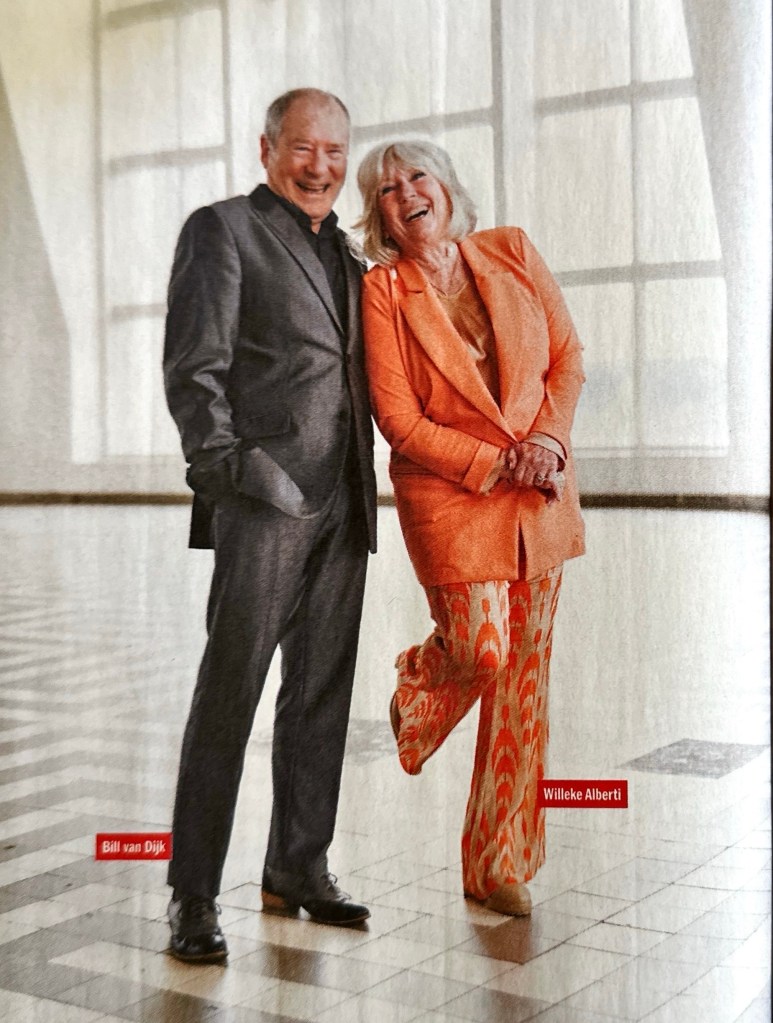
Bill van Dijk (76) Jij en Ik (1982)
For me, the Eurovision Song Contest was a very special experience. It was about big money, apparently, suddenly all kinds of managers from other artists were knocking on my door, I got friends who I didn’t know were my friends, political games were played, there was an argument about the producer of the song, about the dance and about who should make the clothes. Everyone was angry at everyone. I learned a lot about human behavior.
Once at the festival, the people from the broadcaster had disappeared: they went to play tennis, or swim, or whatever. During the rehearsal it turned out that the choreography was not possible at all, it did not fit on the stage, but the people from the broadcaster were gone. And then there was also a radio boycott of the song, because I couldn’t attend a certain performance. That was my experience with the Songfestival.
I haven’t sung the song for a long time; I already had a theater career and after this performance I simply continued. Why would I still sing that song? From that circus? But now I really like it. The song contains the line: ‘We remain connected forever/No matter how our paths go’. You can also sing this these times, with wars, with fascists taking charge. Because no one takes the same distance as an astronaut. No one sees that we are all sitting on this ball. We really are all connected.
The older I get, the more I like the song. Last year I sang it again, in the Amsterdam Melkweg, it was great fun. I made it too complicated all those years.
Willeke Alberti (79) Waar is de Zon (1994)
The sentence ‘And suddenly you were there, I saw you go again/I stepped aside, but you stood next to me/you kept walking next to me, You went home again /my heart opened again, I feel at home again’ is very special to me. I thought a lot about my father at the time and that helped me enormously. I always try to think of someone with my songs. When I think of ‘Telkens Weer’ I think of the love that is still possible. I like to experience the lyrics at the moment I sing them. I thought it was very special that I could represent my country, comparable to a royal award. I wanted to wear an orange dress in Dublin because it was broadcast on Queen’s Day, but I opted for a black one because I liked it better and it was also made especially for me. ‘Where is the sun’ only got four points, but for me it remains a beautiful song. I still sing it always with great pleasure. Coot van Doesburgh wrote the text for someone who died of AIDS, that makes it more special for me. The song is also always part of my medley that I perform at Gay Prides.
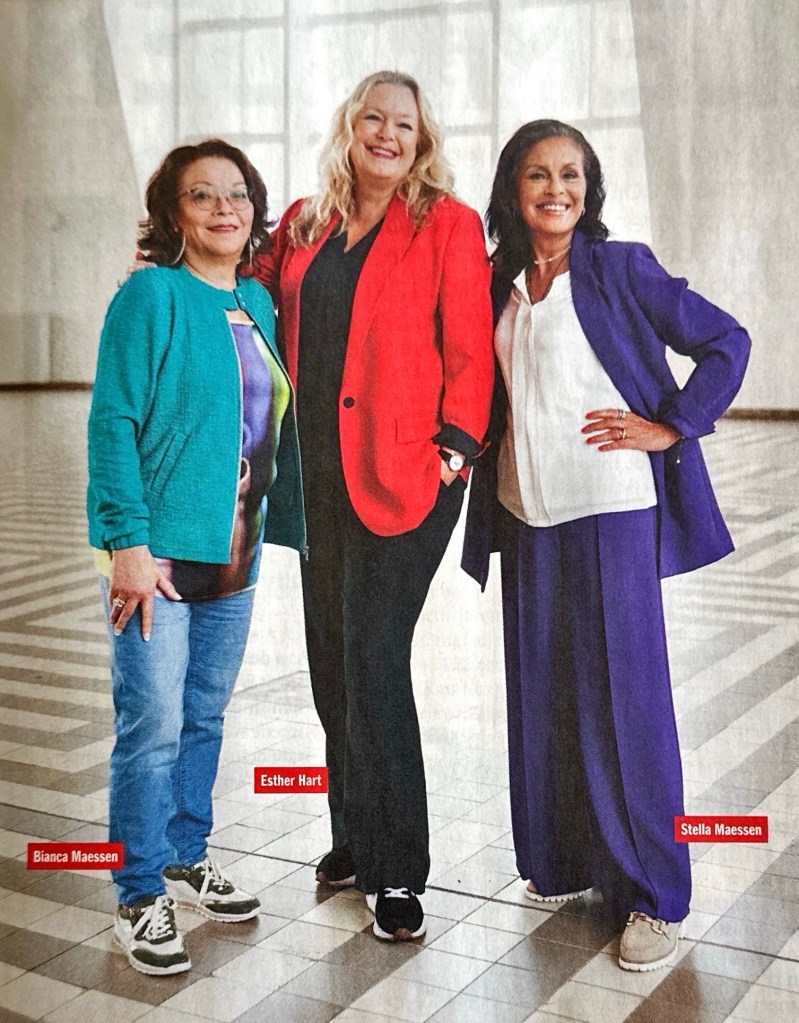
Esther Hart (53) One more night (2003)
I met Tjeerd van Zanen in a café in Rotterdam. He is a composer and has composed, among other things, the Marlayne song (‘One good reason, ed.). I asked him if he would again would submit a song for the Eurovision Song Contest. That’s what he wanted, he had a nice song, ‘but I don’t know yet whether it should be sung by a man or a woman. I offered to sing it for him so he could hear what it sounded like in a female voice. In his upstairs apartment in Rotterdam, in the clothes closet, I sang ‘One more night’ for the first time . Finally he asked if I had it wanted to interpret.
After the Eurovision Song Contest I noticed that I was booked much more. As a solo singer, but also for roles in theater and musicals and as a singing teacher. For example, I have been Marco Borsato’s vocal coach for more than twenty years. I still do a lot for the Eurovision audience. Those fans are all over Europe, so I also have nice international performances. In Stockholm, London, Leeds, Lissabon. Once the Eurovision audience embrace you, they won’t let you go.
Hearts of Soul Stella (71) and Bianca Maessen (73) Waterman (1970)
Stella: I still get the question: aren’t you one of those three sisters from Harderwijk? That’s crazy, I say. We participated in 1970, when the Eurovision Song Contest was already something very big. While we were just starting out as singers. Bianca: We were already in the circuit of Pim Jacobs and Rita Reijs. Stella: Yes, and in Voor de Vuist Weg, we were already there at the time. And Fenklup, with Sonja Barend . Then we wore those blue dresses! Bianca: Yes, with the black bow. We have given away all that clothing over the years, to fans or to charity. Stella: When I joined. I was sixteen years old. And you nineteen. Bianca: So we sang about the zodiac sign Aquarius . Very nice, because each person has an animal sign. I’m a Cancer. Stella, you’re a Leo. Not that those zodiac signs suit an Aquarius very well, as we sing. No, the song was just waiting for us. And it was up to us to sing it in three voices. Bianca: We never married Aquarians later, did we? No, definitely not. Stella: Haha, indeed not! But the song is still beautiful, isn’t it?
Text: Paul de Bruin, Johan Reijnen & Roy van Vilsteren. Photos: Frank Ruiter.
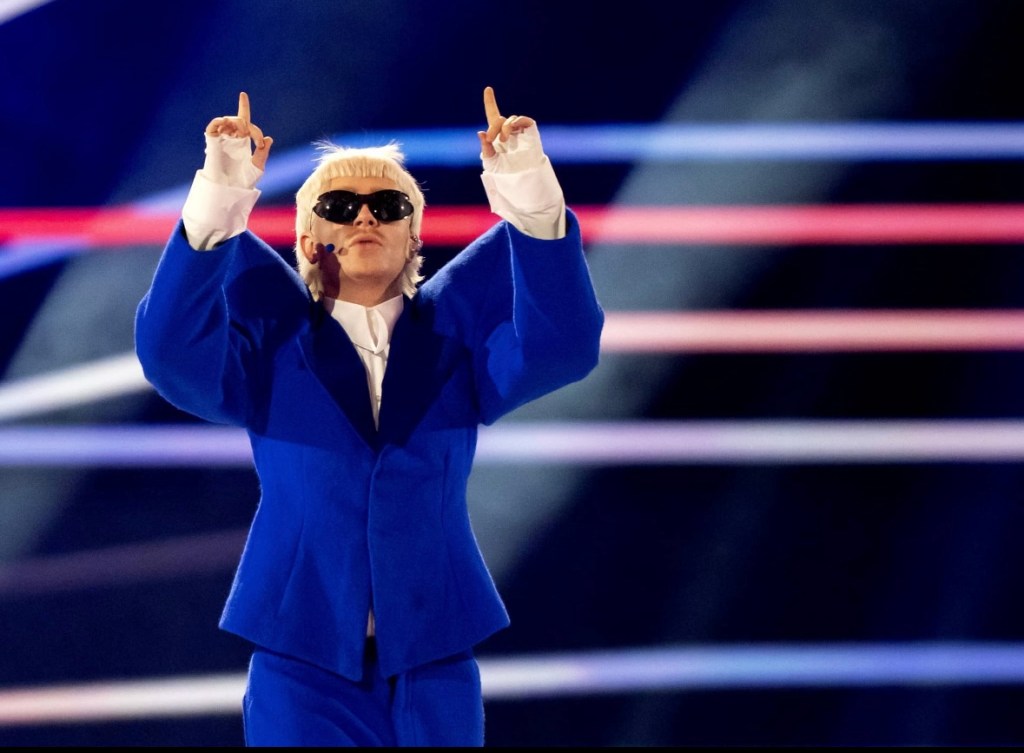
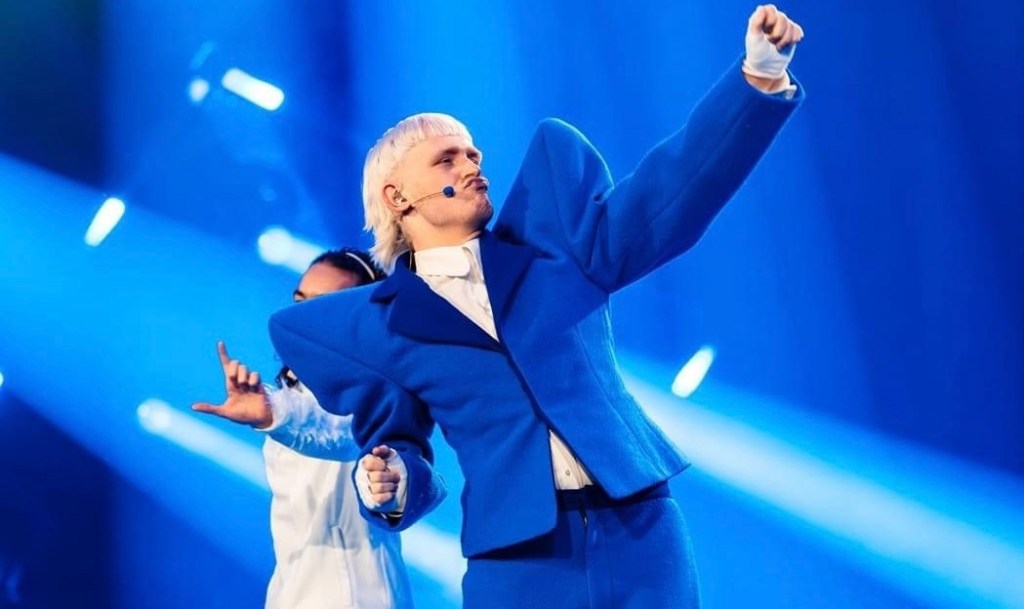
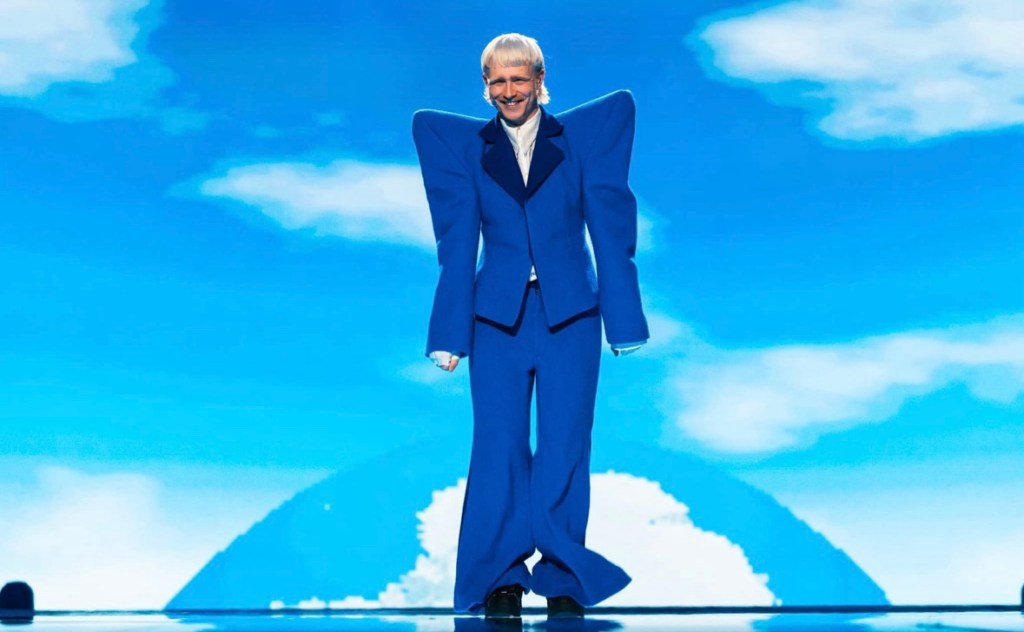
Gover Meit is not only creative director of Joost Klein’s Eurovision Song Contest performance, he and the artist are also very good friends. The grand artist feels extremely responsible for the performance and Klein’s enjoyment, he tells nu.nl.
“I am there for Joost and to ensure that all his ideas can be realized,” says Meit, who previously made a name for himself as Stefano Keizers and Donny Ronny. “But Joost has about a thousand good ideas a month. That’s a lot of ideas to make come true. So I am also a filter and ensure that we come up with an act that can still be followed.”
Klein and Meit have known each other for about 8.5 years now. Meit was associated with a youth platform as a mentor for creative talents. There he met Klein. “Fate really brought us together. From the moment I met Joost there, I saw that we both have a penchant for innovation. That happened so very quickly. I feel like we have always been together.”
Because it clicks so good, Meit feels responsible not only for the act, but also for Klein’s enjoyment of the whole process. “I think I can play just about any role that is needed here. So I am the person who wipes his head with a napkin after the performance, but also the person he goes to talk to in the evening. And with whom he can spar and vent.”
“Through this process I have gained a lot more respect for my own director, Jelle Kuiper. Also because I notice how important it is to have someone by your side who fully supports you.”
Meit is used to being on stage himself, but now notices that he actually finds it even more exciting to accompany someone. “It really is like my child is playing a very important game. And I think anyone with children will know how intense it is to let go. To let him go on that stage and have that whole world wash over him.”
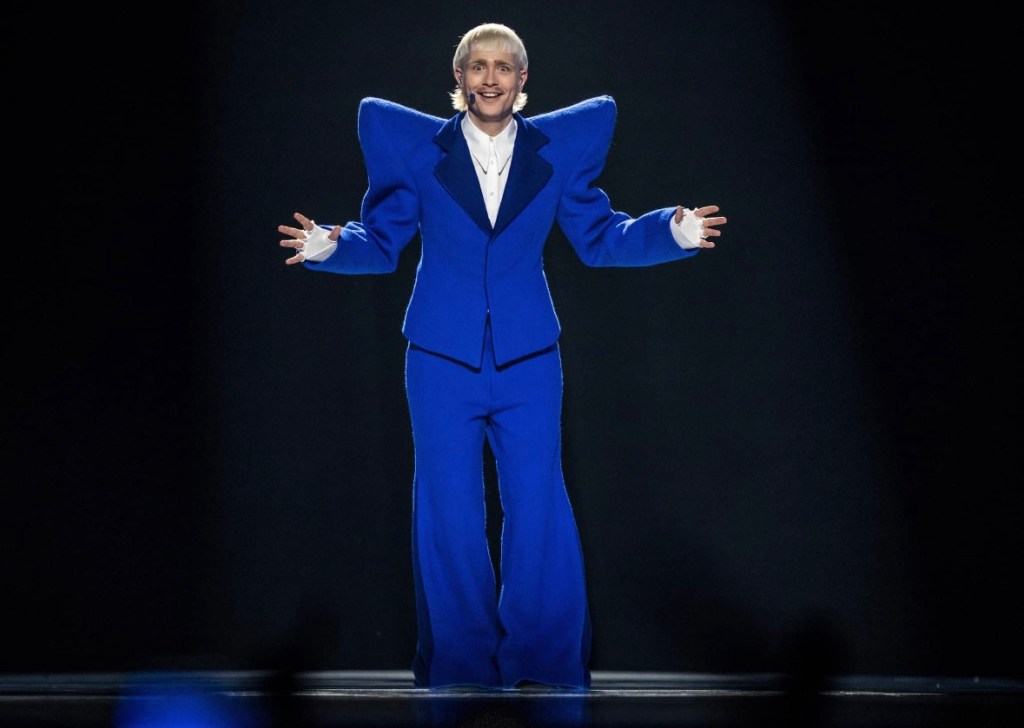
Even after the first photos of Europapa on the Eurovision stage, there was criticism of the performance. Klein and Meit kept talking about “a new form of a moon landing”, which meant that expectations were high. The first images did not meet those expectations for some people and Klein fell with the bookmakers.
The artist told nu.nl that he is having a hard time with it. Meit also sees a role for himself there. “I have been involved in the media world for about ten years now. I know how every time you stick your head above the parapet, you are met with a lot of criticism. So I always help him remember how many people also be helped with this.”
“If we didn’t take risks creatively, who would? I think if I hadn’t been there, it would have been a lot harder for him to keep that trust. I’m lucky to have been a step further. can stand from and always say: let’s not forget how important it is that we try to bring that innovation.”
Klein previously compared the performance at the Eurovision Song Contest to baking a cake: every element belongs in the recipe, he said in conversation with nu.nl. But now that he is in Malmö, he prefers to speak of a bag of chips, because the options are different than expected. Meit believes it is important to add nuance to this. “I would say this is the tastiest bag of chips I have ever eaten. With lots of flippos in it.” Source: nu.nl.








 euro-vision.blog