
The Dutch TV Guides pay attention to the Eurovision Song Contest this week. The VARA GIDS pays attention to seventeen former Dutch acts.
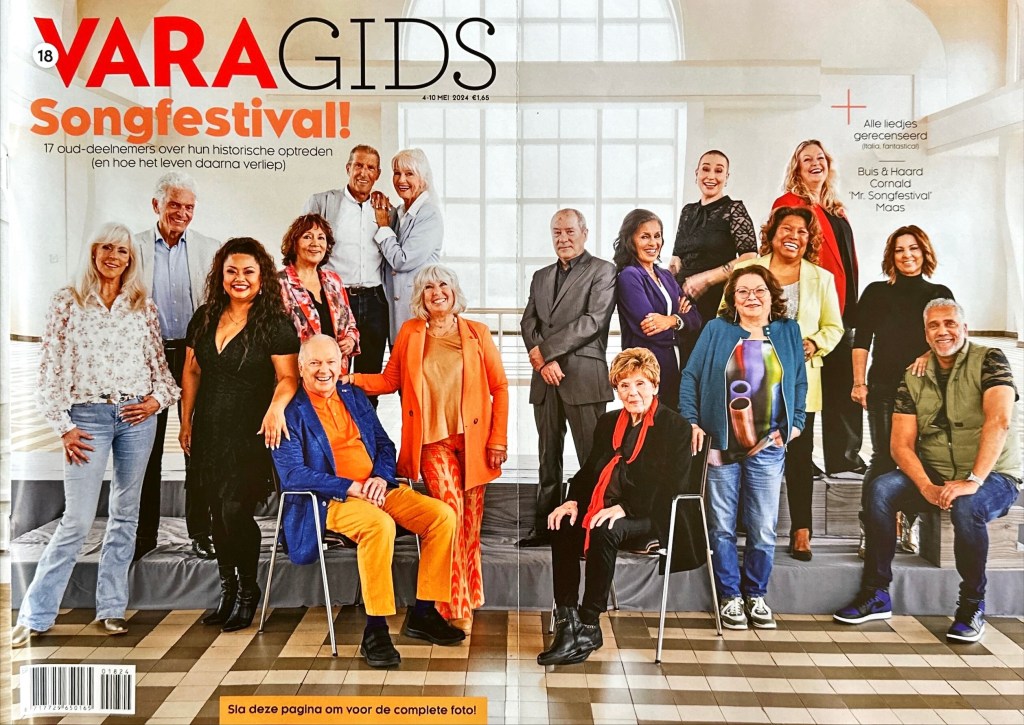
Ben Cramer (77)
De Oude Muzikant (1973)
I sang five songs in the national contest. It was certain that I would participate, but the audience decided which song I would sing at the Eurovision Song Contest. Afterwards I understood why they chose that song: it was a song in six-eighths time. The hit I had two years before Eurovision, ‘De clown’, was also in six-eighths time. These songs are recognizable and sing-alongs for the audience.
The bookmakers ranked this song at number six. I think the fact that I came fourteenth was mainly due to technology. The sound was so bad, everyone complained about it. During the dress rehearsal I stopped singing halfway through, which was absolutely not allowed. I said: ‘Sorry, but this is not possible!’ I received applause from the audience, because they all agreed. But what I didn’t know at the time was that the jury was also watching. And I had to deal with a very angry director, because I quit. In the final TV recording he took his revenge.
Look, the Eurovision Song Contest is not just about the song, but also about the TV registration, and that was deliberately very bare here. Because of the argument. The orchestra sat in the dark and the musician sat in the back. I can’t help but feel that that had an influence on the final score. I have always continued singing this song, and introduce it with the joke: I came, I saw, and I could go again.
Linda Wagenmakers (48)
No Goodbyes (2000)
The first time I heard ‘No Goodbyes’ it was a completely different version than how we know it now. At the time it was still a kind of Spanish summer hit. Jerry Wolff then turned it into what it is today: a party song that really explodes. With my team we then came up with the act, with the dress and the dancers from Fame that came out from under the dress. We made the most of everything, even in the national finals. I’m a real Song festival fan, ever since Sandra Kim won with ‘J’aime la vie’.
It was bizarre to notice how much attention there was about the act itself. Especially from the press. At one point, journalists even broke into the rehearsal room to see what the act would be like and what dress I would wear. In the weeks leading up to the performance, it was really only about that dress. I thought: why is this so important for the Netherlands? Isn’t there anything important happening in the world? Of course it happened, because on the day itself there was a fire works disaster in Enschede, which meant that the live broadcast of the final wasn’t broadcast on Dutch TV. My participation in the Eurovision Song Contest has created a huge audience. Afterwards I often performed the song. And in that dress.

Michelle (42)
Out on my own (2001)
The National Song Contest was the first big performance I did. I was only nineteen at the time and won right away, I didn’t understand it at all. I thought it was bizarre and intense . I was a very insecure teenager. It was not easy, also because I started to get to know myself during that period.
After my participation, I was at a crossroads in my life: continue with my career and use the Eurovision Song Contest as a springboard or continue at the conservatory, where I studied singing and cello. Because I wasn’t sure what I wanted to do, I chose the latter. I didn’t want to jump into something that I wasn’t sure would be right for me.
‘Out on my own’ contains the beautiful sentence ‘Free in the choices of my life’. That’s how it really felt at the time when I sang it. I can make conscious choices in my life! I’m in control! Sometimes I’m a bit insecure, and in those moments I tell myself: you have the choice , you decide. I still sing the song, but in a 2.0 version , with different chords and a bit more jazzy. I retrained as a nurse four years ago and I still enjoy making music. But people always have an opinion. With a few of former Eurovision participants we sometimes jokingly call ourselves ‘our trauma club’, because there is a lot of comments coming your way, for example Mia (van Dion, ed). She has suffered so much misery, we should be more aware of that.
Ronnie Tober (79)
Morgen (1968)
The line “I was on the road for so long” kept coming up in the chorus and I thought, damn, they’ll never get each other. The end came suddenly without you, my distant wife? So that conclusion was correct.
We traveled to London with a very small delegation. Conductor Dolf van der Linden came along and someone from record company Phonogram. I had a stack of biographies with me in three languages and that was it.
Afterwards there was a cocktail party organized by the BBC with the declared winner Cliff Richard, but he came second behind Spain. He didn’t say anything , walked around with a big smile and said ‘next time better.
I am very grateful that I participated. As a result, I have seen a lot of the world with performances in Belgium, France, Poland , Spain and Greece and a show in Germany at the WDR with Üdo Jurgens. Even though I came last, it still felt like I had won. Life doesn’t make or break , and it’s a good push for your career. I would participate again in a heartbeat, after all, those Russian grandmothers who represented their country in 2012 came second. I almost forget the most important thing; I met my husband Jan after a preliminary round of the Eurovision Song Contest in Arnhem during drinks at the White Horse Club. It was an immediate hit and that’s now 58 years ago.

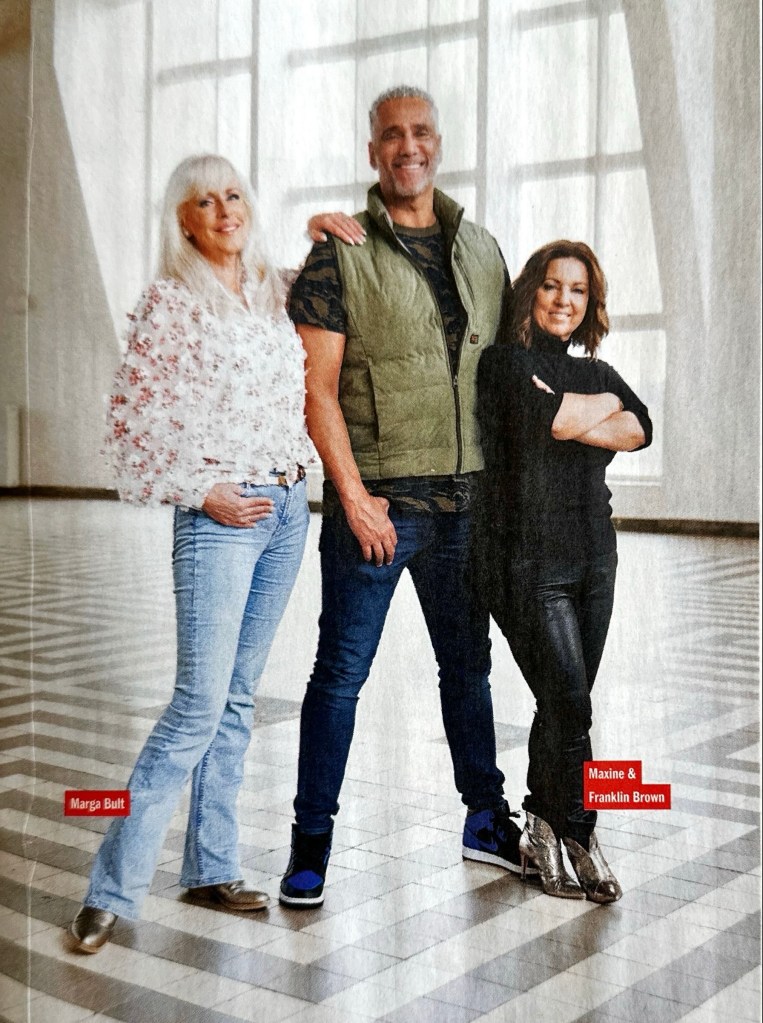
Marga Bult (67)
Rechtop in de Wind (1987)
There is a time before and after ‘Rectop in de Wind’. The song has proven to be a benchmark in my life. It meant the end of girl group Babe, with which I had already had hits, and was the start of my solo career.
The song finished fifth, after the Netherlands had not reached the top ten for years. People still respond so enthusiastically to the song. After 37 years, I have never given a concert where not everyone knows this song. The younger generations also know it, through their parents. A few years ago I sang it at a De Toppers concert. I was curious if people would still like it. Well, the whole place went up! Seven hundred thousand men!
The text is particularly popular: for example, people found out that they were gay through this song. Or they discovered that their marriage was no longer working. Upright in the wind – that sentence catches, something happens. The song still fits me like a glove, you keep experiencing new things. Whenever I was having a hard time, I thought about the song and its predictive value. Then I was singing on stage again and thought: yes, I can sing this song for myself too. I was in the middle of what I was singing about. I would sing it with a smiling face, but with a sad heart. I am also amazed by this song. Nowadays I sometimes see the audience I have to perform in front of and think: they’re quite young. But then they blow the roof off.
Maxine (53) & Franklin Brown (62)
De Eerste Keer (1996)
Maxine: The title ‘The first time’ is very apt for me: the Eurovision Song Contest was my first major performance.
Franklin: And the first time we worked together. We were introduced by John de Mol and Ruth Jacott. When we met there was an immediate click.
Maxine: We thought: this is it.
Franklin: ‘The first time’ is still regularly played on the radio. A few weeks ago we did it live on Radio 538 and since then the phone has been ringing off the hook again. But even when we sing the song at a party, everyone sings along. Also young people. It’s just a catchy and cheerful song. Maxine has been singing in the Edwin Evers Band for years, where she sings the song regularly. I have been touring for years with my band, the Tiny Little Big Band, more jazz and soul, and the audience still asks for this song. So we also sing it separately from each other regularly. She has a tape with my voice on it, and I have a tape with her voice on it.
Maxine: Singing became my job in 1997, before that I still worked at the Social Insurance Bank in Breda. And that is only because of the Eurovision Song Contest.
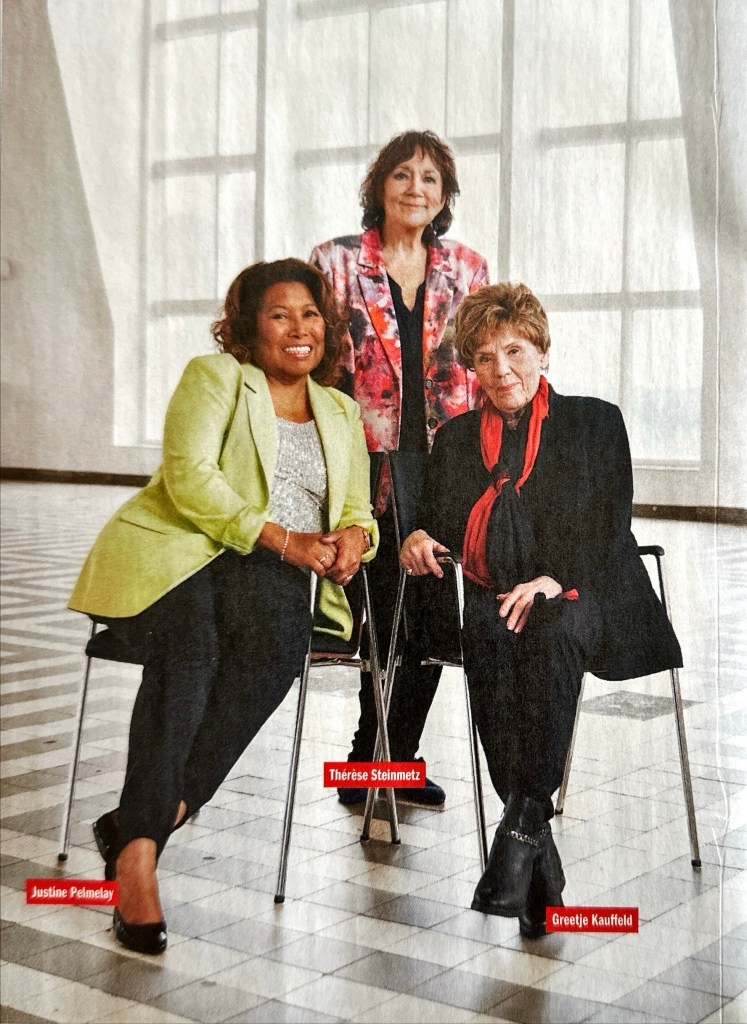
Justine Pelmelay (65)
Blijf Zoals Je Bent (1989)
Jan Kisjes wrote this song for his wife. When I sang it I was in the middle of a divorce. My ex had to read from the newspaper that I had another boyfriend, that didn’t get the beauty prize. So that text had a special meaning for me. But I didn’t know then that ‘Stay the way you are’ would become the anthem of the entire LGBT+ movement. I didn’t know that scene at all at the time.
Everyone still sings along to this, very beautiful. And everyone know the text, although everyone gets something different out of it. Some people have come out of the closet because of this song, I received cards from people who started a new life and it is played at funerals. And all because of that one sentence: ‘Stay as you are.
The moment I received the invitation for this photo shoot, I was diagnosed with leukemia. If I don’t improve, stem cell therapy will follow. I trust that there will be a good outcome, but now I’m performing a little less. Hopefully again later, because I think I’m singing the song better and better. I’m getting older, my backpack is filled with new life experiences and new encounters.
Thérèse Steinmetz (90)
Ring-dinge-ding (1967)
‘If I want to drink vodka in the morning and spontaneously chat with the baker’, I thought it was the funniest sentence. ‘Ring -dinge ding’ was written for a young girl and I wasn’t that young anymore, that’s why.
Participating in the Eurovision Song Contest was a very fun and unexpected experience and a special event. I did an awful lot after that . I immediately won a festival in Belgium and I was able to pack my bags for an eight- day festival in Poland. In 1970 I won the Golden Deer Festival of Brasov in Romania. That lasted a whole week and you were able to show quite a bit of your repertoire. Big names from that time came: Josephine Baker performed there and Dalida but also Charles Trenet.
Musically speaking, I think the Eurovision Song Contest has little to offer these days . Many acts don’t get further than two chords. Oh, everyone will think: what an old, grumpy lady, but that’s not me at all.
Greetje Kauffeld (84)
Wat Een Dag (1961)
I haven’t sung the song for a long time, but recently I started singing it a little more often. It’s not an easy song. ‘I even picked flowers in the park/Across the street with impunity – that part is really difficult, so much text!
When I joined, I had already made quite a career in Germany . And that went really well. Shortly after my participation , I moved from the Netherlands to Stuttgart, then to Munich. I traveled all over the country, at the time there were these big TV shows where I also participated. A golden time. Later I moved back to the Netherlands, I got married , but I always continued to work in Germany, because German fans are very loyal, they still remember me there, I recently performed there with a big band, very special.
‘Wat Een Dag’ hasn’t been part of my repertoire for a long time, because I’m always in Germany. When I started singing it again later, I discovered how good it was. I have gradually come to love ‘Wat Een Dag’ more and more.
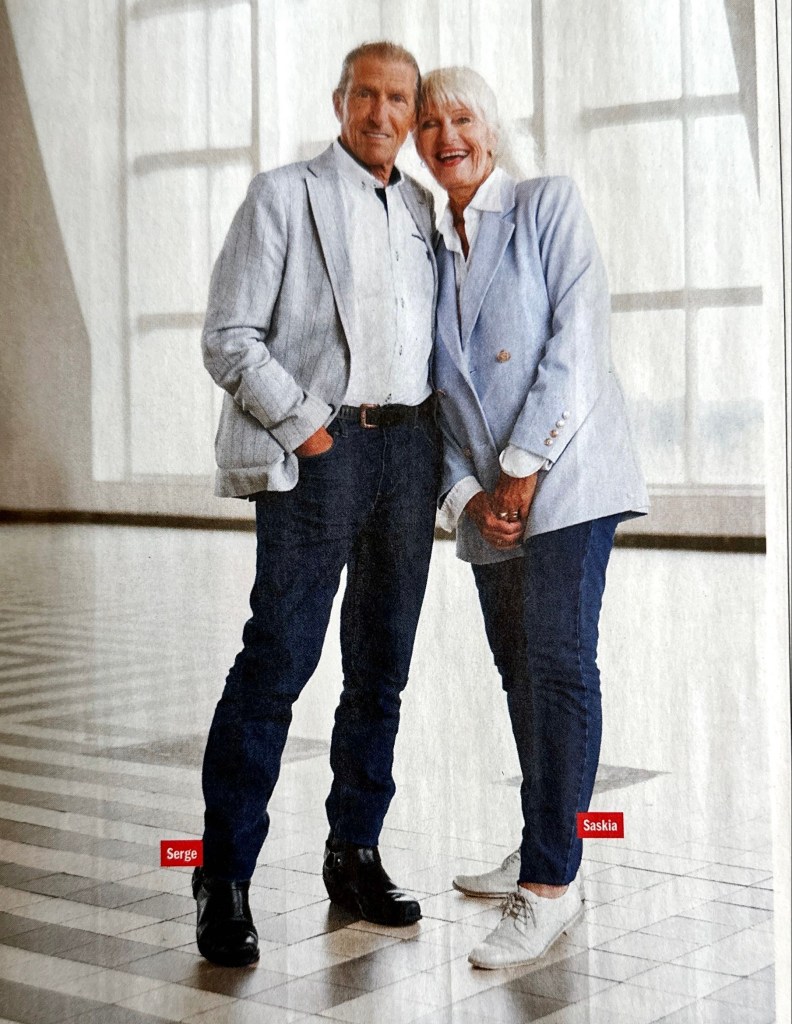
Saskia (77) & Serge (78)
Tijd (1971)
Serge: We were approached in 1970 to participate in the national contest for Eurovision. They were looking for an original Dutch song.
Saskia: That came suddenly, because we filled in for The Shepherds last minute. Serge: We received a call on Tuesday afternoon asking if we had an original Dutch song that we could share on Wednesday morning. Then we wrote the song ‘Het Spinnewiel’, and that turned out to be a kind of coincidence. We didn’t win, but we were nationally known because of that. The following year we were invited to the festival and came sixth with ‘Tijd’.
Saskia: While we thought that we didn’t stand a chance with this, because there is no chorus in it. I thought it was a bit of a calm song, fado-like, and that turned out to be the case: we got twelve points from Portugal.
Serge: After our participation came European success with several TV specials made in other countries, including Portugal. We had hits in America, where we had the opportunity to build a career. There we performed in front of 24,000 people and were offered a recording contract. We were at Johnny Cash’s house.
Saskia: And we met Roy Orbison, Don Everly… we just went to the pub with them.
Serge: They wanted us to stay there and make a country record and go on tour. That was not possible, because four hundred performances were already booked in the Netherlands. And we’re still performing. We only do “Time” and “Spinning Wheel” when its asked. It’s so old, and we have so many other hits.
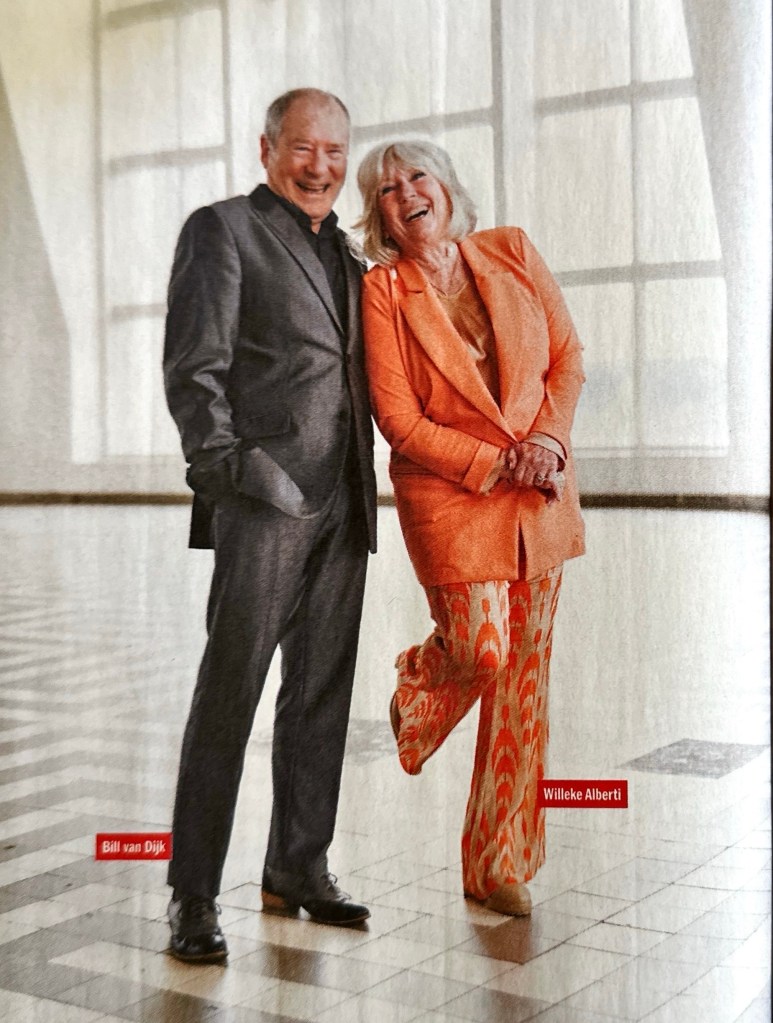
Bill van Dijk (76)
Jij en Ik (1982)
For me, the Eurovision Song Contest was a very special experience. It was about big money, apparently, suddenly all kinds of managers from other artists were knocking on my door, I got friends who I didn’t know were my friends, political games were played, there was an argument about the producer of the song, about the dance and about who should make the clothes. Everyone was angry at everyone. I learned a lot about human behavior.
Once at the festival, the people from the broadcaster had disappeared: they went to play tennis, or swim, or whatever. During the rehearsal it turned out that the choreography was not possible at all, it did not fit on the stage, but the people from the broadcaster were gone. And then there was also a radio boycott of the song, because I couldn’t attend a certain performance. That was my experience with the Songfestival.
I haven’t sung the song for a long time; I already had a theater career and after this performance I simply continued. Why would I still sing that song? From that circus? But now I really like it. The song contains the line: ‘We remain connected forever/No matter how our paths go’. You can also sing this these times, with wars, with fascists taking charge. Because no one takes the same distance as an astronaut. No one sees that we are all sitting on this ball. We really are all connected.
The older I get, the more I like the song. Last year I sang it again, in the Amsterdam Melkweg, it was great fun. I made it too complicated all those years.
Willeke Alberti (79)
Waar is de Zon (1994)
The sentence ‘And suddenly you were there, I saw you go again/I stepped aside, but you stood next to me/you kept walking next to me, You went home again /my heart opened again, I feel at home again’ is very special to me. I thought a lot about my father at the time and that helped me enormously. I always try to think of someone with my songs. When I think of ‘Telkens Weer’ I think of the love that is still possible. I like to experience the lyrics at the moment I sing them. I thought it was very special that I could represent my country, comparable to a royal award. I wanted to wear an orange dress in Dublin because it was broadcast on Queen’s Day, but I opted for a black one because I liked it better and it was also made especially for me. ‘Where is the sun’ only got four points, but for me it remains a beautiful song. I still sing it always with great pleasure. Coot van Doesburgh wrote the text for someone who died of AIDS, that makes it more special for me. The song is also always part of my medley that I perform at Gay Prides.
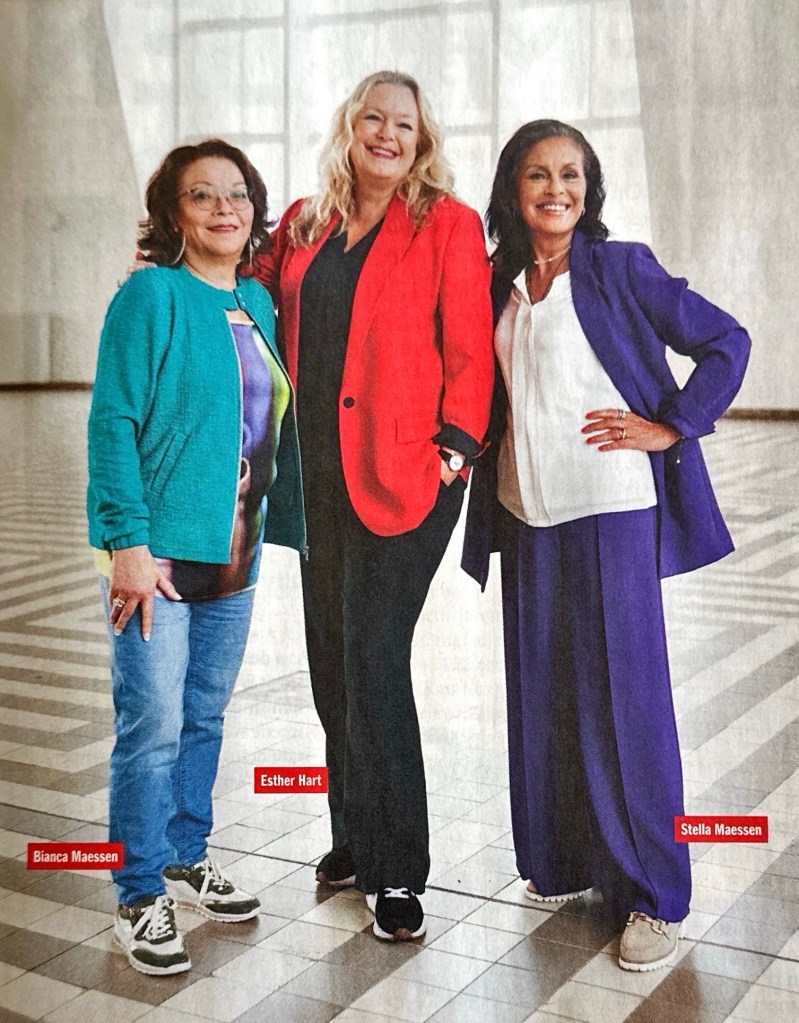
Esther Hart (53)
One more night (2003)
I met Tjeerd van Zanen in a café in Rotterdam. He is a composer and has composed, among other things, the Marlayne song (‘One good reason, ed.). I asked him if he would again would submit a song for the Eurovision Song Contest. That’s what he wanted, he had a nice song, ‘but I don’t know yet whether it should be sung by a man or a woman. I offered to sing it for him so he could hear what it sounded like in a female voice. In his upstairs apartment in Rotterdam, in the clothes closet, I sang ‘One more night’ for the first time . Finally he asked if I had it wanted to interpret.
After the Eurovision Song Contest I noticed that I was booked much more. As a solo singer, but also for roles in theater and musicals and as a singing teacher. For example, I have been Marco Borsato’s vocal coach for more than twenty years. I still do a lot for the Eurovision audience. Those fans are all over Europe, so I also have nice international performances. In Stockholm, London, Leeds, Lissabon. Once the Eurovision audience embrace you, they won’t let you go.
Hearts of Soul Stella (71) and Bianca Maessen (73)
Waterman (1970)
Stella: I still get the question: aren’t you one of those three sisters from Harderwijk? That’s crazy, I say. We participated in 1970, when the Eurovision Song Contest was already something very big. While we were just starting out as singers.
Bianca: We were already in the circuit of Pim Jacobs and Rita Reijs.
Stella: Yes, and in Voor de Vuist Weg, we were already there at the time. And Fenklup, with Sonja Barend . Then we wore those blue dresses!
Bianca: Yes, with the black bow. We have given away all that clothing over the years, to fans or to charity.
Stella: When I joined. I was sixteen years old. And you nineteen.
Bianca: So we sang about the zodiac sign Aquarius . Very nice, because each person has an animal sign. I’m a Cancer. Stella, you’re a Leo. Not that those zodiac signs suit an Aquarius very well, as we sing. No, the song was just waiting for us. And it was up to us to sing it in three voices.
Bianca: We never married Aquarians later, did we? No, definitely not.
Stella: Haha, indeed not! But the song is still beautiful, isn’t it?


 euro-vision.blog