Proud of Teddy

No rainbow-coloured Pride flags, but encouraging cries with which proud fans of Teddy Scholten waved her goodbye at Schiphol airport in 1959 towards the Eurovision Song Contest in Cannes. And… she won with the catchy song Een Beetje, a composition by Dick Schallies with lyrics by Willy van Hemert. Many readers will still be able to sing along to the chorus: ‘Een beetje, verliefd was je wel meer, meneer, dat weet je! Je hart kwam weleens meer op een ideetje. Dat speet je, maar ach weetje, soms vergeet je wel een beetje gauw je eedje van trouw’.

In 1959, only eleven countries participated, but that number has now tripled. In Basel – in addition to the Netherlands with the song ‘C’est la Vie‘ by Claude – no fewer than 37 countries are participating, including several non-European countries. The condition for participation is not that a country is European, but that it must be a member of the European Broadcasting Union (EBU), which organizes the festival annually. The final is on Saturday, May 17. Source: Max Magazine
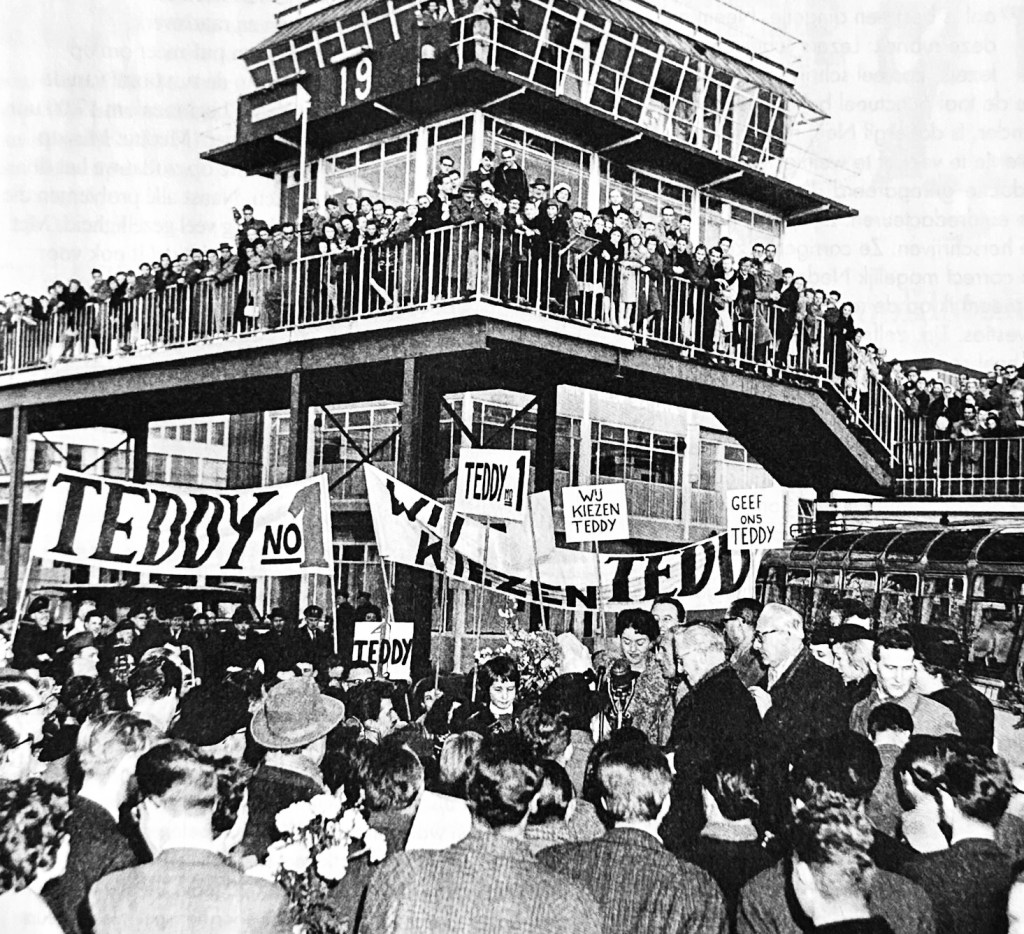
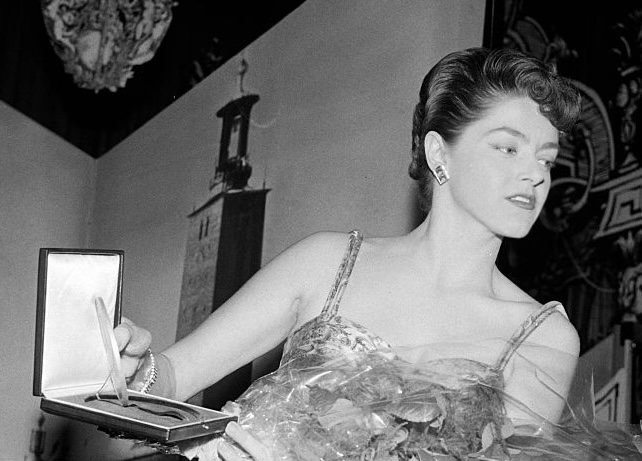
Eurovision 1959

Tonight the fourth edition of the annual Eurovision Song Contest 1959 was held at the Palais des Festivals et des Congrès in Cannes, France, and hosted by French television presenter Jacqueline Joubert. Organised by the European Broadcasting Union (EBU) and host broadcaster Radiodiffusion-Télévision Française (RTF), the contest, originally known as the Grand Prix Eurovision de la Chanson Européenne 1959 (English: Grand Prix of the Eurovision Song Contest 1959), was held in France following the country’s victory at the 1958 contest with the song Dors, mon amour, performed by André Claveau.

In total eleven countries participated in the contest, with Monaco making its first appearance and the United Kingdom returning after their absence the previous year. Luxembourg, however, decided not to participate after competing in all former editions.

The winner was the Netherlands with the song Een beetje, performed by Teddy Scholten, composed by Dick Schallies and written by Willy van Hemert. This was the Netherlands’ second victory in the contest, having also won in 1957, and also marked the first time a country had won the contest more than once. Van Hemert also became the first individual to win twice, having also written the first Dutch winning song from 1957, Net als toen. The United Kingdom placed second, marking the first of a record sixteen times that the country would go on to finish as contest runners-up, while France placed third.