
Wanneer ik anderen in mijn omgeving opdring met deel in mijn enthousiasme voor het Eurovisie Songfestival zijn de meesten aangenaam verrast door de inzending van Frankrijk. Het is een zomers zouk-achtige nummer, waar je met moeite stil bij kan blijven zitten. Of het nummer zal winnen weet ik niet, want ik weet niet hoe de mensen in het Oostblok reageren op vrolijke Kaoma-muziek. Zet de volume van je computer lekker hoog en speel onderstaand youtubefilmpje af. Schudden! Schudden!
Author: Dray
Be kind.
De Russen!
Velen in mijn omgeving zijn het helemaal niet met mij eens, maar ik vind de inzending van Rusland voor het Eurovisie Song Festival juist heerlijk (vaak afgespeeld in iTunes). Een heerlijk relaxt voortkabbelend liedje met een lieve tekst en ook heel relaxt uitgevoerd. Hoe de andere landen eind deze maand zullen stemmen weet ik (nu nog) niet, maar van mij het onderstaand lied door naar de finale op 29 mei.
In onderstaande clip zie je heel even de winnaars van vorig jaar (Alexander Rybak) en het jaar er voor (Dima Bilan). Beneden het onderstaand filmpje vind je de lyrics van ‘Lost & Forgotten’. Zing maar mee..
Would you believe, Lord of Mercy?
Would you be so good, Lord?
I wanna love her now
And I wanna feel that now with all…
All of those kisses and sweet embraces
Here am I, lost and forgotten
For this cruel, cruel time
When I’m first time in love
Now that is why
Now that is why I sing, Lord of Mercy
And I hope now that you hear me
What are you doing man?
I’m looking at her photos
What should I do with them?
Drop them to the fire
Oh, yes, yes, I’m gonna burn them now
‘Cause I have to forget her now with all…
All of those kisses and sweet embraces
Here am I, lost and forgotten
For this cruel, cruel time
When I’m first time in love
Now that is why
Now that is why I sing, Lord of Mercy
And I hope now that you hear me
Here am I, lost and forgotten
For this cruel, cruel time
First time in love
Now that is why
Now that is why I sing, Lord of Mercy
And I hope now that you hear me
Oh, bring her back to me
Wat Let(je)land
Afgelopen zaterdag bracht de postbode mij de dubbel-cd met alle songs voor het komende Eurovisie Songfestival. Zo kan ik over een paar weken -bijna- alle nummers tijdens de uitzendingen op tv meezingen. Het lied van Letland vind ik een catchy/gospelachtige meezinger. Op de dubbel-cd klinkt zangeres Aisha best okay, maar via youtube.com kwam ik er achter dat Aisha best nog even mag oefenen wil ze over twee weken op 25 mei het nummer live mooi goed zingen.
Madness
Onder het mom van ‘veel jolijt en ongein is nog altijd beter dan kwaliteit’ stuurt het land Litouwen dit jaar de groep Inculto met ‘Eastern European Funk’ naar het Eurovisie Songfestival. Een vijftal ‘oudere’ jongens die met hun buurthuis-act nog niet eens zouden mogen doorschieten naar een volgende ronde van een gemiddeld Idols- cq X-Factorshow laten dit jaar voor hun land de kunstjes op het podium zien.
Als het nummer dit jaar hoog eindigt komt het zeker niet door de zangkunsten. Ook niet door de danspasjes. Maar wellicht komen de punten van de buurlanden voor de Bucks Fizz-achtige cq Full Monthy act op 2 minuut 12 seconde?
Sailing Home
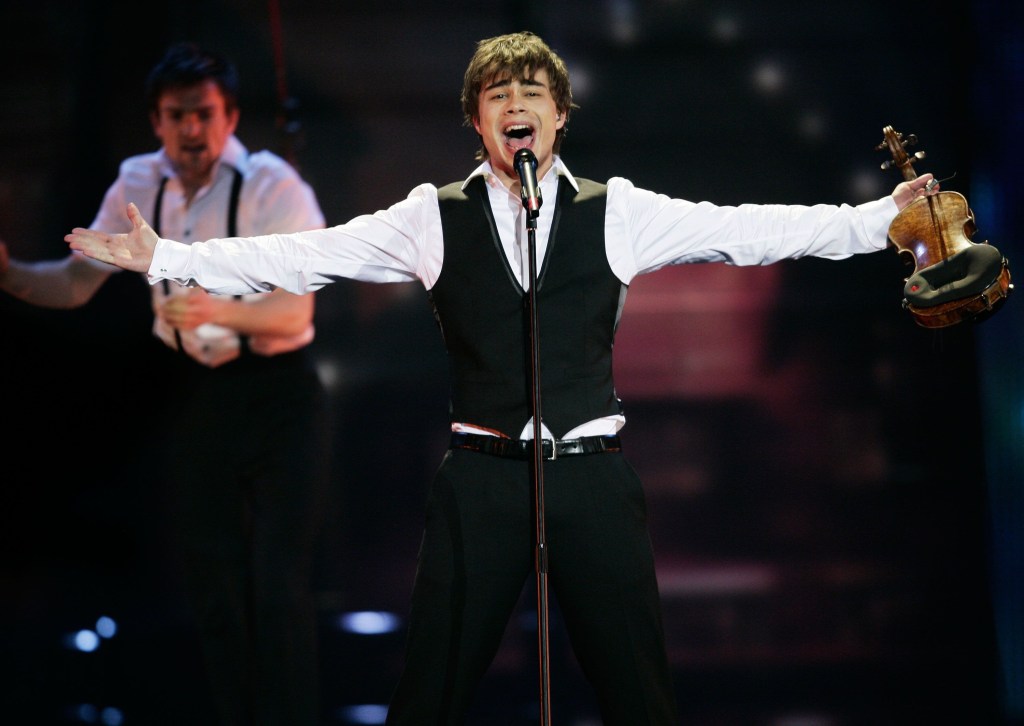
Vorig jaar won Noorwegen het Eurovisie Songfestival en het winnend land van 2009 heeft dit jaar wederom een prettig ogend menneke uitgezonden voor het Eurovisie Songfestival van 2010. Didrik Solli-Tangen. Deze zanger staat met een paar violisten (waar heb ik dat eerder gezien?) op het podium een Volendams Veermanachtig lied te zingen.
Het lied doet mij een beetje denken aan een nummer dat vorig jaar op de uitvaartdienst van mijn vader werd gedraaid. Hierdoor wordt het lied iets persoonlijker. Voor mij is het -mede dankzij de tekst- een mooi nummer over voor mijn vader geworden. Persoonlijk denk ik dat de rest van Europa het ook wel de top 10 in stemt..
Sounds Greek 2 Me
Sinds vorige week heb ik besloten om iedere dinsdag hier op dit ‘draystation’ een inzending voor het Eurovisie Songfestival 2010 te plaatsen. Vorige week was dat mijn favoriet (tot nu toe); België. Vandaag de inzending van Griekenland.
Dit land stuurt Giorgos Alkaios & Friends naar Oslo met het nummer ‘OPA!’. Het lied is er één van dertien in een dozijn. Veel dansers, kreten (opa!), een viool-riedeltje (winnaar vorig jaar) en af en toe lijkt het alsof het mobieltje van een van de dansers afgaat.
Ik denk wel dat Griekenland in de top 5 komt. Natuurlijk winnen ze niet, want de financiële situatie misère van Griekenland laat geen organisatie voor het songfestival 2011 toe. En als ik heel eerlijk ben zorgt het lied ‘Opa!’ er zelf wel voor dat het net geen overwinning wordt.
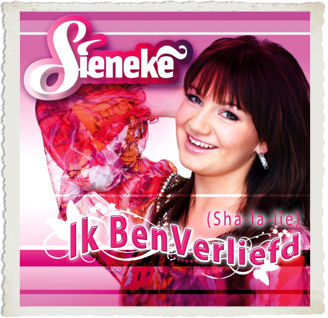
Ik Ben Verliefd
Ik word een beetje heel erg moe van iedereens mening over het ingezonden lied voor het Eurovisie Songfestival 2010 in Oslo, Noorwegen. Vooral moe over alle negatieve meningen (Tatjana, in de jury plaatsnemen -vast niet voor niets- en vervolgens daags er na met modder smijten. Shame on you!).
Iedereen is het er wel over eens dat ‘Ik Ben Verliefd’ (Sha la lie) een ouderwets en vooral oubollig lied is. Daarom ben ik zo blij met de winnende uitvoering: een draaiorgel en een jaren vijftig riedeltje. Niet te pretentieus, maar gewoon een liedje met een pakkende melodie. Dat laatste vind ik dan toch iets minder, want ik krijg het shalalie sinds afgelopen weekend niet meer uit mijn kop (en sta ik er morgen weer mee op?) ..
Eén voordeel van al deze Nationaal Songfestival-perikelen is wel dat Patricia Paay niet meer dagelijks met non-nieuws in het nieuws komt.
Ik ben vergeten waar ik dit liedje heb gehoord, in de zomerzon
Ik geloof dat het toen daar met jou op het strand was in Lissabon
Of was het daar toen in Parijs
Achter een coupe vers mokkaijs?
Het kan ook zijn dat het was met zijn tweeën overzee in die luchtballon
Shalalie shalala, shalalie shalala
Het gaat niet uit m’n kop
Shalalie shalala, shalalie shalala
Ik sta d’r ‘s morgens mee op
Ik ben verliefd op jou
Daardoor vergeet ik alles gauw en weet ik het niet meer
Shalalie shalala, shalalie shalala Zo gaat het ongeveer
Ik ben verliefd, ik ben verliefd
Ik ben verliefd, dat kun je zo zien
Het kan ook zijn dat ik hoog in de lucht in een vliegtuig naar Oslo
Of klonk het uit een café in zo’n straatje – ik was ooit in Trinidad
Of was het met een goed glas wijn
Op dat terrasje in Berlijn?
Of was het in Moskou waar ik mijn eerste kus heb gehad van jou?
Hoe kan ik dat, hoe kan ik dat…
Hoe kan ik dat, hoe kan ik dat…
Hoe kan ik dat nou vergeten?
Shalalie shalala, shalalie shalala
Het gaat niet uit m’n kop
Shalalie shalala, shalalie shalala
Ik sta d’r ‘s morgens mee op
Ik ben verliefd op jou
Daardoor vergeet ik alles gauw en weet ik het niet meer
Shalalie shalala, shalalie shalala
Zo gaat het ongeveer.
History Repeatin’?
‘Ik ben verliefd (Sha-la-lie)’ heet het liedje waar we volgend jaar veel punten mee hopen te gooien op het Eurovisie Songfestival in Oslo. Dat werd vrijdag duidelijk in het TROS-programma Gouden Uren (Radio 2). Op uitnodiging van de TROS, die komend jaar in Nederland het Songfestival organiseert, heeft Pierre Kartner (aka Vader Abraham) het lied geschreven. De schrijver en componist bracht het nummer vrijdag in de radioshow zelf ten gehore. Wie de inhaker in Oslo gaatvertolken is echter nog niet bekend. Dat wordt duidelijk na het Nationaal Songfestival, dat op zondag 7 februari plaatsvindt.
Zenden we na 34 jaar dan eindelijk eens een winnend nummer in..?

Eurovision 2009
This week the 54th edition of the annual Eurovision Song Contest took place in Moscow, Russia, following the country’s victory at the 2008 contest with the song Believe by Dima Bilan. Organised by the European Broadcasting Union (EBU) and host broadcaster Channel One (C1R), the contest was held at the Olimpiysky Arena, and consisted of two semi-finals on 12 and 14 May, and a final on 16 May 2009. The semi-finals were presented by Russian model Natalia Vodianova and television presenter Andrey Malakhov, while the final was presented by Russian television presenter Ivan Urgant and former Russian contestant Alsou Abramova, becoming the first and to date only time that two different sets of presenters had hosted the semi-finals and finals.

Forty-two countries participated in the contest, down one from the record forty-three the year before. Slovakia returned to the contest for the first time since 1998, while San Marino did not enter due to financial issues. Latvia and Georgia originally announced their intention not to participate, but it was later stated by the EBU that both countries would participate. However, Georgia later decided to withdraw after the EBU rejected its selected song as being a breach of the contest’s rules.
Thirty-seven countries participated in one of the two semi-finals of the contest, with the Big Four countries (France, Germany, Spainand the United Kingdom) and the host (Russia) pre-qualified for the final. In addition to those pre-qualified, the final also included the ten selected countries from each semi-final, making a total of twenty-five participants.
A discussion on changes to the format of the 2009 Eurovision Song Contest had taken place at an EBU meeting in Athens, Greece in June 2008 where a proposal was made that could have resulted in the Big Four losing their automatic place in the final of the contest. However, it was confirmed that the Big Four countries would continue to automatically qualify for the final at the 2009 contest.
Host broadcaster Channel One presented the sub-logo and theme for the 2009 contest on 30 January 2009. The sub-logo is based upon a Fantasy Bird, which can be used with many colours. As in previous years, the sub-logo was presented alongside the generic logo. 2009 is the only year since 2002 without a slogan.
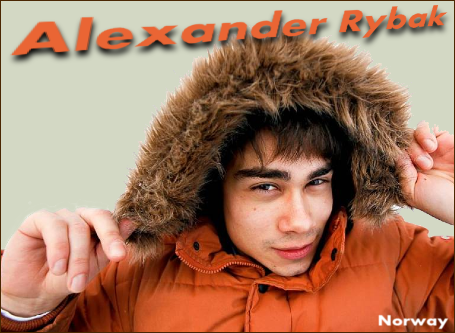
The winner was Norway with the song Fairytale, performed and written by Alexander Rybak. The song won both the jury vote and televote and received 387 points out of a possible 492, at the time the highest total score in the history of the contest. Iceland, Azerbaijan, Turkey and the United Kingdom rounded out the top five, with the latter achieving its best placing since 2002. Iceland’s second-place finish was the country’s best placing in a decade.
After criticism of the voting system in 2007, changes in the voting procedure were finally made prior to this contest, with the re-introduction of a national jury alongside televoting for the final, while the format of the semi-finals remained the same.
Voor(spelling)ronde

Het Songfestival is weer ouderwets retro en vintage. Afgelopen week ging er geen dag voorbij of er viel wel iets te melden over onze Toppers in Moskou. Viel de afgelopen jaren het Eurovisie Songfestival niet meer op en trokken de Nederlanders de schouders op als men vroeg wie er voor Nederland afgevaardigd was, nu is dat anders. Schandalen en tragedies zijn weer aan de orde van de dag. Het Eurovisie Songfestival is weer op de kaart gezet. Nu Nederland nog door naar de finale!
Over een half uur begint de tweede halve finale en nu nog even snel een voorspelling doen. Eens zien of mijn muzikale smaak nog gelijk is aan die van de gemiddelde Europeaan. Ik ga voor en hoop vooral dat de volgende tien landen naar de finale door gaan: Polen, Noorwegen, Cyprus, Denemarken, Hongarije, Azerbeidzjan, Griekenland, Litouwen, Oekraïne en dan toch Nederland.

Glazen Bol
De NOS zal haar medewerking aan de finale van het Eurovisiesongfestival in Moskou heroverwegen, als de Gay Pride die zaterdag in de Russische hoofdstad plaats heeft, wordt neergeslagen. Dat viel dinsdag op te maken uit antwoorden van cultuurminister Ronald Plasterk op vragen uit de Tweede Kamer. De Nederlandse bijdrage, geleverd door De Toppers, moet natuurlijk wel eerst de finale halen. Eerder dreigde deelnemer Gordon in het geval van een finaleplaats en antihomogeweld niet te zullen zingen.
Boris van der Ham (D66) kaartte de zaak aan en vond bij Plasterkveel begrip. De bewindsman herinnerde zich beelden van een eerderehomodemonstratie die in Rusland in elkaar werd geslagen: ”Gruwelijk!”. Hij zal de zorg aan de Russische ambassadeur in Nederland overbrengen, zijnRussische cultuurcollega aanspreken en staatssecretaris FransTimmermans vragen de kwestie te berde te brengen tijdens eenbijeenkomst over homorechten deze week in Parijs. bron
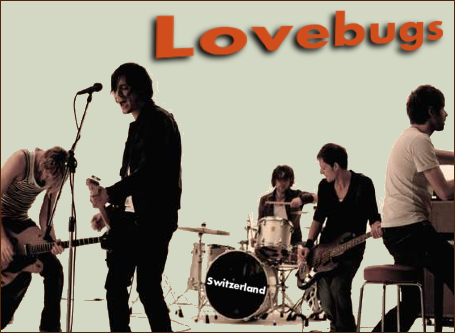
Laten we de dingen positief benaderen en er van uit gaan dat èn de Toppers doorgaan naar de finale èn dat de zaterdag de Gay Pride in Moskou vredelievend door zal gaan. Over een half uur begint de eerste halve finale en ik denk (en hoop) dat de volgende tien landen naar de finale door gaan: Zweden, Zwitserland, Turkije, Israel, IJsland, Roemenië, Finland, Portugal, Malta en Bosnië Herzegovina.
€-Visie
Waar ik vroeger met een pen plus schrijfblokje voor de buis zat te schrijven en de liedjes van het Eurovisie Songfestival voor het eerst hoorde en zag, kan ik vandaag de dag ruim van te voren weten wie er voor welk land mag optreden. Toen ik nog een mini-dray was beoordeelde/veroordeelde ik de deelnemers op wat ik toen pas op de buis kreeg voorgeschoteld.
Sinds een week heb ik de dubbel CD van alle liedjes 2009 in huis en kan zo langzaamaan wennen aan de 42 (!) deelnemers. Er zitten afschuwelijke dingen tussen, maar ook liedjes waarvan ik denk: ‘Hmm, zo slecht nog niet.’ Zo vind ik het nummer ‘I Dont Wanna Leave‘ van Polen een mooie ballad, maar toen ik de uitvoering op YouTube zag, was ik toch minder enthousiast. Het gaat tegenwoordig tenslotte ook om de act.
In de linkerkolom staat sinds vandaag een Google-overzicht. Hierop staan de landen in volgorde van populariteit. Echter niet om het liedje of act, maar om het aantal zoekopdrachten in Google. Bij de bookmakers zal er zeker een andere volgorde te zien zijn. Ik ben overigens benieuwd hoe ‘onze’ Toppers het volgende week zullen doen. Nu ze van die kitscherig lamp-kostuums hebben aangeschaft, maken ze wellicht meer kans dan voorheen. Ze staan vandaag net niet in de top 10 van de minst succesvolle deelnemers bij de bookmakers..
Top of Flop
Ik heb net gekeken naar het Nationaal Song Festival met de Toppers. Gepresenteerd door Jack van Gelder. De vijfkoppige vakjury die hun zegje mochten doen, bestaat uit TROS-radiopresentator Daniël Dekker, Getty Kaspers (Teach-In),tekstschrijver/producer Emile Hartkamp, Tony Berk (voormalig radiopresentator) en actrice/zangeres Tatjana Simic.
De liedjes die de Toppers vanavond ten gehore brachten konden mij niet echt bekoren. Ik ben van mening dat men het winnende liedje kan kiezen uit de minst slechte van de zes. Ikzelf vond het laatste nummer ‘Shine’ het minst stom. Hoogtepunt voor mij vond ik het optreden van Your Votes (en Rolf Koster -nice!- in het bijzonder). Ze zongen een medley van wel leuke diverse songfestivalsongs.
Over een half uur wordt bekend gemaakt met welk liedje de Toppers naar Moskou gaan. Top of Flop?
Eurovision 2008
This week the 53rd edition of the annual Eurovision Song Contest took place in Belgrade, Serbia, following the country’s victory at the 2007 contest with the song Molitva by Marija Šerifović. Organised by the European Broadcasting Union (EBU) and host broadcaster Radio Television of Serbia (RTS), the contest was held at the Belgrade Arena, and (for the first time) consisted of two semi-finals on 20 and 22 May, and a final on 24 May 2008. The three live shows were presented by Serbian television presenter Jovana Janković and musician Željko Joksimović.
Forty-three countries participated in the contest, the highest ever number of participants in the contest beating the record of forty-two set the year before. Azerbaijan and San Marino participated for the first time, while Austria did not participate, mainly due to questions on the semi-final organisation as well as the politicization of the contest.
At a press conference in Helsinki in May 2007, Svante Stockselius, executive supervisor of the contest for the EBU, announced that the competition’s format may be expanded to two semi-finals in 2008 or 2009. On 28 September 2007 it was announced that the EBU had approved the plan of hosting two semi-finals in 2008.
According to the executive supervisor of the contest Svante Stockselius, there were multiple ideas on how the two semi-finals would be organized, such as prerecording both semi-finals and airing them simultaneously on Thursday 22 May, with each broadcaster airing the semi-final their country competes or votes in; or prerecording one semi-final, while the other one is held live, and airing them simultaneously on Thursday 22 May, with each broadcaster airing the semi-final their country votes in. In both cases, the results sequences would be held live.
Although originally this option was not being considered due to the additional costs to such a production, it was later decided that the two semi-finals would be held on different days, both live, on Tuesday 20 May and 22 May 2008.
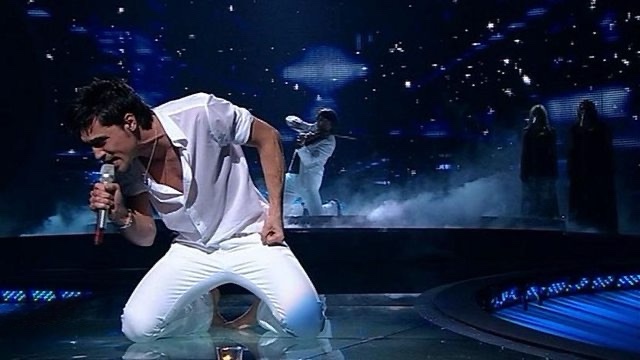
The winner was Russia with the song Believe, performed by Dima Bilan who wrote it with Jim Beanz. Ukraine, Greece, Armenia and Norway rounded out the top five. Armenia achieved their best result to date this year. Of the Big Four countries Spain placed the highest, finishing sixteenth, while the United Kingdom ended up in last place for the second time in their Eurovision history, after 2003.
The official website, eurovision.tv, streamed national finals for this year’s contest live on ESCTV for the first time. Furthermore, for the first time the winner has been awarded the perpetual glass microphone trophy of the Eurovision Song Contest. The trophy is a handmade piece of sandblasted glass in the shape of a 1950s microphone.
Eurovision 2007
This week the 52nd edition of the annual Eurovision Song Contest was held in Helsinki, Finland, following the country’s victory at the 2006 contest with the song Hard Rock Hallelujah by Lordi. Organised by the European Broadcasting Union (EBU) and host broadcaster Yleisradio (YLE), the contest was held at the Hartwall Areena, and consisted of a semi-final on 10 May, and a final on 12 May 2007. The two live shows were presented by Finnish television presenter Jaana Pelkonen and musician and TV-host Mikko Leppilampi. In addition, Krisse Salminen acted as guest host in the green room, and reported from the crowds at the Senate Square.
Forty-two countries participated in the contest – three more than the previous record of thirty-nine, that took part in 2005. The EBU decided to put aside its limit of 40 countries, which would have meant excluding some countries using a ranking order scheme. The Czech Republic and Georgia participated for the first time this year, with Montenegro and Serbia taking part as independent nations for the first time. Austria and Hungary both returned, after their absence from the previous edition. Meanwhile, Monaco decided not to participate, despite initially confirming participation. Monaco has not competed in Eurovision Song Contest ever since.
On 12 March 2007, the draws for the running order for the semi-final, final and voting procedure took place. A new feature allowed five wild-card countries from the semi-final and three countries from the final to choose their starting position. The heads of delegation went on stage and chose the number they would take. In the semi-final, Austria, Andorra, Turkey, Slovenia and Latvia were able to choose their positions. In the final, Armenia, Ukraine and Germany were able to exercise this privilege. All countries opted for spots in the second half of both evenings. Shortly after the draw, the entries were approved by the EBU, ending the possibility of disqualification for the Israeli song. The United Kingdom chose their entry after the deadline because they were granted special dispensation from the EBU.
The contest saw some minor changes to the voting time-frame. The compilation summary video of all entries including phone numbers was shown twice. The voting process was the same as 2006 except there was fifteen minutes to vote, an increase of five minutes on the 2006 contest. In the final, the results from each country were once again shown from one to seven points automatically on screen and only eight, ten and twelve were read by the spokespeople.
The winner was Serbia with the song Molitva, performed by Marija Šerifović and written by Vladimir Graić and Saša Milošević Mare. This was Serbia’s first victory in the contest, coincidentally the first year it competed as an independent nation. It was also the first winning song entirely performed in a country’s native language since Israel’s Diva in 1998. Ukraine, Russia, Turkey and Bulgaria rounded out the top five. Further down the table, Belarus achieved their best placing to date, finishing sixth. Meanwhile, Ireland achieved its worst placing in the contest up until that point, finishing twenty-fourth (last place) in the final. Of the Big Four countries, Germany placed the highest, finishing nineteenth.
Eurovision 2006
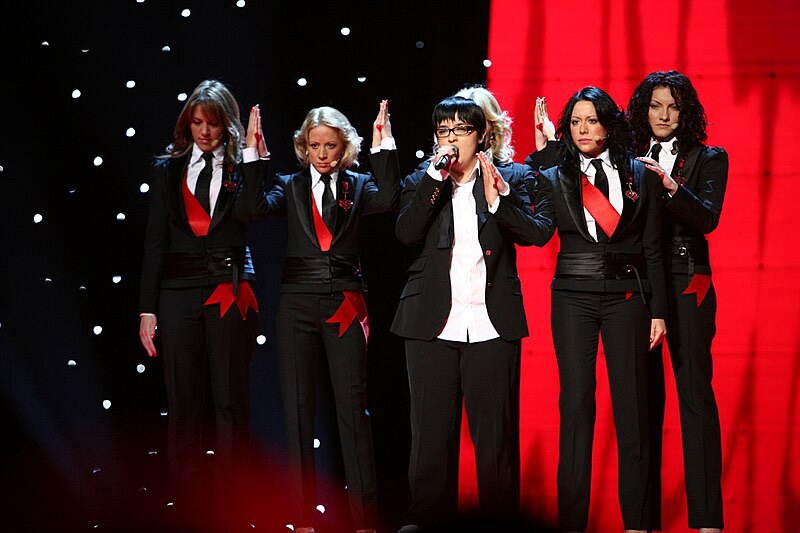
This week the 51th edition of the annual Eurovision Song Contest took place in Athens, Greece, following the country’s victory at the 2005 contest with the song My Number One by Helena Paparizou. Organised by the European Broadcasting Union(EBU) and host broadcaster Hellenic Broadcasting Corporation (ERT), the contest was held at the Nikos Galis Olympic Indoor Hall, and consisted of a semi-final on 18 May, and a final on 20 May 2006. The two live shows were presented by American television personality Maria Menounos and Greek former contestant Sakis Rouvas.
Thirty-seven countries participated in the contest. Armenia took part for the first time. Meanwhile, Austria, Hungary, and Serbia and Montenegro announced their non-participation in the contest. Serbia and Montenegro had intended to participate, but due to a scandal in the national selection, tensions were caused between the Serbian broadcaster, RTS, and the Montenegrin broadcaster, RTCG. Despite this, the nation did retain voting rights for the contest.
The semi-final was held on 18 May 2006 at 21:00 (CET). 23 countries performed and all 37 participants and Serbia and Montenegro voted.
The semi-final opened with a medley of former Eurovision songs performed by Greek gods: Welcome to the Party (runner-up at the Ellinikós Telikós 2006) of Anna Vissi performed by Muses, Nel blu, dipinto di blu (Italy 1958) of Domenico Modugno performed by Zeus, L’amour est bleu (Luxembourg 1967) of Vicky Leandros performed by Poseidon, Save Your Kisses for Me (United Kingdom 1976) of Brotherhood of Man performed by Hermes, Making Your Mind Up (United Kingdom 1981) of Bucks Fizz performed by Athena, A-Ba-Ni-Bi (Israel 1978) of Izhar Cohen & The Alphabeta performed by Hephaestus, Dschinghis Khan (Germany 1979) of Dschinghis Khan performed by Ares, Diva (Israel 1998) of Dana International performed by Aphrodite, Waterloo (Sweden 1974) of ABBA performed by Charites, Wild Dances (Ukraine 2004) of Ruslana performed by Artemis and My Number One (Greece 2005) of Helena Paparizou performed by the ensemble cast of the Greek gods. In addition, the hosts Maria Menounos and Sakis Rouvas sang the winning song of the 1997 contest, Love Shine a Light of Katrina and the Waves, representing the United Kingdom.
Following Istanbul’s Under The Same Sky and Kyiv’s Awakening, the slogan for the 2006 show was Feel The Rhythm. This theme was also the basis for the postcards for the 2006 show, which emphasized Greece’s historical significance as well as being a major modern tourist destination.
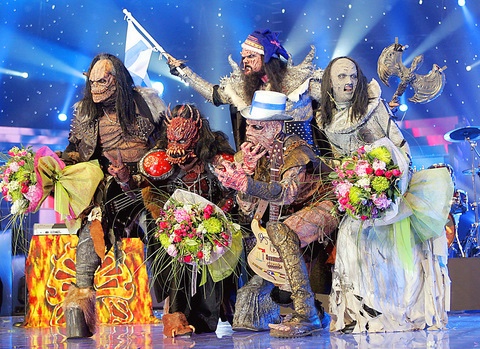
The winner was Finland with the heavy metal-song Hard Rock Hallelujah, performed by Lordi and written by lead singer Mr. Lordi. This was Finland’s first victory in the contest – and first top five placing – in 45 years of participation, the longest time a country had competed without a win at that point. It was also the first ever hard rock song to win the contest, as well as the first band to win since 1997. Russia, Bosnia and Herzegovina, Romania and Sweden rounded out the top five. Bosnia and Herzegovina achieved their best result in their Eurovision history. Further down the table, Lithuania also achieved their best result to date, finishing sixth. Of the Big Four countries Germany placed the highest, finishing joint fourteenth (with Norway).
Songs
It’s that time of year again: the Eurovision Song Contest. Last year I was enjoying the show in my PJ’s on the couch, but tonight Edo and I are going to visit friends with several people to experience the ‘annual spectacle’ in a group. The exciting question Will We Win This Year? has been taken from us, so we will relax and only have eyes for the beautiful men and the ugly dresses.

Eurovision 2005
This week the 50th edition of the annual Eurovision Song Contest was held in Kyiv, Ukraine, following the country’s victory at the 2004 contest with the song Wild Dances by Ruslana. Organised by the European Broadcasting Union (EBU) and host broadcaster National Television Company of Ukraine (NTU), the contest was held at the Palace of Sports, and consisted of a semi-final on 19 May, and a final on 21 May 2005. The two live shows were presented by Ukrainian television presenters Maria Efrosinina and Pavlo Shylko.
Thirty-nine countries participated in the contest, three more than the previous record of thirty-six, that took part the year before. Bulgaria and Moldova made their first participation this year, while Hungary returned to the contest after a six-year absence, having last taken part in 1998.
An official CD and DVD was released and a new introduction was an official pin set, which contains heart-shaped pins with the flags of all thirty-nine participating countries. The EBU also commissioned a book The Eurovision Song Contest – The Official History by British/American author John Kennedy O’Connor to celebrate the contest’s fiftieth anniversary. The book was presented on screen during the break between songs 12 and 13 (Serbia and Montenegro, Denmark). The book was published in English, German, French, Dutch, Swedish, Danish and Finnish.
During the semi-final, there were a few sound faults, most notably during the Norwegian song, shortly after the intro and also during the Irish song. These were not fixed for the DVD release.
Following Istanbul’s Under The Same Sky, the slogan for the 2005 show was Awakening, which symbolised the awakening of the country and city ready to present itself to Europe. The postcards (short clips shown between performances) for the 2005 show illustrated Ukraine’s culture and heritage along with a more modern and industrial side to the country.This was the first edition to be broadcast in widescreen 16:9 format.
The Netherlands did not qualify for the final on Saturday. My Impossible Dream by Glennis Grace got 53 point and ended as 14th in the semi-final.
The winner was Greece with the song My Number One, performed by Helena Paparizou and written by Manos Psaltakis, Christos Dantis and Natalia Germanou. This was Greece’s first victory in the contest after 31 years of participation. Malta, Romania, Israel and Latvia rounded out the top five. Malta equalled their best result from 2002, while Romania achieved their best result in their Eurovision history. Unusually, all Big Four countries (France, Germany, Spain and United Kingdom) ended up as the Last Four, all placing in the bottom four positions in the final
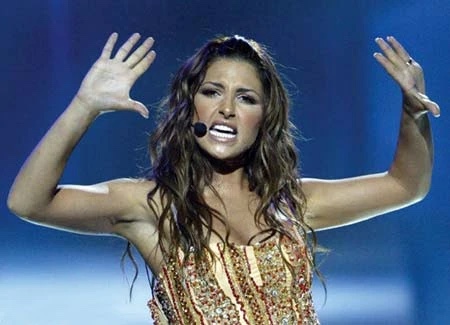
Eurovision 2004
This week the 49th edition of the annual Eurovision Song Contest took place in Istanbul, Turkey, following the country’s victory at the 2003 contest with the song Everyway That I Can by Sertab Erener. Organised by the European Broadcasting Union (EBU) and host broadcaster Turkish Radio and Television Corporation (TRT), the contest was held at the Abdi İpekçi Arena, and, for the first time, consisted of a semi-final on 12 May, and a final on 15 May 2004. The two live shows were presented by Turkish actors Korhan Abay and Meltem Cumbul. It was the first time that Turkey had hosted the contest, 29 years after the country made its debut, and was also the first time since the 1998 contest in Birmingham that it was not hosted in the host country’s capital city.
Thirty-six countries participated in the contest, beating the record of twenty-six in the previous edition. Albania, Andorra, Belarus and Serbia and Montenegro took part for the first time this year. The old relegation system was replaced with a semi-final format. This was done in order to accommodate the increasing number of countries who wished to participate. The new format allowed all countries to participate every year, rather than being forced to sit out per the relegation rules, which had been the standard since 1994. Because of this, Denmark, Finland, Lithuania, Macedonia, Monaco and Switzerlandall returned to the contest, Monaco not having competed since 1979.
The semi-final was held on 12 May 2004 at 21:00 (CET). 22 countries performed and all participants voted except France, Poland and Russia who opted not to broadcast the show.
A new ABBA video was shown in the semi-final, briefly outlining how ABBA started and what the response was of the first record company they approached. It featured small puppets of the band performing snippets of their songs (the voices being the ones of the band) and featured Rik Mayall as the record company manager. Due to copyright purposes, this was cut from the Eurovision Song Contest DVD and released separately. References to the video before it was shown were also cut.
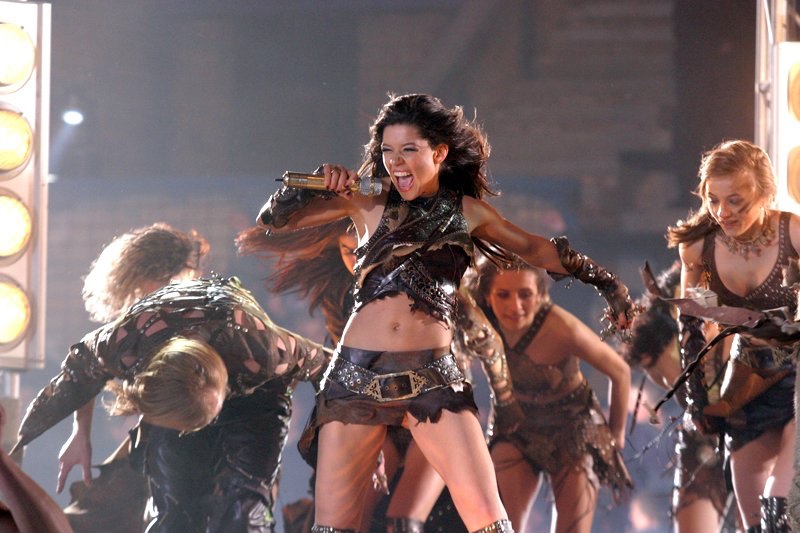
The winner was Ukraine with the song Wild Dances, performed by Ruslana who wrote it with her husband Oleksandr Ksenofontov. This was Ukraine’s first victory in the contest, only one year after the country made its debut in 2003. Serbia and Montenegro, Greece, Turkey, Cyprus and Sweden rounded out the top five. Due to the expansion of the contest, this year was the first time in which a non-winning entry scored over 200 points. Prior to this contest, only the winning entries in 1994 and 1997 had passed this mark. In this contest, the top 3 songs all got over 200 points. An official CD was released and, for the first time, the entire contest was released on DVD which included the semi-final and the final.
Eurovision 2003
Today, the 48th edition of the annual Eurovision Song Contest 2003 was held in Riga, Latvia, following the country’s victory at the 2002 contest with the song I Wanna by Marie N. Organised by the European Broadcasting Union (EBU) and host broadcaster Latvijas Televīzija (LTV), the contest was held at the Skonto Hall on 24 May 2003. The contest was presented by last year’s winner Marie N and former contestant Renārs Kaupers.

Twenty-six countries participated in the contest, beating the record of twenty-five first set in 1993. It saw the return of Iceland, Ireland, the Netherlands, Norway and Poland after having been relegated from competing the previous year. Portugal also returned to the contest after being absent the previous year, while Ukraine participated in the contest for the first time. Denmark, Finland, Lithuania, Macedonia and Switzerland were relegated due to their poor results in 2002.
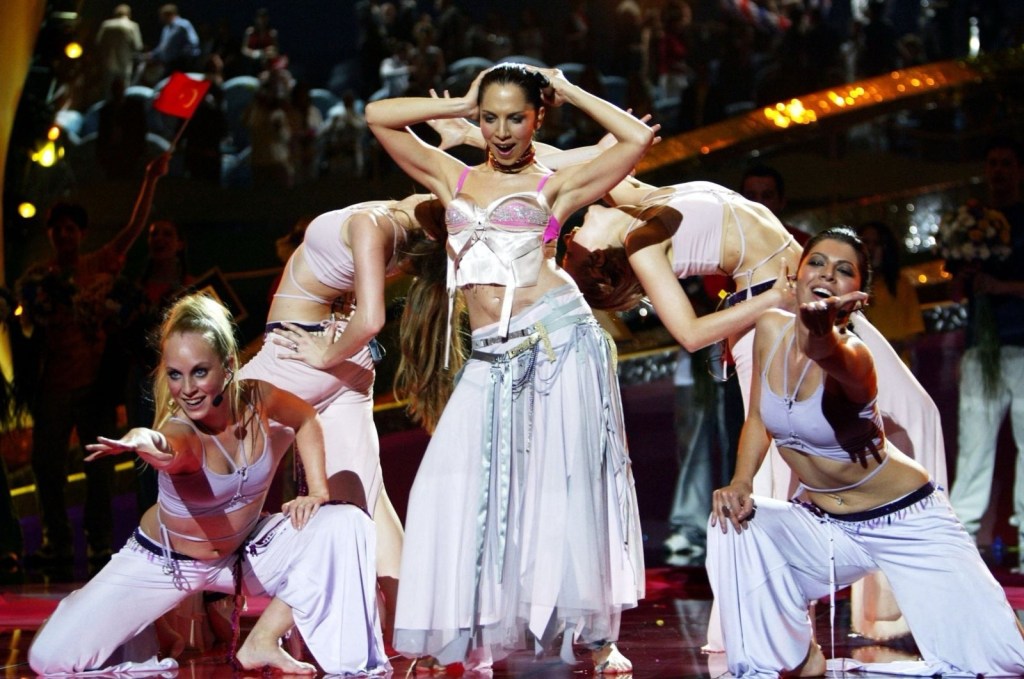
The winner was Turkey with the song Everyway That I Can, performed by Sertab Erener who wrote it with Demir Demirkan. This was Turkey’s first victory in the contest after 28 years of participation. Belgium, Russia, Norway and Sweden rounded out the top five. Further down the table, the United Kingdom achieved their worst result to date, finishing twenty-sixth (last place) with no points. However, they avoided relegation due to being one of the “Big Four” countries at the time. The host country Latvia placed twenty-fourth (third from last) – this was the first time since 1995 that the host entry did not place in the top 10, and it was, overall, the worst result for a host entry since 1992.
This was the last contest to take place on one evening. The EBU revealed that it would be adding a semi-final show to the competition in order to accommodate the growing number of interested countries wishing to take part in the contest. This was also the last contest in which a relegation system was used to determine which countries would participate in the following year’s contest. As the Belgian entry was sung in an imaginary language, this was also the first time the contest featured a song with no parts performed in English or a language native to the country.
Eurovision 2002
Today the 47th edition of the annual Eurovision Song Contest was held in Tallinn, Estonia, following the country’s victory at the 2001 contest with the song Everybody by Tanel Padar, Dave Bentonand 2XL. Organised by the European Broadcasting Union (EBU) and host broadcaster Eesti Televisioon (ETV), the contest was held at the Saku Suurhall on 25 May 2002. The contest was presented by Estonian opera singer Annely Peebo and actor Marko Matvere. It was the first Eurovision Song Contest held in one of the former Sovietrepublics.
For the first time, a slogan (or theme) was implemented. This year’s theme was called A Modern Fairytale, which was evident in the postcards shown between the songs, which showed classic fairytales ending in modern Estonian situations.
The postcards continued with the opening theme of A Modern Fairytale taking well known fairy tales and translating them into Estonian life through short films, with a moral at the end of each one of them.
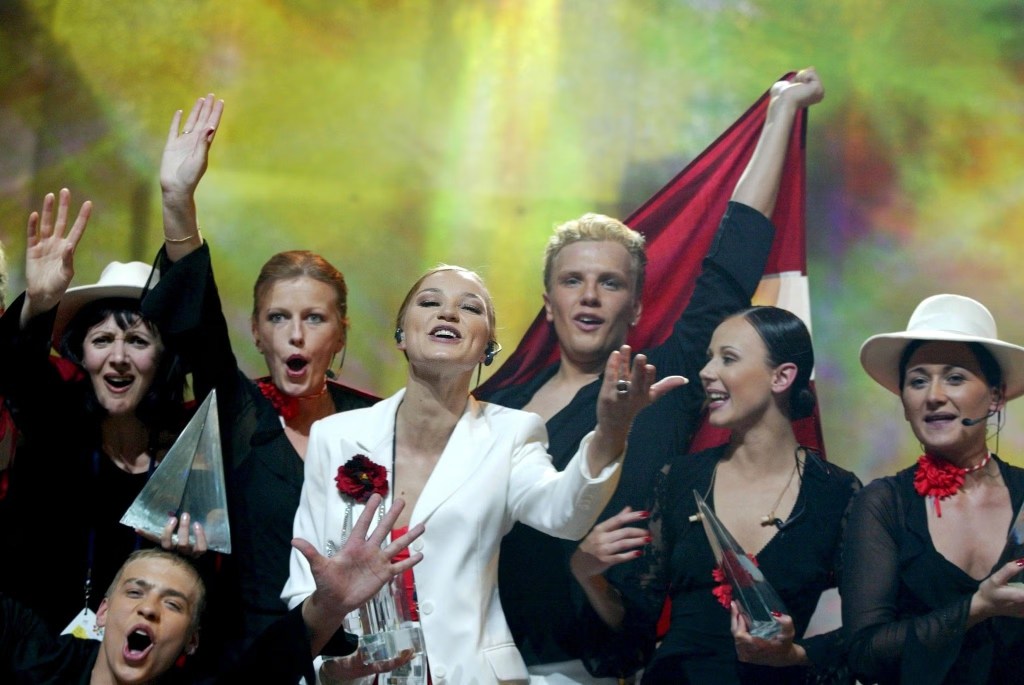
Twenty-four countries participated in the contest. Austria, Belgium, Cyprus, Finland, Macedonia, Romania and Switzerland returned after their relegation from the previous edition. Iceland, Ireland, Netherlands, Norway and Poland were relegated due to their poor results in 2001. It was the first (and only) time Ireland and Norway were relegated from the contest. Latvia was also set to sit out this year, but when Portugal announced their non-participation, due to internal problems at its broadcaster, it left a spot open for Latvia to take, as the country had finished higher the year before than any of the other relegated countries. This would go on to be very fortunate for the country as Latvia ended up winning the contest with the song I Wanna, performed by Marie N who wrote it with Marats Samauskis. Malta, United Kingdom, Estonia and France rounded out the top five. Malta achieved their best result in their Eurovision history, coming second. Further down the table, Denmark finished twenty-fourth and last, their worst result up until that point, despite having been declared one of the favourites to win the competition beforehand.
Eurovision 2001
On this day in 2001, the 46th edition of the annual Eurovision Song Contest was held in Copenhagen, Denmark, following the country’s victory at the 2000 contest with the song Fly on the Wings of Love by Olsen Brothers. Organised by the European Broadcasting Union (EBU) and host broadcaster the Danish Broadcasting Corporation (DR), the contest was held at the Parken Stadium. The contest was presented by Danish television presenter Natasja Crone Back and actor Søren Pilmark.

Twenty-three countries took part in the contest. Bosnia and Herzegovina, Lithuania, Poland, Portugal, and Slovenia returned after their relegation from the previous edition. Greece also returned after their two-year absence, following financial trouble. Meanwhile, Austria, Belgium, Cyprus, Finland, Macedonia, Romania, and Switzerland were relegated.
The winner was Estonia with the song Everybody, performed by Tanel Padar, Dave Benton and 2XL, and written by Ivar Must and Maian Kärmas. This was the first time the contest was won by one of the countries from the former Eastern bloc that debuted in the contest in the 1990s. Denmark, Greece, France and Sweden rounded out the top five with Greece achieving its best result up to that point in the contest. Further down the table, Slovenia equalled their best result from 1995, finishing seventh. Meanwhile, Ireland finished in 21st place, giving the nation its worst placement up to that point.

 euro-vision.blog