
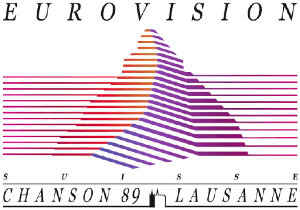
This evening the 34th edition of the annual Eurovision Song Contest was held on 6 May 1989 in the Palais de Beaulieu in Lausanne, Switzerland. Organised by the European Broadcasting Union (EBU) and host broadcaster Télévision suisse romande (TSR) on behalf of the Swiss Broadcasting Corporation (SRG SSR), and presented by Jacques Deschenaux and Lolita Morena, the contest was held in Switzerland following the country’s victory at the 1988 contest with the song Ne partez pas sans moi by Céline Dion.
Each participating broadcaster submitted one song, which was required to be no longer than three minutes in duration and performed in the language, or one of the languages, of the country which it represented. A maximum of six performers were allowed on stage during each country’s performance. Each entry could utilise all or part of the live orchestra and could use instrumental-only backing tracks, however any backing tracks used could only include the sound of instruments featured on stage being mimed by the performers.
The results of the 1989 contest were determined through the same scoring system as had first been introduced in 1975: each country awarded twelve points to its favourite entry, followed by ten points to its second favourite, and then awarded points in decreasing value from eight to one for the remaining songs which featured in the country’s top ten, with countries unable to vote for their own entry. The points awarded by each country were determined by an assembled jury of sixteen individuals, who were all required to be members of the public with no connection to the music industry, split evenly between men and women and by age. Each jury member voted in secret and awarded between one and ten votes to each participating song, excluding that from their own country and with no abstentions permitted. The votes of each member were collected following the country’s performance and then tallied by the non-voting jury chairperson to determine the points to be awarded. In any cases where two or more songs in the top ten received the same number of votes, a show of hands by all jury members was used to determine the final placing.
Partly due to the close result at the previous year’s event, the tie-break procedure, to determine a single winner should two or more countries finish in first place with the same number of points, was modified. For the 1989 event and for future contents an analysis of the tied countries’ top marks would be conducted, with the country that received the most 12 point scores being declared the winner. If a tie for first place remained then the country with the most 10 points would be crowned the winner. Should two or more countries still remain tied for first place after analysing both 12 and 10 point scores then the tying countries would be declared joint winners.
Twenty-two countries participated in the contest, with Cyprus returning after a one-year absence. Among the participating artists were the two youngest artists to have ever participated in the contest, 12-year-old Gili Netanel and 11-year-old Nathalie Pâquerepresenting Israel and France respectively; the inclusion of the young performers led to some controversy in the run-up to the event.
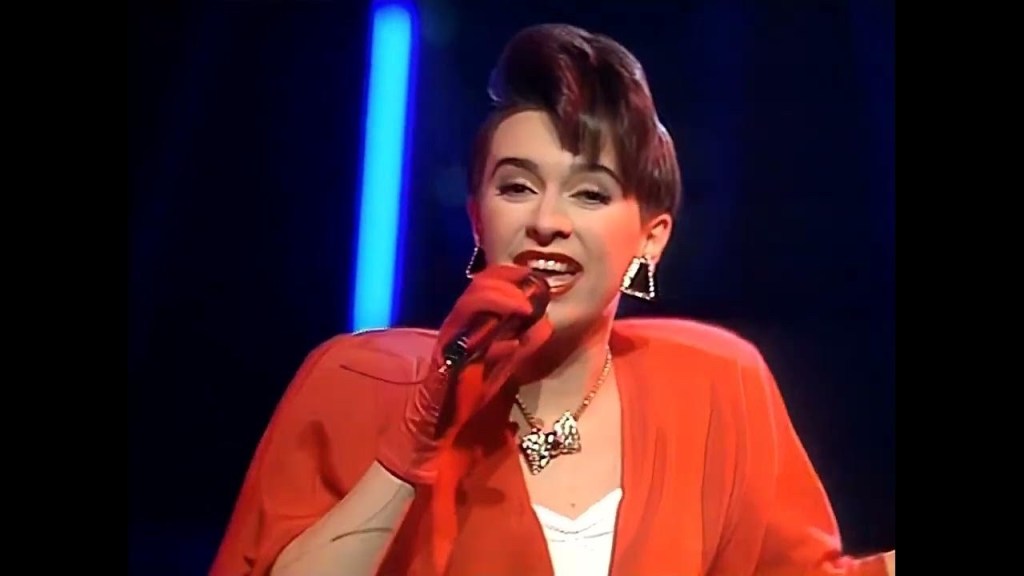
The winner was Yugoslavia with the song Rock Me, composed by Rajko Dujmić, written by Stevo Cvikić and performed by the group Riva. This was Yugoslavia’s first contest victory in twenty-four attempts. The United Kingdom, Denmark, Sweden and Austria rounded out the top five positions; the UK and Denmark placed second and third for a second consecutive year, and Austria finished in the top five for the first time since 1976. Finland gained their best result since 1975, while Ireland and Iceland achieved their worst ever placings to date, placing eighteenth and twenty-second respectively, with Iceland ultimately earning nul points and coming last for the first time.

 euro-vision.blog